Quick Answer
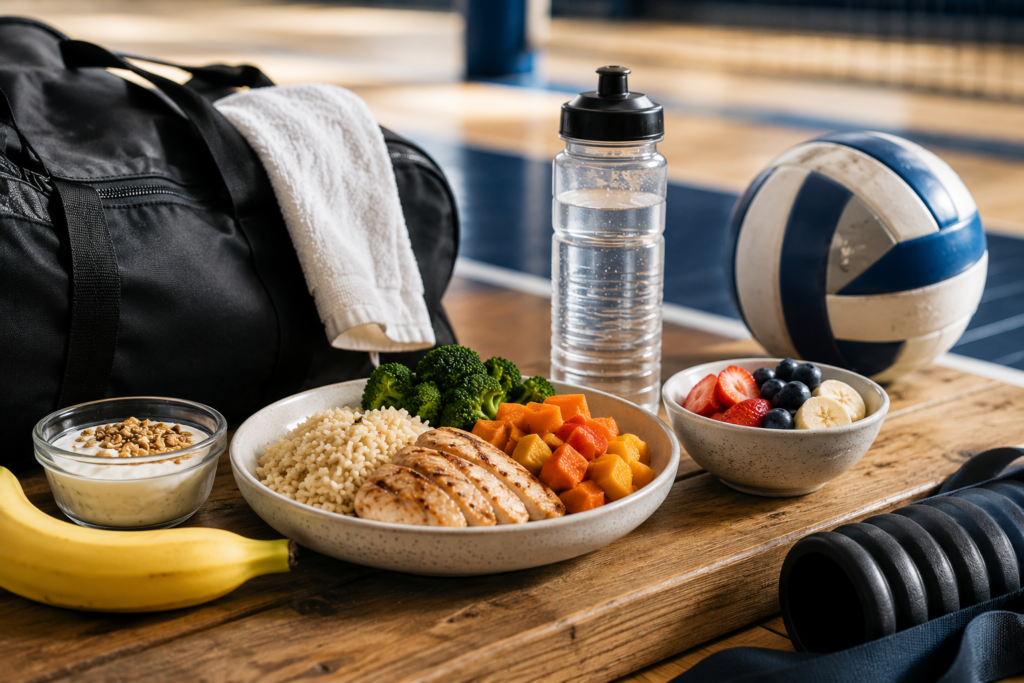
After a game, athletes should prioritize carbohydrates to restore energy, protein to support muscle repair, and fluids/electrolytes to rehydrate. Start with fluids and quick carbohydrates immediately after competition, then follow with a balanced meal within 1–2 hours to support recovery and performance.
Key Takeaways
- Recovery after a game directly impacts your next performance
- Carbohydrates are the top priority immediately after competition
- Protein supports muscle repair and adaptation
- Hydration is critical, especially after high sweat loss
- Appetite may be low after competition—but fueling is still necessary
- Tournament play requires faster, more strategic recovery
Table of Contents
Introduction
You just finished a game.
You’re tired, maybe not very hungry, and either heading home or preparing for your next match.
This is where many athletes make a critical mistake.
They:
- delay eating
- rely on whatever is convenient
- or skip recovery altogether
Then they show up to the next game feeling:
- low on energy
- sluggish
- not performing at their best
What you eat after a game directly impacts how you perform next.
Proper post-game nutrition works together with pre-game fueling, hydration, and overall recovery habits to support athletic performance across training and competition.
Within the M3 Performance Framework (Mind • Meals • Motion):
- Meals → restore energy and support recovery
- Motion → creates the physical demand
- Mind → determines whether recovery actually happens
After competition, recovery isn’t optional—it’s part of performance.
Why Is Recovery After a Game Important?
Recovery after a game isn’t the same as recovery after a normal workout.
Games often involve:
- higher intensity efforts
- unpredictable duration
- increased emotional and mental stress
- greater glycogen depletion
You may also experience:
- reduced appetite from adrenaline
- limited time before the next game
- travel or schedule constraints
This makes recovery more challenging—and more important.
Unlike training, where you can plan everything, game-day fueling requires:
- flexibility
- preparation
- simple, repeatable strategies
Why Fueling After a Game Matters Physiologically
Unlike structured training sessions, competition often creates more unpredictable and repeated stress on the body. To understand why recovery nutrition matters, it helps to look at what’s happening physiologically after competition.
After a game, your body is in a state of energy depletion and physiological stress.
During competition:
- glycogen stores are significantly reduced
- muscle tissue experiences repeated high-intensity loading
- fluid and electrolyte losses accumulate
Without proper recovery nutrition:
- glycogen restoration is delayed
- muscle repair is impaired
- performance in subsequent games declines
Carbohydrate intake supports:
- rapid glycogen replenishment
- sustained energy across matches
Protein intake supports:
- muscle repair and adaptation
Hydration supports:
- cardiovascular function
- temperature regulation
- cognitive performance
👉 Even though competition may feel different than training, the same physiological demands apply—often at a higher intensity.
What Should Athletes Eat After a Game?
After a game, the challenge usually isn’t knowing what to eat—it’s making good decisions when you’re tired, rushed, and not very hungry.
Instead of overcomplicating recovery, focus on a structure you can execute consistently.
Carbohydrates + Protein + Fluids
Immediately After the Game (0–30 Minutes)
Focus on:
- fluids (water or electrolytes)
- quick carbohydrates
Examples:
- sports drink
- fruit (banana, orange)
- applesauce
- granola bar
Goal: begin rehydration and start restoring energy.
Within 1–2 Hours After the Game
Follow with a balanced meal that includes:
- carbohydrates (primary focus)
- protein
- some fats
Examples:
- rice + chicken + vegetables
- pasta with lean protein
- sandwich + fruit
- burrito bowl
👉 Goal: fully refuel and support recovery.
These strategies are supported by research on glycogen resynthesis, muscle protein synthesis, and hydration status following exercise.
How to Build a Post-Game Recovery Meal
A practical way to structure your recovery meal is:
- Start with a carbohydrate base (rice, pasta, bread, potatoes)
- Add a protein source (chicken, eggs, yogurt, protein shake)
- Include fluids to rehydrate
This doesn’t need to be complicated.
👉 The goal is to create a repeatable structure you can rely on after every game.
Visual Framework
Instead of guessing what to eat after a game, use a simple structure to guide your recovery nutrition.
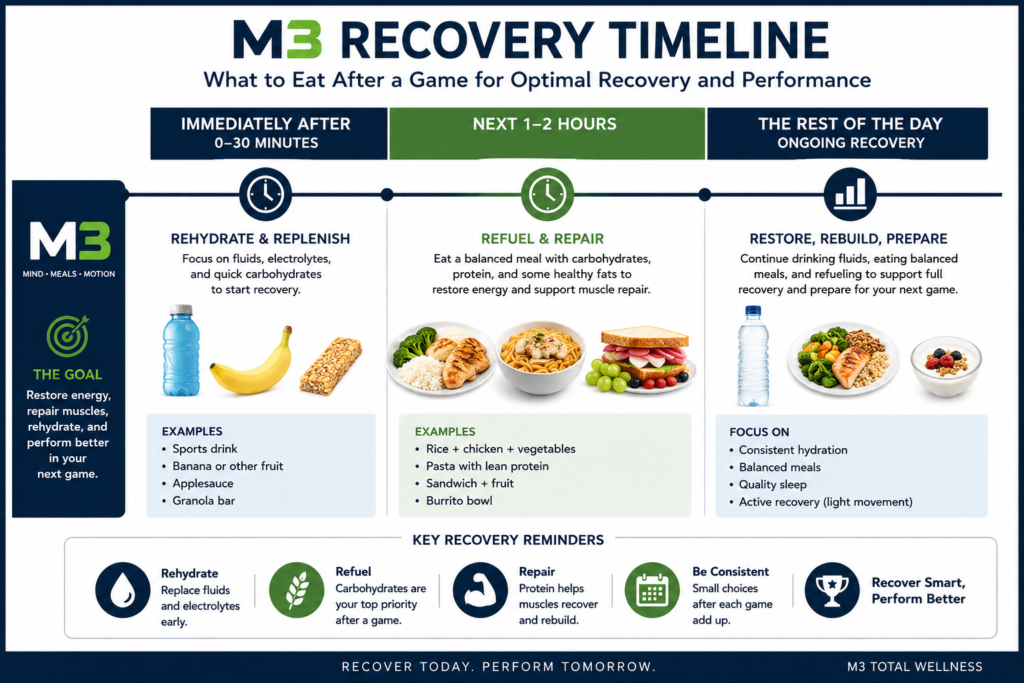
This gives you a repeatable system you can rely on—especially when you’re tired or short on time.
What Should Athletes Eat Between Tournament Games?
This is where many athletes struggle most.
Single Game (More Time to Recover)
- You can take your time with a full meal
- Focus on a balanced recovery approach
Tournament or Multiple Games
- Recovery time is limited
- Speed and convenience matter
Focus on:
- quick carbs between games
- easy-to-digest foods
- consistent hydration
Examples:
- banana + sports drink
- granola bar + yogurt
- peanut butter sandwich
- smoothie
👉 In tournaments, recovery is about staying fueled—not getting full.
Why Tournament Fueling Is So Challenging
Tournament environments create unique challenges:
- limited time between games
- inconsistent access to food
- fatigue accumulating across the day
- reliance on convenience options
Because of this, many athletes unintentionally underfuel due to lack of preparation and recovery planning.
👉 Having a simple fueling plan going into the day makes a significant difference.
These challenges are one of the main reasons athletes often don’t feel hungry between games—even when their body needs fuel.
What If You’re Not Hungry After a Game?
This is very common.
After competition, appetite can be suppressed due to:
- adrenaline
- fatigue
- dehydration
But your body still needs fuel.
In these situations:
- start with liquids (smoothies, chocolate milk, sports drinks)
- choose smaller, easy-to-digest foods
- focus on consistency rather than portion size
👉 You don’t need a full meal right away—but you do need to start refueling.
Sport-Specific Example (Volleyball)
After a volleyball match—especially during tournaments—your body has been under repeated explosive demand.
You’ve likely:
- jumped dozens of times
- performed high-intensity rallies
- depleted glycogen stores
- lost fluids through sweat
Between matches, many athletes:
- don’t feel hungry
- underestimate how much energy they used
- rely only on water
Over time, this leads to:
- decreased jump height
- slower reaction time
- increased fatigue
A better approach:
Between matches:
- quick carbs + fluids (banana + sports drink)
After final match:
- full recovery meal (rice + protein + fruit)
This helps:
- maintain performance throughout the day
- reduce fatigue
- support recovery for the next session
This becomes especially noticeable late in tournaments, where small differences in energy availability can significantly impact performance.
Athletes who fuel consistently tend to:
- maintain jump performance
- sustain focus
- recover more effectively between matches
At higher levels, this is often the difference between maintaining performance and progressively declining across matches.
Common Post-Game Nutrition Mistakes
Many athletes unintentionally limit their performance with these habits:
1. Waiting Too Long to Eat
Recovery is delayed when fueling is pushed too far after competition.
2. Relying Only on Water
Fluids are important—but without carbohydrates, energy isn’t restored.
3. Not Eating Between Games
Even small gaps in fueling can lead to noticeable performance drops later.
4. Underestimating Energy Needs
Games often require more energy than athletes realize.
👉 Avoiding these mistakes can significantly improve consistency during competition.
Practitioner Insight: What I See in Real Athletes
In competition settings, the biggest challenge usually isn’t knowledge—it’s executing a plan when conditions aren’t ideal.
Many athletes:
- eat well before games
- focus on performance
- but underfuel after competition
Especially during tournaments, I often see:
- long gaps without eating
- minimal carbohydrate intake between games
- inadequate hydration
The result isn’t always immediate—but it shows up as:
- declining performance across matches
- increased fatigue late in the day
- inconsistent energy levels
👉 The athletes who perform best aren’t just the most skilled—they’re the most consistently fueled.
Recovery after each game sets up the next one.
The difference usually isn’t knowledge—it’s execution under real competition conditions.
Game-Day Recovery Strategy
1. Have a Recovery Plan Before Your Game Ends
Don’t wait until you’re tired to decide what to eat.
2. Start With Fluids and Carbs Immediately
Even if you’re not hungry, begin refueling.
3. Pack Easy, Portable Options
Tournament days require convenience.
4. Eat Something Between Games—Even If It’s Small
Fueling doesn’t need to be a full meal.
5. Follow With a Full Meal After Your Last Game
This is key for complete recovery.
6. Pay Attention to How You Feel in Later Games
Your energy is feedback on your fueling.
👉 Consistency during competition is what separates good performance from great performance.
Frequently Asked Questions
What should athletes eat immediately after a game?
Athletes should prioritize fluids, electrolytes, and quick carbohydrates immediately after competition to begin rehydration and glycogen restoration.
Is protein important after a game?
Yes. Protein helps support muscle repair and recovery after intense exercise, especially when combined with carbohydrates.
What should athletes eat between tournament games?
Athletes should focus on quick, easy-to-digest carbohydrates, fluids, and smaller snacks that provide energy without causing stomach discomfort.
What if I’m not hungry after competition?
Loss of appetite after intense exercise is common. Starting with liquids like smoothies, chocolate milk, or sports drinks can make recovery nutrition easier.
Conclusion
In competition, performance isn’t reset between games—it carries over.
Many athletes focus heavily on preparation but overlook recovery during competition.
The reality is:
👉 each game is not independent—your fueling connects them
When you consistently:
- restore energy with carbohydrates
- support muscle repair with protein
- rehydrate effectively
you give yourself the best chance to:
- maintain performance
- reduce fatigue
- stay competitive throughout the day
You don’t need a perfect plan. But you do need a consistent one.
In competition, small mistakes compound quickly—but so do good habits.
Because in competition, how you recover between games often determines how you perform in the next one.
Take the Next Step
Most athletes don’t realize how much their recovery between games is holding them back.
If you’ve ever felt:
- drained during tournaments
- inconsistent across games
- unsure what to eat between matches
your recovery strategy may be limiting your performance.
At M3 Total Wellness, I help athletes:
- fuel effectively during competition
- recover faster between games
- build simple, repeatable nutrition strategies
👉 If you’re ready to improve your performance and consistency, schedule a performance assessment here.
References
Thomas, D. T., Erdman, K. A., & Burke, L. M. (2016). Nutrition and athletic performance. Medicine & Science in Sports & Exercise, 48(3), 543–568. https://doi.org/10.1249/MSS.0000000000000852
Burke, L. M., Hawley, J. A., Wong, S. H., & Jeukendrup, A. E. (2011). Carbohydrates for training and competition. Journal of Sports Sciences, 29(Suppl 1), S17–S27. https://doi.org/10.1080/02640414.2011.585473
Kerksick, C. M., Arent, S., Schoenfeld, B. J., Stout, J. R., Campbell, B., Wilborn, C. D., Taylor, L., Kalman, D., Smith-Ryan, A. E., Kreider, R. B., & Antonio, J. (2017). International society of sports nutrition position stand: Nutrient timing. Journal of the International Society of Sports Nutrition, 14(1), 33. https://doi.org/10.1186/s12970-017-0189-4
Sawka, M. N., Burke, L. M., Eichner, E. R., Maughan, R. J., Montain, S. J., & Stachenfeld, N. S. (2007). American College of Sports Medicine position stand: Exercise and fluid replacement. Medicine & Science in Sports & Exercise, 39(2), 377–390. https://doi.org/10.1249/mss.0b013e31802ca597
Beelen, M., Burke, L. M., Gibala, M. J., & van Loon, L. J. C. (2010). Nutritional strategies to promote postexercise recovery. International Journal of Sport Nutrition and Exercise Metabolism, 20(6), 515–532. https://doi.org/10.1123/ijsnem.20.6.515