Quick Answer
Athletes perform best when nutrition supports the demands of training. Consistent meals that include carbohydrates for energy, protein for recovery, and healthy fats for overall health help maintain energy availability and support performance. Strategic fueling before and after exercise can improve training quality, recovery, and long-term athletic development.
Key Takeaways
- Athletes require consistent fueling to support training demands
- Carbohydrates are the primary fuel source for most sports
- Protein supports muscle repair and recovery
- Skipping meals can reduce energy and performance
- The M3 Framework (Mind • Meals • Motion) connects nutrition, habits, and training
- Small, consistent nutrition habits often have the biggest long-term impact on performance
Table of Contents
Introduction
A lot of athletes assume that training harder automatically leads to better performance.
But in reality, nutrition is often the missing piece.
I see this all the time with athletes who are highly disciplined in training but inconsistent with fueling. They show up to practice underfueled, rely heavily on caffeine to push through fatigue, or go long periods without eating during the day. Then they wonder why recovery feels difficult, energy crashes happen late in sessions, or performance feels inconsistent.
The reality is this:
Training creates the stimulus for improvement. Nutrition provides the resources that allow the body to adapt.
Without adequate fueling, even the best training program becomes harder to recover from and more difficult to sustain long term.
This is where the M3 Performance Framework — Mind, Meals, and Motion — comes in.
It’s a practical approach designed to help athletes fuel more consistently, recover more effectively, and support performance without overcomplicating nutrition.
The M3 Performance Framework
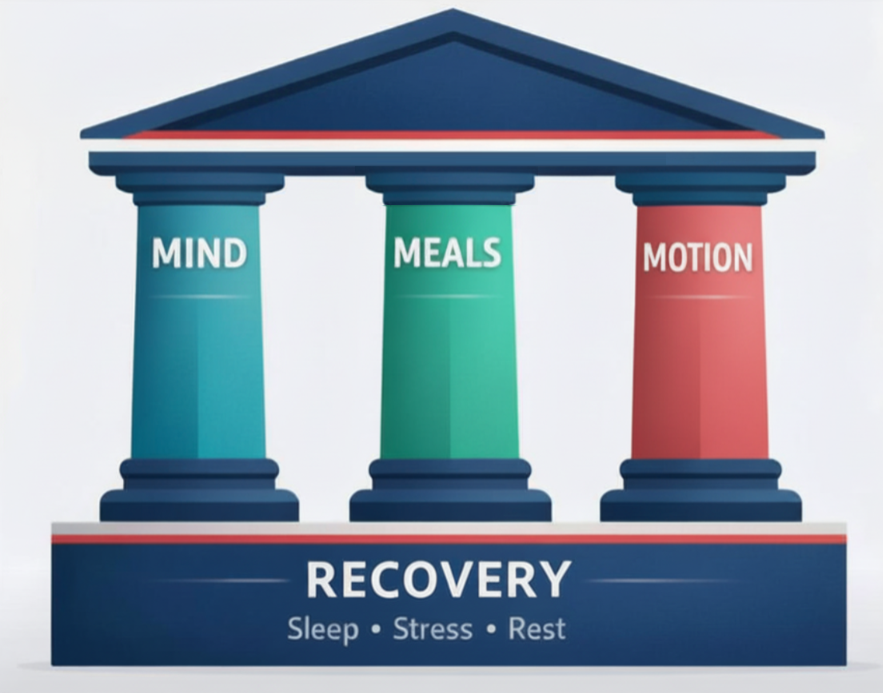
At M3 Total Wellness, athletic performance is built around three interconnected pillars:
Mind
Mind refers to the habits, awareness, and routines that support consistent fueling behaviors.
Most athletes do not struggle with nutrition because they “don’t know what’s healthy.” Usually, the bigger issue is execution.
Common patterns I see include:
- skipping meals because of busy schedules
- relying heavily on caffeine for energy
- under-eating earlier in the day
- inconsistent meal timing around training
Building better nutrition habits often starts with awareness and consistency rather than perfection.
Meals
Meals represent the nutrition strategies that fuel performance and recovery.
Athletes need enough energy and nutrients to support:
- training output
- muscle repair
- recovery
- hormone function
- immune health
- long-term adaptation
Consistent meals that include carbohydrates, protein, and healthy fats help provide the body with the fuel it needs to perform and recover effectively.
Motion
Motion represents the physical training stimulus.
Training challenges the body and creates the opportunity for adaptation. But without enough energy intake, the body may struggle to:
- recover between sessions
- maintain strength and power
- support muscle growth
- sustain training quality over time
Nutrition and training work together. One cannot fully support performance without the other.
Why Is Nutrition Important for Athletes?
Training creates stress on the body.
Nutrition helps the body adapt to that stress.
During exercise, the body produces energy in the form of ATP (adenosine triphosphate). That energy production depends heavily on nutrients obtained through food.
When fueling is inadequate, athletes may notice:
- lower energy during training
- slower recovery
- reduced power output
- increased fatigue
- inconsistent performance
Over time, chronic underfueling can contribute to low energy availability (LEA), which negatively affects both health and performance.
Honestly, many athletes who feel “burned out” are not necessarily overtraining — they are underfueling relative to their workload.
If this sounds familiar, you may also relate to some of the common fueling mistakes discussed in:
👉 Why You’re Not Performing at Your Best (Even If You Train Hard)
How the Body Produces Energy for Exercise
Understanding the body’s energy systems helps explain why nutrition matters so much for athletes.
The body primarily relies on three energy systems during exercise.
ATP-PC System
This system provides immediate energy for short, explosive efforts lasting only a few seconds.
Examples include:
- sprinting
- jumping
- heavy lifting
- explosive volleyball movements
Glycolytic System
This system relies heavily on carbohydrates and supports moderate to high-intensity exercise lasting several minutes.
Sports like:
- volleyball
- soccer
- CrossFit
- basketball
depend heavily on this energy system.
This is one reason carbohydrates are so important for athletic performance.
Oxidative System
This system supports longer-duration activity and uses both carbohydrates and fats to produce sustained energy.
It becomes more dominant during:
- endurance training
- longer conditioning sessions
- lower-intensity prolonged activity
All three systems work together during sport and exercise.
What Nutrients Do Athletes Need?
Athletes rely primarily on three macronutrients to support performance and recovery.
Carbohydrates
Carbohydrates are the body’s preferred fuel source during moderate- to high-intensity exercise.
They are stored in the muscles as glycogen. When glycogen stores become depleted, athletes often notice:
- fatigue
- decreased explosiveness
- reduced endurance
- slower reaction time
Good carbohydrate sources include:
- rice
- oats
- potatoes
- fruit
- pasta
- whole grains
One of the biggest misconceptions I still see is athletes being afraid of carbohydrates while simultaneously wondering why energy levels feel low during training.
For many athletes, increasing consistent carbohydrate intake alone can noticeably improve training quality.
Protein
Exercise creates microscopic damage within muscle tissue.
Protein provides amino acids that support:
- muscle repair
- recovery
- muscle maintenance
- strength adaptations
Good protein sources include:
- chicken
- fish
- eggs
- Greek yogurt
- dairy products
- tofu and tempeh
- beans and lentils
Rather than trying to eat all protein at dinner, athletes generally benefit from distributing protein more evenly throughout the day.
Recovery nutrition is one of the most overlooked aspects of sports performance nutrition. For a deeper breakdown of recovery meals, nutrient timing, and post-workout fueling strategies, read:
👉 Post-Workout Recovery Nutrition for Athletes
Healthy Fats
Healthy fats support:
- hormone production
- cell function
- long-duration energy needs
- overall health
Good fat sources include:
- olive oil
- avocado
- nuts and seeds
- fatty fish
Fats are important, but meals immediately before intense exercise are often lower in fat to support digestion and comfort.
What Should Athletes Eat Before Exercise?
Pre-workout nutrition should support energy availability without causing digestive discomfort.
In most cases, athletes benefit from:
- carbohydrates for energy
- moderate protein
- lower fat and fiber close to exercise
Timing matters.
2–4 hours before training
A balanced meal usually works best.
Examples:
- rice with chicken
- oatmeal with protein
- sandwich with fruit
- pasta with lean protein
30–60 minutes before training
A lighter snack may help support energy.
Examples:
- banana
- granola bar
- toast with honey
- applesauce
One thing I notice often with volleyball athletes is that many go too long without eating before evening practices. They may eat lunch at noon, then not train until 6 PM.
That long gap usually catches up to them later in practice.
For a more detailed guide on meal timing, snack ideas, and how to fuel different types of training sessions, read
👉 Pre-Workout Nutrition for Athletes: How to Fuel Training Sessions Effectively
Competition fueling can also look slightly different than normal training nutrition. For more detailed game-day strategies, read:
👉 What to Eat Before a Game: A Simple Guide for Athletes
How Many Calories Do Athletes Need?
Calorie needs vary significantly based on:
- body size
- sport
- training intensity
- training volume
- body composition goals
Athletes generally require more energy than non-athletes because training increases overall energy demand.
One of the most common issues I see is athletes unintentionally underfueling.
This can lead to:
- fatigue
- slower recovery
- poor workout quality
- increased injury risk
- decreased adaptation to training
Many athletes think they are eating “healthy,” but their total intake still may not match the demands of training.
Do Athletes Need More Protein Than Non-Athletes?
Yes.
Athletes generally require more protein to support:
- muscle repair
- recovery
- adaptation to training
- maintenance of lean body mass
A general guideline for many athletes is:
~1.2–2.0 grams of protein per kilogram of body weight per day.
Needs vary depending on:
- sport type
- training intensity
- recovery demands
- body composition goals
Again, consistency matters more than perfection.
Most athletes do not need extreme amounts of protein — they usually just need more consistent intake throughout the day.
The M3 Performance Plate
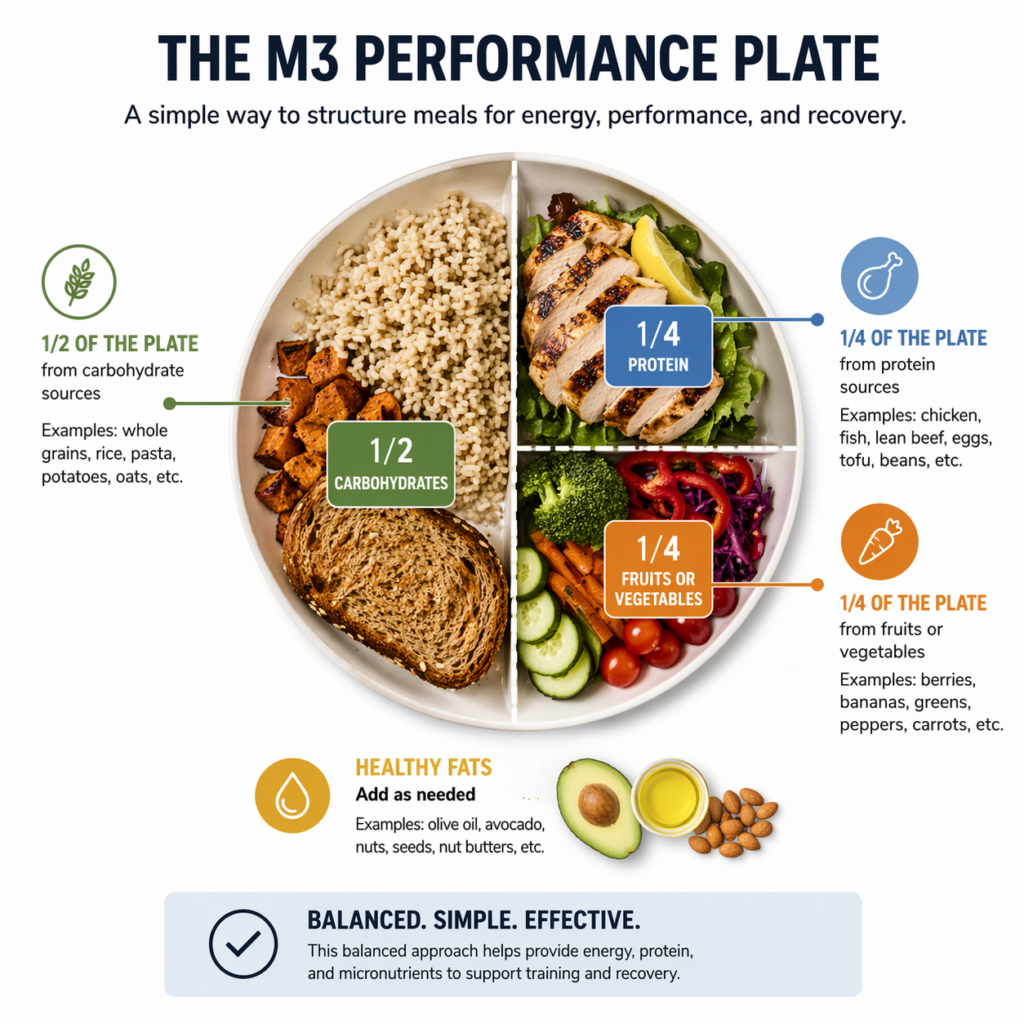
A practical way athletes can structure meals is by using the M3 Performance Plate.
A balanced plate may include:
- approximately half the plate from carbohydrate sources
- one quarter from protein
- one quarter from fruits or vegetables
- healthy fats added as needed
This simple structure helps support:
- energy availability
- recovery
- overall nutrient intake
It also helps athletes avoid overcomplicating meal planning.
Example: Fueling for Beach Volleyball Performance
Beach volleyball is a sport that combines:
- repeated explosive jumping
- sprinting
- rapid directional changes
- prolonged heat exposure
Athletes rely heavily on glycogen stores during long sessions and tournaments.
When carbohydrate intake and hydration are inadequate, athletes may notice:
- reduced jump height
- slower movement
- decreased concentration
- fatigue later in matches
A practical fueling approach may look like this:
Before training
- banana with peanut butter
- rice with lean protein
- oatmeal with fruit
During long sessions
- water + electrolytes
- sports drink
- fruit or quick carbohydrates
After training
- protein smoothie with fruit
- rice bowl with protein
- balanced recovery meal
Playing in the Florida heat has made this very obvious to me personally. During long beach volleyball days, even small gaps in fueling or hydration become noticeable later in the session.
Hydration becomes even more important during long outdoor sessions, tournament play, and hot environments. For a deeper breakdown of hydration strategies, sweat losses, and electrolytes, read:
👉 Hydration for Athletic Performance: How Much Water Athletes Really Need
Practitioner Insight: What I See in Real Athletes
In practice, one of the most common issues I see is not poor food quality — it’s inconsistent fueling.
Many athletes:
- eat very little earlier in the day
- train in a depleted state
- rely heavily on caffeine
- consume most calories late at night
At first, they may still perform reasonably well.
But over time, these habits often lead to:
- declining energy
- inconsistent recovery
- stalled progress
- increased fatigue
What’s interesting is that athletes often notice improvements relatively quickly once they start fueling more consistently.
Usually the biggest difference comes from:
- eating earlier in the day
- adding carbohydrates around training
- improving hydration
- reducing long gaps without food
Often, the solution is not a complicated supplement plan.
It’s better consistency.
Action Steps — How to Start Fueling Like an Athlete Today
If you want to improve your performance, start with these basics:
- Eat consistently throughout the day (every 3–4 hours)
- Include carbohydrates at meals to support training energy
- Prioritize protein after workouts and practices
- Stay hydrated consistently — not just during exercise
- Avoid skipping meals on training days
- Build meals around carbohydrates, protein, and healthy fats
For athletes with busy schedules, strategic snacks can help maintain energy availability and improve recovery between meals and training sessions. Some practical ideas can be found here:
👉 Best Snacks for Athletes: Smart Fueling Options for Energy, Performance, and Recovery
Small habits repeated consistently tend to produce the biggest long-term results.
Frequently Asked Questions
What is the best diet for athletes?
The best diet for athletes is one that consistently supports training demands, recovery, and energy needs. Most athletes benefit from a balanced approach that includes carbohydrates, protein, healthy fats, hydration, and adequate total energy intake.
How often should athletes eat?
Many athletes benefit from eating every 3–4 hours to help maintain energy availability and support recovery.
Are carbohydrates bad for athletes?
No. Carbohydrates are one of the body’s primary fuel sources during exercise and are critical for many sports and training styles.
Can athletes train fasted?
Some lighter sessions may tolerate fasted training, but most athletes perform better when properly fueled beforehand.
Do athletes need supplements?
Not always. Most athletes can meet their needs through food first. Some supplements may be helpful depending on the athlete, sport, and situation.
Conclusion
Athletic performance is influenced by many factors, but nutrition remains one of the most controllable.
When athletes align the three pillars of the M3 Performance Framework — Mind, Meals, and Motion — they create a stronger foundation for both performance and long-term health.
The goal is not perfection.
The goal is building consistent fueling habits that support:
- energy
- recovery
- adaptation
- performance over time
Because at the end of the day:
training hard is important — but fueling properly is what helps athletes sustain and benefit from that training.
Nutrition around competition matters just as much as daily fueling. For more guidance on tournament recovery, recovery meals, and post-game nutrition strategies, read:
👉 What to Eat After a Game for Recovery and Performance
Take the Next Step
If you’re training hard but still struggling with:
- low energy
- inconsistent recovery
- fatigue during workouts
- difficulty fueling properly around training
your nutrition strategy may be limiting your performance.
At M3 Total Wellness, I help athletes build practical, evidence-based fueling strategies that support performance, recovery, and long-term consistency.
👉 Schedule a performance assessment to build a personalized plan based on your sport, training schedule, and goals.
References
Amawi, H., et al. (2023). Athletes’ nutritional demands: A review of nutritional requirements. Frontiers in Nutrition. https://doi.org/10.3389/fnut.2023.1331854
Kerksick, C. M., Arent, S., Schoenfeld, B. J., et al. (2017). International society of sports nutrition position stand: Nutrient timing. Journal of the International Society of Sports Nutrition, 14(1), 33. https://doi.org/10.1186/s12970-017-0189-4
Mountjoy, M., Ackerman, K. E., Bailey, D. M., et al. (2023). International Olympic Committee (IOC) consensus statement on relative energy deficiency in sport (REDs). British Journal of Sports Medicine, 57(17), 1073–1097. https://doi.org/10.1136/bjsports-2023-106994
Thomas, D. T., Erdman, K. A., Burke, L. M. (2016). American College of Sports Medicine joint position statement: Nutrition and athletic performance. Medicine & Science in Sports & Exercise, 48(3), 543–568. https://doi.org/10.1249/MSS.0000000000000852