
Quick Answer
Most athletes perform best when they eat a carbohydrate-focused meal about 2–4 hours before competition, then add a lighter snack closer to game time if needed. The goal is not eating perfectly — it’s making sure the body actually has enough available energy to perform well.
Key Takeaways
- Carbohydrates are the primary fuel source before competition
- Eating too little before games is one of the most common athlete mistakes
- Heavy, greasy, or unfamiliar foods may hurt performance
- Hydration matters just as much as food intake
- A consistent pre-game routine is usually more important than a “perfect” meal
- Tournament days often require more planning than athletes realize
Introduction
A lot of athletes think pre-game nutrition is complicated.
Honestly, it usually isn’t.
But I also think athletes massively underestimate how much game-day fueling affects performance — especially later in games, tournaments, or long training sessions.
I see this constantly in volleyball.
Athletes will:
- skip breakfast
- barely eat all day
- drink some caffeine
- maybe eat half a granola bar before warmups
…then wonder why they feel exhausted by the second or third match.
Usually it’s not a conditioning issue.
It’s a fueling issue.
The body needs available energy to:
- jump explosively
- sprint repeatedly
- maintain focus
- react quickly
- sustain performance late into competition
And when athletes consistently underfuel before games, performance usually starts dropping later on — even if they feel okay at first.
One thing I’ve noticed over the years is that athletes often focus heavily on supplements, pre-workouts, or hydration powders while completely overlooking basic meal timing and consistent fueling.
But honestly, getting the basics right usually matters far more.
Within the M3 Performance Framework:
- Mind = preparation and consistency
- Meals = fueling for performance
- Motion = the physical demands of sport
Pre-game nutrition sits right in the middle of all three.
For a broader overview of how nutrition supports athletic performance overall, start here:
👉 How Athletes Should Eat for Performance: The M3 Fueling Framework
Table of Contents
Why Pre-Game Nutrition Matters
The body relies heavily on stored carbohydrates (glycogen) during higher-intensity exercise.
Sports like:
- volleyball
- basketball
- soccer
- CrossFit
- tennis
all depend heavily on carbohydrate availability.
When glycogen stores begin dropping, athletes often notice:
- lower energy
- slower reactions
- reduced explosiveness
- decreased endurance
- mental fatigue
And honestly, this usually shows up later in competition.
Athletes often feel okay during:
- warmups
- the first set
- the first half of a game
But then energy crashes later.
I notice this especially during beach volleyball tournaments in Florida heat. Some athletes fuel consistently throughout the day, while others barely eat between matches. By the afternoon, you can usually tell who prepared properly and who didn’t.
Not because they’re tougher.
Not because they’re more talented.
Usually because they actually fueled.
The M3 Pre-Game Framework
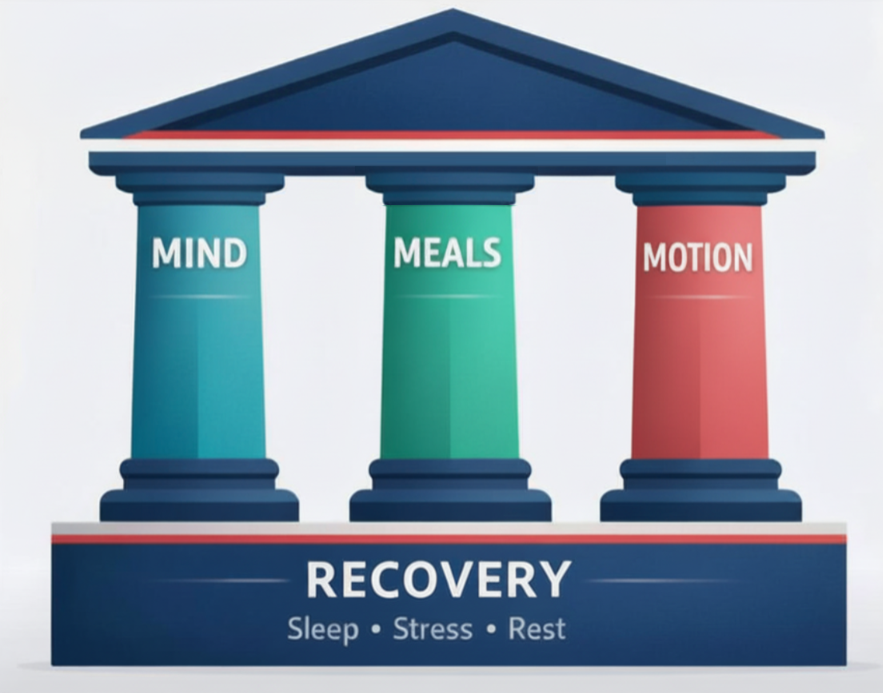
Mind
Pre-game nutrition starts with preparation.
Athletes who fuel consistently usually:
- plan meals ahead of time
- avoid experimenting on game day
- build repeatable routines
- understand what foods work best for them
Honestly, one of the biggest problems I see is athletes making last-minute decisions when they are already rushed or stressed.
Meals
Meals provide the energy needed for competition.
Carbohydrates are especially important because they help support:
- glycogen availability
- energy production
- high-intensity movement
- concentration during play
Protein can help provide balance and satiety, while fats and fiber are usually moderated closer to competition to reduce digestive discomfort.
Motion
Different sports place different demands on the body.
For example:
- volleyball involves repeated explosive jumps and quick reactions
- soccer combines sprinting with endurance demands
- CrossFit includes repeated high-intensity efforts
The higher the intensity and duration, the more important carbohydrate availability becomes.
What to Eat 2–4 Hours Before a Game
In most cases, the ideal pre-game meal includes:
- carbohydrates as the primary focus
- moderate protein
- lower fat and fiber
The goal is to provide energy while allowing enough time for digestion.
Good examples include:
- rice with chicken and fruit
- oatmeal with banana and protein
- pasta with lean protein
- sandwich with fruit
- potatoes with eggs or turkey
Meals should also be:
- familiar
- practical
- easy to digest
- realistic for the athlete’s schedule
One thing I always tell athletes is:
👉 game day is not the time to experiment.
Consistency matters more than perfection.
What to Eat 30–60 Minutes Before
In some cases, athletes may benefit from a small snack closer to game time to help maintain energy levels.
The goal here is not a full meal, but a light, easily digestible source of carbohydrates that can be used quickly for energy.
Examples include:
- a banana
- applesauce
- a granola bar
- toast with honey
These options should be simple, familiar, and low in fat and fiber to reduce the risk of gastrointestinal discomfort.
What to Avoid Before a Game
Certain foods can interfere with digestion and negatively impact performance if consumed too close to competition.
Foods that are high in fat or fiber tend to slow digestion, which can lead to discomfort, bloating, or sluggishness during play.
Athletes should also avoid trying new or unfamiliar foods on game day, as this increases the risk of gastrointestinal issues.
Common foods to limit before a game include:
- fried or greasy foods
- large meals close to competition
- very high-fiber foods
Keeping food choices simple and consistent helps reduce risk and improve overall performance.
Hydration Before Competition
Hydration plays a critical role in performance and is often overlooked.
Athletes should aim to stay hydrated throughout the day leading up to competition, rather than trying to catch up right before the game.
Closer to game time, sipping fluids can help maintain hydration status. In some cases—especially in hot environments or with high sweat rates—electrolytes may also be beneficial.
Even mild dehydration can lead to increased fatigue, reduced endurance, and decreased performance.
A simple way to monitor hydration is by checking urine color, which should be light yellow.
What if I feel nervous and can’t eat?
It’s common for athletes to experience pre-game nerves that reduce appetite. However, going into competition without fuel can negatively impact performance.
Instead of skipping food entirely, focus on smaller, easy-to-digest options that feel manageable. Liquid nutrition or simple carbohydrates can help provide energy without causing discomfort.
Options like smoothies, fruit, yogurt, or applesauce can be effective alternatives when a full meal isn’t realistic.
The goal is not perfection—it’s making sure your body has enough energy to perform.
Is it okay to play without eating?
For most athletes, competing without eating is not recommended and can negatively impact performance.
Without adequate fuel, the body has limited energy available, which can lead to early fatigue, decreased power output, and reduced focus during competition. This is especially important in sports that require repeated high-intensity efforts or sustained concentration.
Even a small amount of carbohydrate before a game is typically better than going in completely fasted. If a full meal isn’t possible, a light snack can still help support energy levels and performance.
Should I eat the same thing every game?
Consistency is one of the most important aspects of pre-game nutrition.
Eating similar foods before competition allows athletes to understand how their body responds, reducing the risk of gastrointestinal discomfort or unexpected drops in energy.
It also removes decision-making on game day, which helps athletes stay focused and confident in their preparation.
This doesn’t mean meals need to be identical every time, but having a consistent structure—timing, portion size, and food types—can significantly improve both comfort and performance.
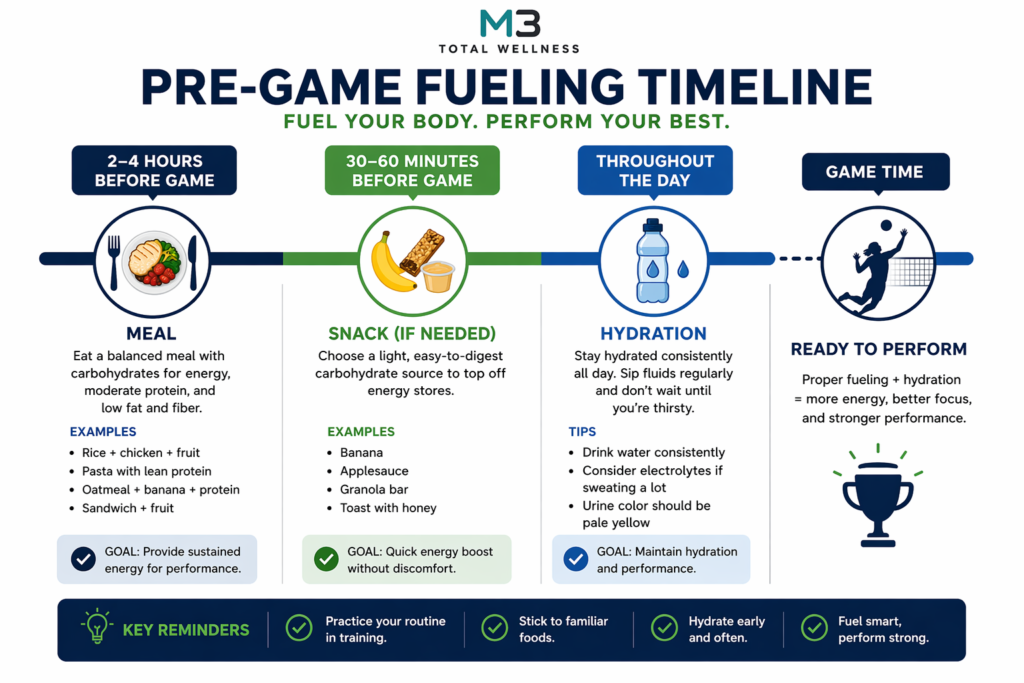
Example: Fueling Before a Volleyball Match
Volleyball requires repeated high-intensity efforts, rapid changes in direction, and sustained focus across multiple sets.
Inadequate pre-game fueling—particularly low carbohydrate intake or poor timing—can lead to decreased jump performance, slower reaction time, and early onset fatigue.
A structured approach would include:
- a carbohydrate-focused meal 2–3 hours prior to competition (e.g., rice, lean protein, fruit)
- a small, easily digestible carbohydrate source before warm-up if needed (e.g., banana or granola bar)
- consistent fluid intake throughout the day, with electrolytes considered based on sweat rate and environment
Given the intermittent high-intensity nature of volleyball, maintaining energy availability is critical for both physical output and cognitive performance.
Practitioner Insight: What I See in Real Athletes
In practice, pre-game nutrition is rarely limited by knowledge—it’s limited by execution.
Most athletes understand that they should eat before competition, but the issue is inconsistency. Meals are often mistimed, portion sizes are inadequate, or food choices are unfamiliar on game day.
From a performance standpoint, this creates variability in energy availability, which directly impacts output, reaction time, and fatigue resistance.
The goal is not to find a “perfect” pre-game meal, but to establish a consistent fueling strategy that aligns with the athlete’s schedule, sport demands, and individual tolerance.
Athletes who perform at a high level tend to treat pre-game nutrition as part of their preparation—not an afterthought.
Common Mistakes
Even when athletes understand the basics of nutrition, execution is often where things break down.
Skipping the pre-game meal often leads to low energy and early fatigue during competition.
Eating too close to game time can result in discomfort, heaviness, or reduced performance.
Trying new foods on game day increases the risk of gastrointestinal issues that can interfere with performance.
Poor hydration can lead to decreased endurance, increased fatigue, and reduced overall output.
Avoiding these common mistakes can make a noticeable difference in how you feel and perform during competition.
Action Steps
If you want to improve your performance, start with these simple steps:
- Eat a balanced meal 2–4 hours before your game
- Add a small snack if needed closer to game time
- Avoid heavy or unfamiliar foods
- Stay hydrated throughout the day
- Build a consistent pre-game routine
Small, consistent habits in your pre-game routine can have a significant impact on performance over time.
Frequently Asked Questions
Below are answers to common questions athletes have about pre-game nutrition and performance.
What is the optimal meal composition before a game?
A pre-game meal should prioritize carbohydrates to support glycogen availability, include moderate protein, and limit fat and fiber to reduce the risk of gastrointestinal discomfort.
How does timing affect performance?
Meal timing influences digestion and energy availability. Eating 2–4 hours before competition allows for adequate digestion, while a small carbohydrate source closer to competition can help maintain blood glucose levels.
What if an athlete cannot tolerate a full meal before competition?
In these cases, liquid nutrition or small, easily digestible carbohydrate sources (e.g., smoothies, fruit, sports drinks) can be used to meet energy needs without causing discomfort.
Is fasted competition ever appropriate?
For most athletes and sports, fasted competition negatively impacts performance due to reduced energy availability and impaired glycogen utilization.
Conclusion
Pre-game nutrition is one of the most controllable factors influencing athletic performance.
When athletes fuel appropriately, they are more likely to maintain energy, sustain output, and stay mentally focused throughout competition. When fueling is inconsistent or inadequate, performance often declines—regardless of training level or skill.
The goal is not to find a perfect meal, but to build a consistent pre-game routine that supports your body’s energy demands and aligns with your sport.
Within the M3 Performance Framework (Mind • Meals • Motion), nutrition is not separate from performance—it is a key part of preparation.
Athletes who treat fueling as part of their routine—not an afterthought—tend to perform more consistently over time.
If you:
- fuel properly → support energy, focus, and performance
- neglect fueling → increase the risk of fatigue and decreased output
Small, consistent improvements in your pre-game approach can lead to meaningful improvements in performance.
Take the Next Step
Optimizing pre-game nutrition requires more than general guidelines—it requires a strategy tailored to the athlete’s sport, schedule, and individual response.
At M3 Total Wellness, we work with athletes to develop structured, evidence-based fueling strategies that support performance, recovery, and long-term development.
👉 Schedule an assessment to build a personalized approach to your nutrition.
References
Thomas, D. T., Erdman, K. A., & Burke, L. M. (2016). Position of the Academy of Nutrition and Dietetics, Dietitians of Canada, and the American College of Sports Medicine: Nutrition and athletic performance. Medicine & Science in Sports & Exercise, 48(3), 543–568. https://doi.org/10.1249/MSS.0000000000000852
Kerksick, C. M., Wilborn, C. D., Roberts, M. D., et al. (2018). ISSN exercise & sports nutrition review update: Research & recommendations. Journal of the International Society of Sports Nutrition, 15(1), 38. https://doi.org/10.1186/s12970-018-0242-y
Burke, L. M., Hawley, J. A., Wong, S. H., & Jeukendrup, A. E. (2011). Carbohydrates for training and competition. Journal of Sports Sciences, 29(sup1), S17–S27. https://doi.org/10.1080/02640414.2011.585473
Jeukendrup, A. E. (2014). A step towards personalized sports nutrition: Carbohydrate intake during exercise. Sports Medicine, 44(Suppl 1), S25–S33. https://doi.org/10.1007/s40279-014-0148-z
Sawka, M. N., Burke, L. M., Eichner, E. R., et al. (2007). American College of Sports Medicine position stand: Exercise and fluid replacement. Medicine & Science in Sports & Exercise, 39(2), 377–390. https://doi.org/10.1249/mss.0b013e31802ca597