Quick Answer
Athletes should stay hydrated before, during, and after exercise by consistently replacing fluids and electrolytes lost through sweat. Most athletes benefit from drinking fluids throughout the day, consuming additional fluids before and during exercise, and replacing approximately 16–24 oz of fluid per pound lost after activity. Proper hydration supports endurance, strength, focus, recovery, thermoregulation, and overall athletic performance.
Key Takeaways
- Hydration directly impacts endurance, strength, recovery, and mental focus
- Even mild dehydration can negatively affect athletic performance
- Sweat losses vary greatly between athletes, sports, and environments
- Sodium and electrolytes help maintain fluid balance and muscle function
- Waiting until you feel thirsty may already mean performance is declining
- Heat, humidity, long training sessions, and beach sports increase fluid needs
- Hydration strategies should include both fluids and electrolytes
- Chronic underhydration can reduce training quality and recovery over time
- Proper hydration may help athletes maintain energy, concentration, and power output later into training and competition
Introduction
Many athletes assume fatigue during training is simply caused by poor conditioning or lack of effort.
In reality, dehydration is often one of the biggest hidden performance killers.
Even mild dehydration can negatively affect:
- endurance
- focus
- reaction time
- recovery
- power output
- decision-making
- overall training quality
The problem is that many athletes do not realize they are underhydrated until performance already starts declining.
Athletes frequently:
- forget to drink consistently throughout the day
- rely only on thirst
- underestimate sweat losses
- avoid electrolytes
- drink very little before training
- consume large amounts of caffeine while neglecting fluids
Then they experience:
- headaches
- cramping
- fatigue
- dizziness
- reduced endurance
- poor recovery
- decreased concentration
- reduced performance late in games or training sessions
Hydration is not just about avoiding thirst. It is a foundational part of sports performance nutrition.
Within the M3 Performance Framework (Mind • Meals • Motion):
Mind
Hydration requires awareness, planning, and consistency.
Meals
Fluids, electrolytes, and hydrating foods all contribute to hydration status.
Motion
Exercise increases sweat losses and fluid demands.
Even the best training program can be limited by poor hydration habits.
Athletes often spend significant time optimizing workouts, supplements, and meal plans while completely overlooking hydration. However, hydration affects nearly every major system involved in athletic performance.
In many cases, improving hydration is one of the fastest ways athletes can improve energy levels, training quality, and recovery.
Table of Contents
Why Is Hydration Important for Athletes?
Water plays a role in nearly every major system in the body.
Hydration supports:
- body temperature regulation
- nutrient transport
- cardiovascular function
- joint lubrication
- muscle contractions
- cognitive performance
- digestion
- recovery processes
- circulation
- sweat production
When athletes become dehydrated, the body becomes less efficient.
Research shows that losing as little as 1–2% of body weight from dehydration can negatively affect:
- endurance
- sprint performance
- strength
- reaction time
- concentration
- mood
- exercise tolerance
As dehydration worsens:
- heart rate increases
- perceived effort rises
- body temperature increases
- fatigue develops faster
- exercise feels harder
- recovery becomes more difficult
This becomes especially important during:
- long training sessions
- tournament play
- outdoor sports
- hot or humid conditions
- two-a-day practices
- endurance events
Hydration is one of the fastest and simplest ways athletes can improve performance and recovery.
Many athletes focus heavily on supplements or advanced recovery strategies while overlooking basic hydration habits that may have a larger impact on daily performance.
For example, an athlete who consistently begins practice already dehydrated may struggle with:
- lower energy levels
- reduced concentration
- earlier fatigue
- poor recovery between sessions
- lower overall training quality
Over time, these small performance reductions can accumulate and negatively affect adaptation, consistency, and athletic progress.
The M3 Hydration Framework
Mind
Hydration starts with awareness and preparation.
Many athletes wait until they feel thirsty to drink fluids. However, thirst often occurs after dehydration has already started.
Strong hydration habits include:
- planning ahead
- carrying fluids consistently
- monitoring sweat losses
- adjusting intake based on weather and training load
- paying attention to urine color and hydration patterns
Hydration also requires consistency.
Many athletes drink very little during the workday or school day and then attempt to rapidly hydrate immediately before exercise. Unfortunately, hydration does not work that way.
The body performs best when hydration is maintained consistently throughout the day.
Meals
Hydration is not just about water.
Athletes also obtain fluids from:
- fruits
- vegetables
- smoothies
- soups
- milk
- sports drinks
- yogurt
- high-water foods
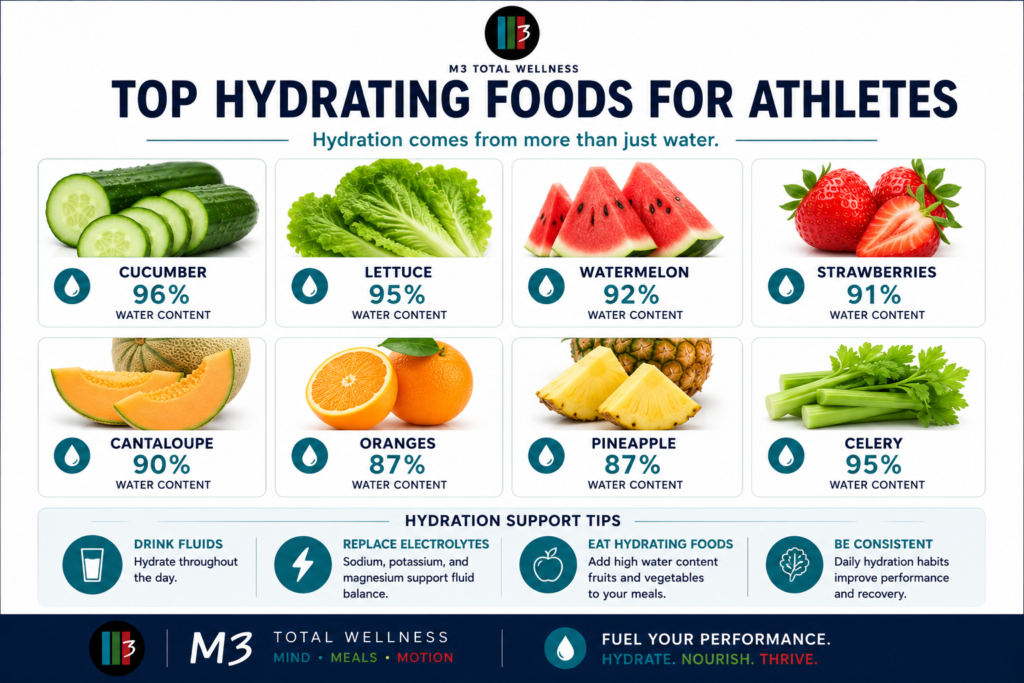
Foods such as:
- watermelon
- oranges
- strawberries
- cucumbers
- soups
- smoothies can meaningfully contribute to hydration status.
Electrolytes and sodium also play an important role in maintaining hydration.
Many athletes mistakenly believe sodium should always be avoided. However, sodium losses through sweat can become substantial during intense or prolonged exercise.
This is especially true for:
- heavy sweaters
- athletes training in the heat
- beach athletes
- endurance athletes
- athletes completing multiple sessions per day
Motion
Movement increases sweat losses.
Factors that increase hydration needs include:
- higher exercise intensity
- longer training duration
- heat
- humidity
- direct sun exposure
- heavy sweat rates
- protective equipment
- indoor environments without airflow
Athletes participating in beach volleyball, football, CrossFit, endurance sports, or tournament play often require more aggressive hydration strategies.
Hydration is not random. It should be part of a performance plan.
Just like athletes prepare meals, training sessions, and recovery strategies, hydration should also be planned intentionally.
The Science of Hydration and Athletic Performance
What Happens When You Sweat?
Sweating is the body’s natural cooling mechanism.
As body temperature rises during exercise, sweat evaporates from the skin to help dissipate heat.
Sweat contains:
- water
- sodium
- chloride
- potassium
- other electrolytes
If these losses are not replaced, dehydration develops.
Sweat rates vary greatly between athletes.
Some athletes may lose less than 0.5 liters of sweat per hour. Others may lose more than 2 liters per hour in hot conditions.
This explains why hydration strategies should be individualized rather than based on generic recommendations alone.
How Dehydration Affects Performance
As dehydration increases:
Blood volume decreases
The heart must work harder to circulate oxygen and nutrients.
Core temperature rises
The body becomes less efficient at cooling itself.
Perceived effort increases
Exercise feels harder, even at the same intensity.
Mental focus declines
Decision-making, concentration, and reaction time may worsen.
Power output may decline
Athletes may notice reduced explosiveness, speed, and endurance.
This combination can significantly impair athletic performance and recovery.
In sports that require rapid decision-making and coordination, dehydration may also impair cognitive performance.
Athletes may experience:
- slower reactions
- reduced concentration
- poorer tactical decisions
- reduced motor control
These effects become increasingly important during:
- prolonged outdoor activity
- long matches
- tournament days
- late-game situations
Why Sodium Matters
Sodium is the primary electrolyte lost in sweat.
Sodium helps:
- maintain fluid balance
- support nerve signaling
- assist muscle contractions
- improve fluid retention
- support normal hydration status
Athletes who only drink plain water during long or intense exercise may dilute sodium levels too much.
This can contribute to:
- cramping
- headaches
- fatigue
- nausea
- declining performance
For many athletes, hydration requires both fluids and electrolytes.
This does not mean every athlete needs sports drinks for every workout.
However, electrolyte replacement becomes increasingly important during:
- tournament competition
- long sessions
- hot conditions
- high sweat losses
- multiple practices
How Sweat Loss Affects Athletes
Not all athletes sweat equally.
Sweat rate depends on:
- genetics
- body size
- training intensity
- heat exposure
- humidity
- acclimatization
- clothing and equipment
Some athletes are also naturally “salty sweaters,” meaning they lose more sodium in sweat.
Signs of high sodium losses may include:
- visible salt stains on clothing
- sweat stinging the eyes
- frequent cramping
- feeling depleted after long sessions
Athletes with higher sweat and sodium losses may require more aggressive hydration and electrolyte strategies.
This is one reason generic hydration recommendations often fail.
Two athletes training side by side may have dramatically different hydration needs.
How Much Water Should Athletes Drink?
The American College of Sports Medicine recommends individualized hydration strategies based on sweat rate, exercise duration, and environmental conditions.
Hydration needs vary based on:
- body size
- sweat rate
- climate
- exercise intensity
- exercise duration
- sport
There is no perfect universal number.
However, these guidelines provide a useful starting point.
Before Exercise
Aim to begin exercise well hydrated.
General recommendations:
- Drink 16–20 oz of fluid 2–3 hours before exercise
- Drink another 8–10 oz about 15–20 minutes before activity if needed
Athletes who consistently begin exercise dehydrated may experience earlier fatigue and reduced performance.
Hydration works best when paired with proper pre-workout nutrition for athletes, especially before intense or prolonged training sessions.
During Exercise
The goal is to reduce excessive fluid losses.
General recommendations:
- Drink approximately 7–10 oz every 10–20 minutes
Athletes with higher sweat rates or longer sessions may require more.
For sessions longer than 60–90 minutes, athletes may also benefit from:
- sodium replacement
- carbohydrate-containing sports drinks
- electrolyte supplementation
After Exercise
Post-workout hydration is essential for recovery.
General guideline: 👉 Replace approximately 16–24 oz of fluid per pound lost during exercise.
Tracking body weight before and after training sessions can help personalize hydration needs.
Athletes who fail to rehydrate adequately may begin the next training session already dehydrated.
Post-workout hydration is essential for recovery and works best alongside proper post-workout recovery nutrition.
How to Estimate Your Sweat Rate
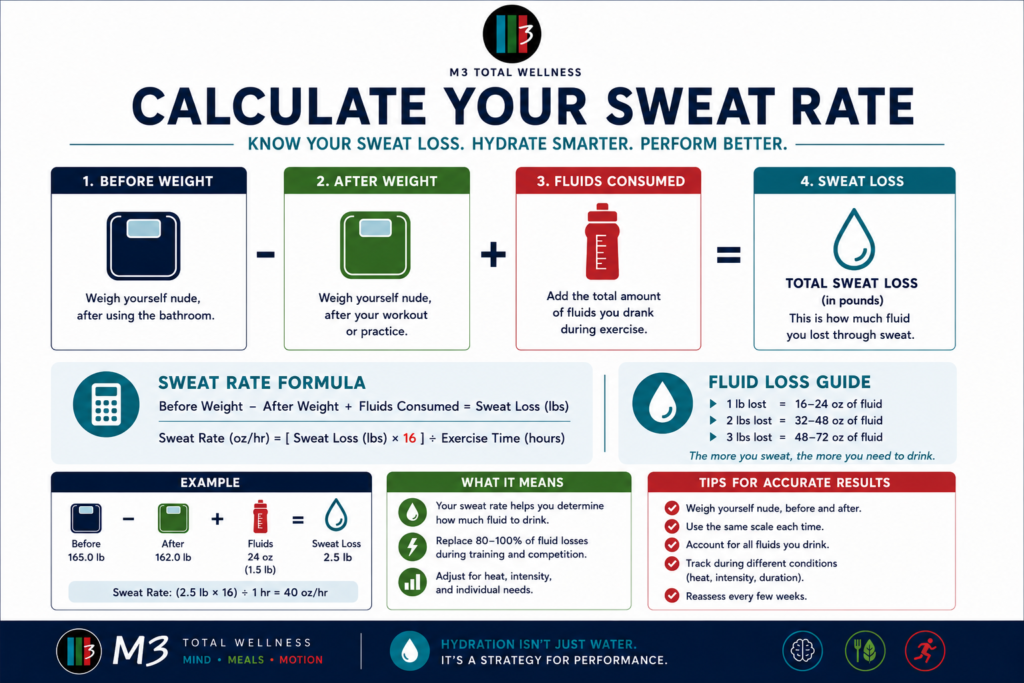
A simple way to estimate sweat losses:
- Weigh yourself before exercise
- Track how much fluid you drink during exercise
- Weigh yourself again afterward
- Every pound lost represents approximately 16–24 oz of fluid deficit
This can help athletes build a more individualized hydration strategy.
For example:
If an athlete loses 2 pounds during practice, they may need approximately:
- 32–48 oz of fluid replacement afterward
This method is especially useful for athletes who:
- train in the heat
- sweat heavily
- compete in tournaments
- struggle with cramping or fatigue
Do Athletes Need Electrolytes?
Research published in the Journal of the International Society of Sports Nutrition continues to highlight the importance of hydration and electrolyte replacement for athletic performance.
When Electrolytes Become More Important
Electrolytes are especially beneficial during:
- workouts lasting longer than 60 minutes
- hot or humid conditions
- high sweat rates
- tournament days
- multiple training sessions per day
- endurance training
- beach sports
Common Electrolyte Sources
Athletes may obtain electrolytes from:
- sports drinks
- electrolyte powders
- salty foods
- fruits and vegetables
- sodium-containing snacks
Not every workout requires sports drinks or supplements.
For shorter or lower-intensity sessions, water is often sufficient.
However, many athletes underestimate how much sodium they lose during longer or hotter sessions.
Electrolyte needs also vary greatly.
Athletes who train indoors for shorter durations may have very different needs than athletes training outdoors for several hours in direct heat.
Signs and Symptoms of Dehydration
Common signs include:
- dark urine
- fatigue
- headaches
- dizziness
- muscle cramps
- dry mouth
- elevated heart rate
- decreased endurance
- poor concentration
- irritability
One simple way to monitor hydration is urine color.
Pale yellow
Generally indicates good hydration.
Dark yellow
May indicate dehydration.
No single sign is perfect, but trends can help athletes monitor hydration status.
Athletes should also recognize that thirst alone is not always a reliable hydration marker.
During intense exercise, athletes may become significantly dehydrated before strong thirst signals develop.
Common Hydration Mistakes Athletes Make
Many athletes unintentionally sabotage performance with poor hydration habits.
Common mistakes include:
- waiting until thirsty to drink
- only drinking water during long sessions
- avoiding sodium completely
- drinking very little throughout the workday
- underestimating sweat losses
- failing to rehydrate after training
- relying heavily on caffeine while neglecting fluids
- consuming large amounts of alcohol after competition
Small hydration mistakes can accumulate over time and negatively affect performance and recovery.
One of the most common patterns is athletes attempting to “catch up” on hydration late at night after spending the entire day underhydrated.
Consistent hydration throughout the day is generally more effective than consuming very large amounts of fluid all at once.
Hydration Strategies for Training and Competition
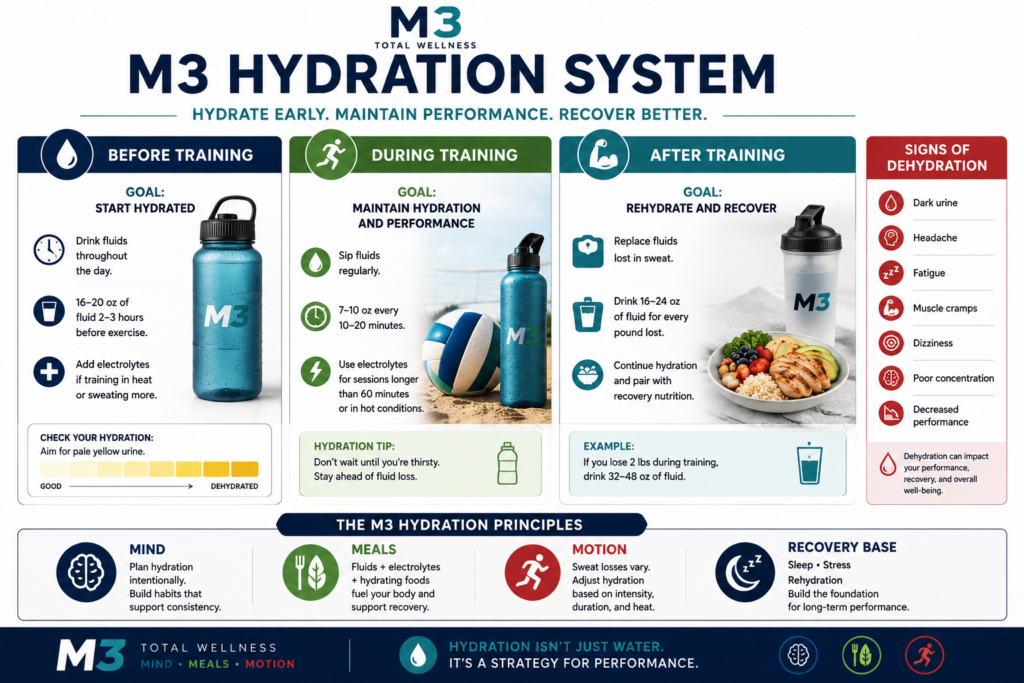
Before Training
- Begin the day hydrated
- Drink fluids consistently throughout the day
- Include hydrating foods
- Monitor urine color
- Consider electrolytes in hot conditions
During Training
- Sip fluids regularly
- Avoid waiting until extremely thirsty
- Use electrolytes during longer or hotter sessions
- Adjust intake based on sweat rate and environment
After Training
- Replace fluid losses
- Include sodium-containing foods or drinks
- Continue hydrating over the next several hours
- Pair hydration with recovery nutrition
Consistency matters more than perfection.
Athletes do not need a perfect hydration strategy to see benefits. Small improvements often lead to meaningful performance gains.
Heat, Humidity, and Athletic Performance
Heat and humidity dramatically increase hydration demands.
When environmental temperatures rise:
- sweat rates increase
- fluid losses rise
- cooling becomes more difficult
- fatigue develops faster
Humidity can make this even more challenging because sweat evaporates less efficiently.
This means athletes may sweat heavily without cooling effectively.
Sports commonly affected by heat stress include:
- beach volleyball
- football
- soccer
- tennis
- track and field
- endurance sports
Athletes training in hot climates should prioritize:
- earlier hydration
- electrolyte replacement
- cooling strategies
- monitoring sweat losses
Acclimatization to heat can help improve sweat response over time, but hydration remains essential.
Can Athletes Drink Too Much Water?
Yes.
Overhydration can occur when athletes consume excessive water without replacing sodium.
This can dilute blood sodium levels and contribute to a dangerous condition called hyponatremia.
While less common than dehydration, it may occur during:
- endurance events
- prolonged exercise
- excessive water intake
- competitions in the heat
Symptoms may include:
- nausea
- confusion
- headaches
- swelling
- severe fatigue
Balance matters.
Hydration should focus on replacing both fluids and electrolytes appropriately.
Sport-Specific Example: Beach Volleyball
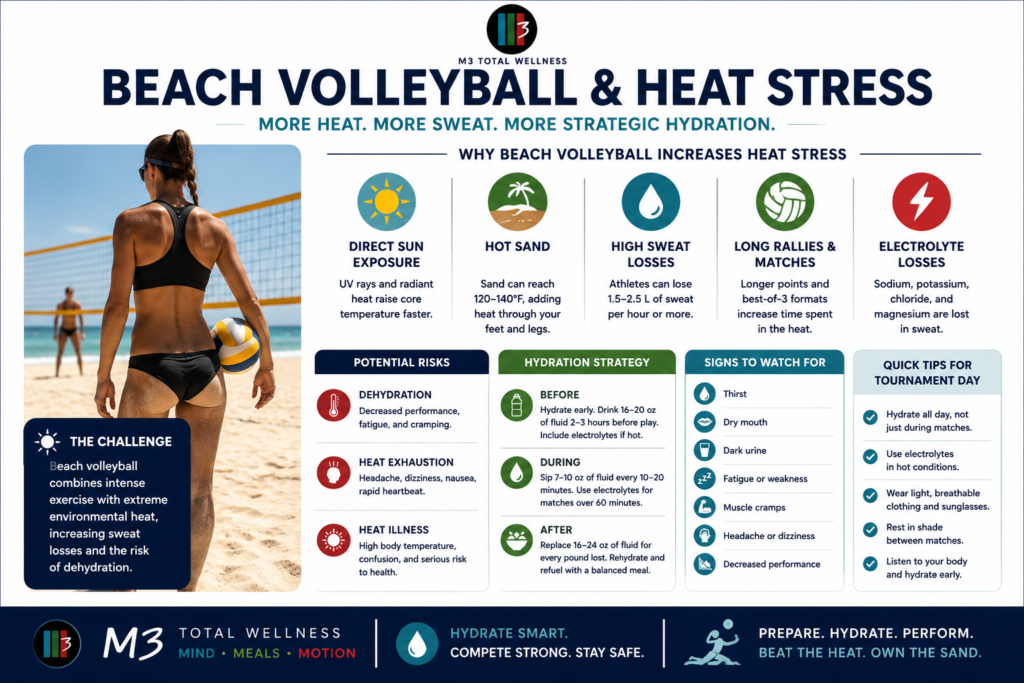
Beach volleyball presents unique hydration challenges.
Athletes are often:
- exposed to direct sunlight
- competing in hot sand
- sweating heavily
- playing multiple matches
- spending hours outdoors
One of the most common mistakes I see is athletes only drinking plain water.
A better strategy often includes:
- water plus electrolytes
- regular sipping between rallies
- hydration before arriving at the beach
- post-match rehydration with fluids and sodium
Many athletes underestimate hydration needs because volleyball includes frequent breaks between rallies. However, cumulative sweat losses over several hours in the sun can still become significant.
Beach athletes may also underestimate how much energy and fluid is lost simply from prolonged heat exposure.
Proper hydration can help improve:
- endurance
- jump performance
- concentration
- recovery between matches
- consistency late into tournaments
Practitioner Insight:
One of the most common patterns I see in athletes is chronic underhydration.
Many athletes:
- drink very little throughout the work or school day
- rely entirely on thirst
- avoid sodium unnecessarily
- only focus on hydration during exercise
Then they report:
- fatigue
- inconsistent energy
- headaches
- poor recovery
- declining performance late in sessions
- cramping during practices or competition
Often, improving hydration habits leads to noticeable performance improvements relatively quickly.
Athletes do not need perfect hydration strategies to benefit. Small improvements can make a meaningful difference.
In many cases, athletes feel noticeably better simply by:
- drinking fluids more consistently
- adding electrolytes strategically
- beginning workouts hydrated
- rehydrating properly after training
Hydration is one of the lowest-hanging fruit in sports nutrition.
Action Steps for Athletes
1. Drink fluids consistently throughout the day
Do not rely only on workouts for hydration.
2. Start exercise hydrated
Hydration before training matters.
3. Sip fluids regularly during activity
Avoid waiting until dehydration becomes severe.
4. Use electrolytes strategically
Especially during:
- long sessions
- tournaments
- hot environments
- heavy sweating
5. Monitor urine color
This can provide a simple daily hydration check.
6. Personalize your hydration strategy
Sweat rates vary significantly between athletes.
Hydration needs are highly individual.
7. Rehydrate after training
Recovery hydration matters just as much as hydration during exercise.
Frequently Asked Questions
How much water should athletes drink daily?
Fluid needs vary depending on body size, activity level, sweat rate, climate, and training duration. Most athletes benefit from consistent fluid intake throughout the day rather than relying on large amounts all at once.
Are electrolytes necessary for athletes?
Electrolytes become more important during longer workouts, hot environments, heavy sweating, and tournament play. Sodium is especially important for maintaining fluid balance and performance.
Is water enough during exercise?
For short or low-intensity sessions, water is often sufficient. During longer, hotter, or more intense sessions, many athletes benefit from electrolyte replacement as well.
What are signs of dehydration in athletes?
Common signs include:
- dark urine
- fatigue
- headaches
- dizziness
- muscle cramps
- poor performance
Can athletes drink too much water?
Yes. Excessive water intake without adequate sodium replacement can dilute blood sodium levels and negatively affect performance and health.
Conclusion
Hydration is one of the most powerful — and most overlooked — aspects of athletic performance.
Even mild dehydration can negatively affect:
- endurance
- strength
- focus
- recovery
- training quality
- concentration
- consistency
Within the M3 Performance Framework, hydration supports both fueling and performance.
Athletes do not need complicated hydration protocols to improve performance. Consistent daily habits often make the biggest difference.
Small improvements in hydration can lead to meaningful improvements in:
- energy
- endurance
- concentration
- recovery
- overall athletic performance
Hydration should not be viewed as an afterthought.
It is part of training.
Athletes who consistently hydrate well often recover better, maintain performance longer, and tolerate demanding training more effectively.
Take the Next Step
If you want help building a personalized fueling and hydration strategy for your sport, training schedule, and goals, explore the performance nutrition coaching services available through M3 Total Wellness.
At M3 Total Wellness, we help athletes build simple, sustainable nutrition strategies that support energy, recovery, and long-term performance.
👉 Book an assessment to get a personalized plan based on your sport, training, and goals.
References
Baker, L. B., et al. (2023). National Athletic Trainers’ Association position statement: Fluid replacement for athletes. Journal of Athletic Training, 58(1), 6–33.
Grgic, J., et al. (2022). International Society of Sports Nutrition position stand: Hydration and exercise performance. Journal of the International Society of Sports Nutrition, 19(1), 1–34.
McDermott, B. P., et al. (2021). National Athletic Trainers’ Association position statement: Fluid replacement for the physically active. Journal of Athletic Training, 56(4), 356–372.
Maughan, R. J., & Shirreffs, S. M. (2021). Hydration and performance during sport and exercise. Current Opinion in Physiology, 22, 100–105.
Wittbrodt, M. T., & Millard-Stafford, M. (2022). Dehydration impacts on cognitive and physical performance in athletes. Nutrients, 14(4), 876.