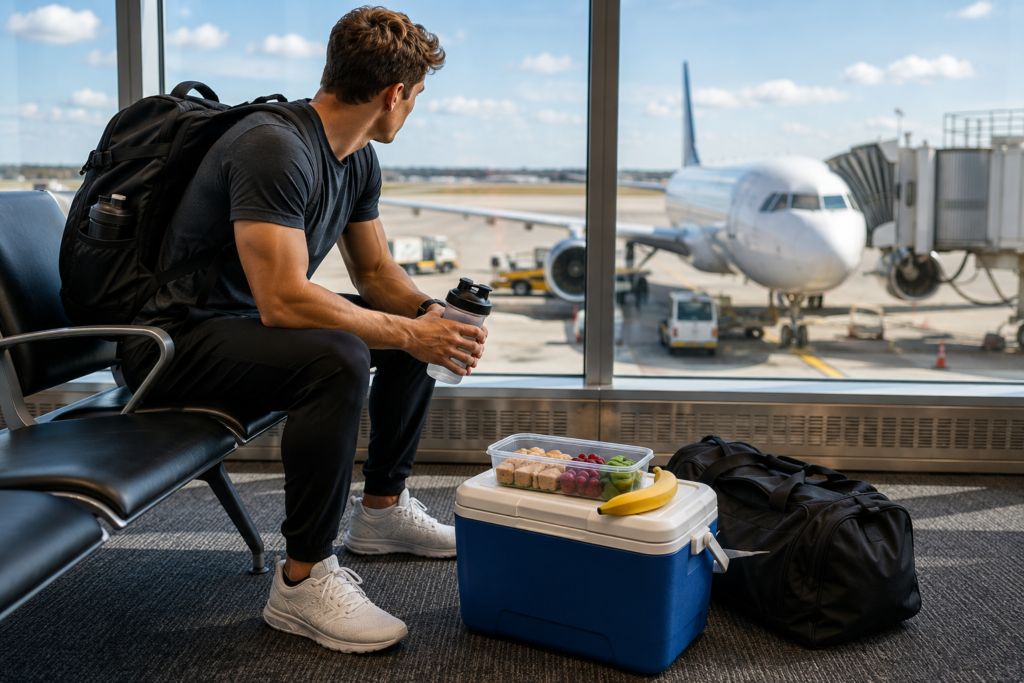
Quick Answer
Travel can make it more difficult for athletes to eat well, stay hydrated, and maintain consistent energy. Long drives, flights, delayed meals, limited food choices, and disrupted routines all increase the risk of underfueling. The best travel nutrition strategy is to plan ahead by packing portable snacks, staying hydrated, choosing balanced meals whenever possible, and sticking with familiar foods before competition. Whether you’re driving to a weekend tournament or flying across the country for a national championship, proper planning can help you arrive ready to perform.
Key Takeaways
- Travel changes your routine, but your nutrition needs remain the same.
- Planning ahead is the single most effective way to stay fueled while traveling.
- Portable snacks help prevent long gaps without eating.
- Hydration is especially important during flights and long travel days.
- Airports, gas stations, and restaurants can all provide nutritious options when you know what to look for.
- Familiar foods are usually the safest choice before competition.
- Good travel nutrition doesn’t have to be perfect—it needs to be consistent.
Introduction
Travel is exciting.
It’s also one of the easiest times for athletes to fall behind on nutrition.
Whether you’re driving several hours to a volleyball tournament, flying to a national swim meet, traveling with your soccer team for a weekend showcase, or heading to a CrossFit competition, being away from home introduces challenges that most athletes don’t face during their normal training routine.
Your schedule changes.
Meal times become unpredictable.
Food options become limited.
Sometimes you’re eating in airports.
Sometimes you’re stopping at gas stations.
Sometimes you’re trying to find dinner in an unfamiliar city after competing all day.
Travel nutrition for athletes can be challenging, whether you’re driving to a local tournament, flying across the country, or competing internationally.
For many athletes, travel quickly becomes a series of compromises.
Breakfast gets skipped because the team bus leaves early.
Lunch becomes a bag of chips from a convenience store.
Dinner doesn’t happen until late because the tournament ran behind schedule.
Unfortunately, your body doesn’t know—or care—that you’re traveling.
Your muscles still need carbohydrates to provide energy.
Your body still needs protein to repair and recover.
You still lose fluids through sweat and everyday activities.
And if you’re traveling to compete, arriving underfueled or dehydrated can affect your performance before the competition even begins.
I’ve experienced this firsthand while traveling for beach volleyball tournaments.
When you’re focused on finding your court assignment, checking match times, unloading equipment, and getting mentally prepared to compete, nutrition can easily become an afterthought. I’ve seen athletes arrive with nothing more than a bottle of water and a protein bar, assuming they’d “figure it out later.” By the afternoon, they’re exhausted, hungry, and relying on concession stand food because they didn’t plan ahead.
The athletes who consistently perform well while traveling usually aren’t following complicated meal plans.
They’re simply prepared.
Within the M3 Performance Framework, travel nutrition is built around three simple principles:
Mind
Preparation starts before you leave home. Planning meals, packing snacks, researching restaurants, and anticipating travel delays reduce stress and help you make better nutrition decisions on the road.
Meals
Your body still requires carbohydrates for energy, protein for recovery, healthy fats for overall nutrition, and fluids to maintain hydration. Travel doesn’t reduce your nutrition needs—it often makes meeting them more important.
Motion
Whether you’re traveling for practice, training camp, or competition, your body is still being asked to perform. The better you fuel during travel, the more prepared you’ll be when it’s time to train or compete.
The good news is that eating well while traveling doesn’t require perfection.
It requires preparation.
In this guide, you’ll learn practical, evidence-based strategies to help you stay fueled whether you’re traveling by car, bus, or airplane, eating in airports or restaurants, staying in hotels, or competing away from home.
Table of Contents
Why Travel Disrupts Nutrition
At home, most athletes follow a fairly predictable routine.
You know when you’ll wake up.
You know where your next meal is coming from.
Your kitchen is stocked with foods you enjoy, and your training schedule is usually consistent.
Travel changes almost all of that.
Suddenly, you’re waking up in a hotel room instead of your own bed. You’re eating breakfast at an airport instead of your kitchen table. Lunch might happen in the car between destinations, and dinner could depend on whatever restaurant happens to be open after a long day of travel.
These changes may seem small, but together they can have a meaningful impact on your nutrition.
Travel commonly leads to:
- Irregular meal timing
- Long gaps without eating
- Limited access to balanced meals
- Greater reliance on convenience foods
- Reduced water intake
- Poor sleep
- Increased mental and physical fatigue
For athletes preparing to compete, these disruptions can contribute to lower energy levels, slower recovery, and reduced performance.
One of the biggest mistakes athletes make is assuming they can “make up for it later.”
Unfortunately, nutrition doesn’t work that way.
Skipping breakfast because your flight leaves early doesn’t magically disappear once you arrive at your destination. Waiting six or seven hours to eat because you’re on the road often leaves athletes overly hungry, making it more difficult to make balanced food choices later in the day.
Travel also tends to create what I call “accidental underfueling.”
Very few athletes intentionally eat too little.
Instead, they simply get busy.
A delayed flight becomes a missed meal.
A long bus ride turns into several hours without food.
A tournament runs behind schedule, and suddenly dinner is much later than expected.
Before they realize it, they’ve gone most of the day without meeting their energy needs.
This is especially important for athletes participating in multi-day competitions or training camps, where one day of inadequate fueling can affect recovery and performance over the following days.
The solution isn’t perfection.
It’s preparation.
The athletes who consistently eat well while traveling aren’t necessarily more disciplined.
They’ve simply planned for the challenges before they happen.
The M3 Travel Nutrition Framework
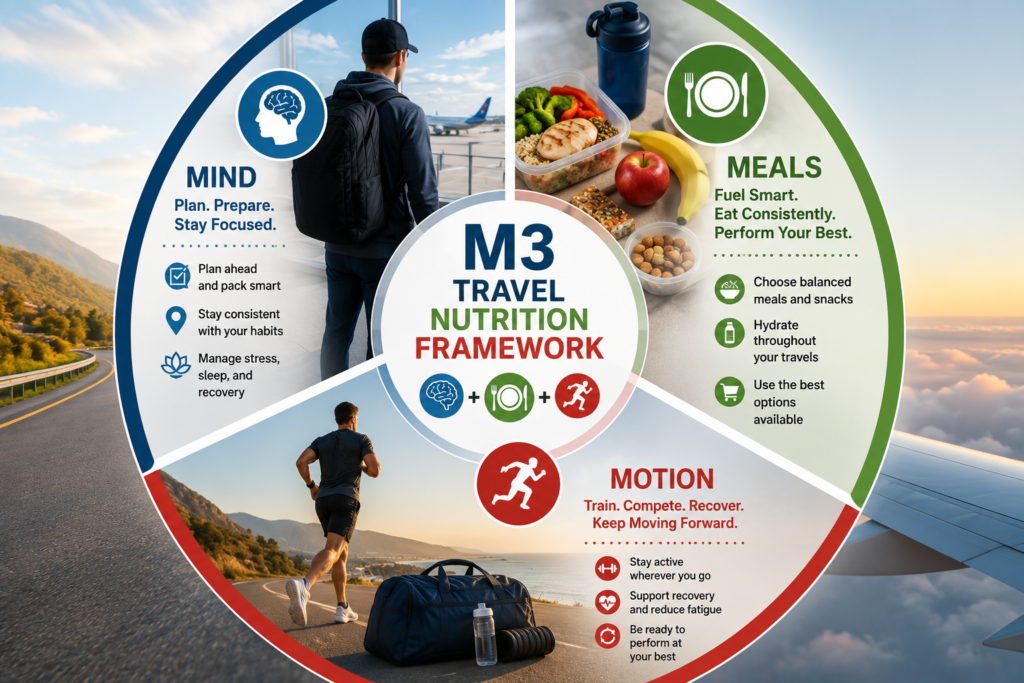
Successful travel nutrition isn’t about finding the “perfect” airport meal or avoiding every fast-food restaurant.
It’s about creating a flexible plan that allows you to fuel consistently, regardless of where your journey takes you.
That’s where the M3 Travel Nutrition Framework comes in.
Mind: Plan Before You Pack
Good travel nutrition starts several days before you leave—not after you’ve already boarded your flight or started your road trip.
Ask yourself:
- How long will I be traveling?
- Will I have access to food during the trip?
- Should I bring a cooler?
- What snacks can I pack?
- Where will I eat after arriving?
- Will I compete shortly after traveling?
Thinking through these questions ahead of time helps prevent rushed decisions when healthy options are limited.
Meals: Fuel Consistently
Travel often leads athletes to eat fewer meals than usual.
Instead of waiting until you’re extremely hungry, look for opportunities to eat consistently throughout the day.
Your travel nutrition plan should include:
- Balanced meals whenever available
- Portable carbohydrate-rich snacks
- Quality protein sources
- Fruits and vegetables when possible
- Plenty of fluids
Consistency is far more important than perfection.
Motion: Prepare Your Body to Perform
Travel itself places additional stress on your body.
Long periods of sitting, disrupted sleep, unfamiliar environments, and competition schedules all influence how you feel when it’s time to perform.
Your goal isn’t simply to arrive at your destination.
It’s to arrive feeling energized, hydrated, and ready to compete.
When Mind, Meals, and Motion work together, travel becomes another part of your performance strategy—not another obstacle to overcome.
Planning Ahead Before You Leave
One of the biggest differences I notice between athletes who travel well and those who struggle isn’t their nutrition knowledge.
It’s their preparation.
Successful travel nutrition rarely happens by accident.
The athletes who stay energized during long travel days usually aren’t making better decisions in the moment—they’ve already made those decisions before leaving home.
Whether you’re traveling for a one-day tournament, a weekend showcase, or a week-long training camp, taking just 15–20 minutes to plan ahead can dramatically improve your nutrition and reduce unnecessary stress.
Ask Yourself These Questions Before You Travel
Before packing your bags, take a few minutes to think through your trip.
Questions I encourage athletes to ask include:
- How long will I be traveling?
- Will I be driving, flying, or riding a team bus?
- What time will I eat breakfast?
- How many meals will I need during travel?
- Will food be available where I’m going?
- Does my hotel have a refrigerator or microwave?
- Will I compete shortly after arriving?
- Can I stop at a grocery store after I get there?
Answering these questions ahead of time helps you avoid relying on luck—or whatever food happens to be nearby.
Build a Simple Travel Nutrition Plan
You don’t need an elaborate meal plan.
Instead, think about each part of your trip.
For example:
Before leaving home
- Eat a balanced meal if time allows.
- Fill your reusable water bottle.
- Pack your snacks and meals.
During travel
- Plan when you’ll eat your next snack or meal.
- Continue drinking fluids throughout the trip.
After arriving
- Find your hotel.
- Locate nearby grocery stores or restaurants.
- Rest, rehydrate, and prepare for the next day if competition is coming.
Breaking your trip into smaller steps makes travel nutrition much more manageable.
Expect the Unexpected
Even the best travel plans don’t always go perfectly.
Flights get delayed.
Traffic happens.
Tournaments run behind schedule.
Restaurants close earlier than expected.
Instead of assuming everything will go according to plan, prepare for small disruptions.
Packing a few extra snacks often makes the difference between staying fueled and going several hours without eating.
I’d rather an athlete return home with leftover snacks than wish they had packed more.
For more information on what snacks to bring, read Best Snacks for Athletes.
Travel Nutrition for Road Trips
Road trips offer athletes one major advantage over flying:
You have much more control over your food.
If you’re driving to competition, you can bring a cooler, pack meals, stop at grocery stores, and choose where you eat.
That flexibility makes it much easier to maintain your normal nutrition routine.
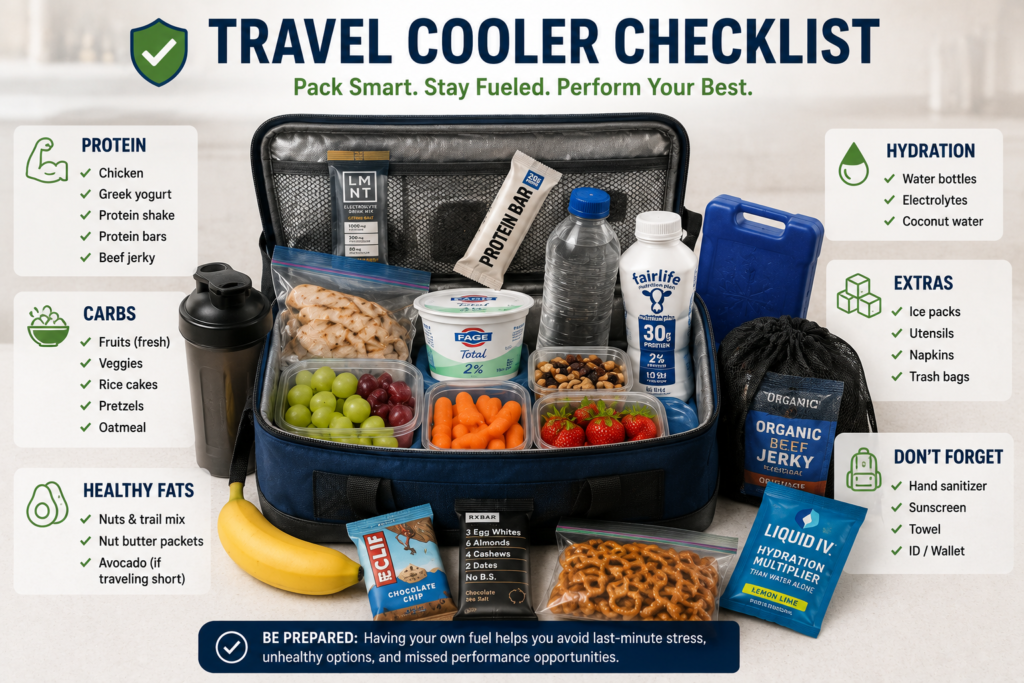
Pack a Cooler
One of the best investments for athletes who travel regularly is a quality insulated cooler.
Instead of relying entirely on fast food or convenience stores, you can bring meals and snacks from home that you already know work well for your body.
Some great cooler options include:
- Turkey or chicken sandwiches
- Pasta salad with grilled chicken
- Greek yogurt
- String cheese
- Hard-boiled eggs
- Fresh fruit
- Cut vegetables
- Hummus
- Chocolate milk
- Ready-to-drink protein shakes
- Bottled water
- Sports drinks when appropriate
Using ice packs helps keep foods safe for several hours.
For more snack ideas, read Healthy Snacks for Athletes.
Plan Your Stops
Don’t wait until everyone in the car is starving before deciding where to eat.
Instead, identify meal stops before your trip begins.
This allows you to choose restaurants with balanced options rather than pulling into the first fast-food restaurant you see because everyone is hungry.
A little planning can prevent a lot of rushed decisions.
Don’t Forget to Move
Nutrition isn’t the only thing affected by long drives.
Sitting for several hours can leave athletes feeling stiff before training or competition.
If you’re driving a long distance, try to stop every couple of hours to:
- walk for a few minutes
- stretch
- refill your water bottle
- use the restroom
A short break can help you feel more refreshed when you get back in the car.
Flying to Competition
Flying introduces a different set of challenges than driving.
Once you pass through airport security, you have less control over your food choices, and delays can quickly turn a two-hour travel day into an eight-hour one.
That’s why planning becomes even more important.
Eat Before You Leave
Whenever possible, don’t begin your travel day on an empty stomach.
A balanced breakfast or meal before heading to the airport gives your body a steady source of energy while reducing the temptation to grab the first fast-food option you see after arriving.
If your flight leaves very early, even a smaller meal or snack is usually better than skipping breakfast entirely.
Pack TSA-Friendly Snacks
Many athletes assume they can’t bring food through airport security.
Fortunately, plenty of portable snacks travel well.
Some of my favorites include:
- Bananas
- Apples
- Oranges
- Trail mix
- Mixed nuts
- Pretzels
- Dry cereal
- Graham crackers
- Fig bars
- Protein bars
- Granola bars
- Peanut butter packets (within TSA liquid limits)
- Beef or turkey jerky
- Electrolyte drink packets
Having your own snacks means you won’t be forced to buy expensive airport food every time you’re hungry.
Stay Flexible
Travel rarely goes exactly as planned.
Flights may be delayed.
Connections may be missed.
Restaurants may be crowded.
Rather than becoming frustrated, think of your packed snacks as a backup plan.
They’re there to bridge the gap until you can eat your next balanced meal.
What to Pack for Travel
Packing for competition involves much more than remembering your uniform or equipment.
Your nutrition deserves the same attention.
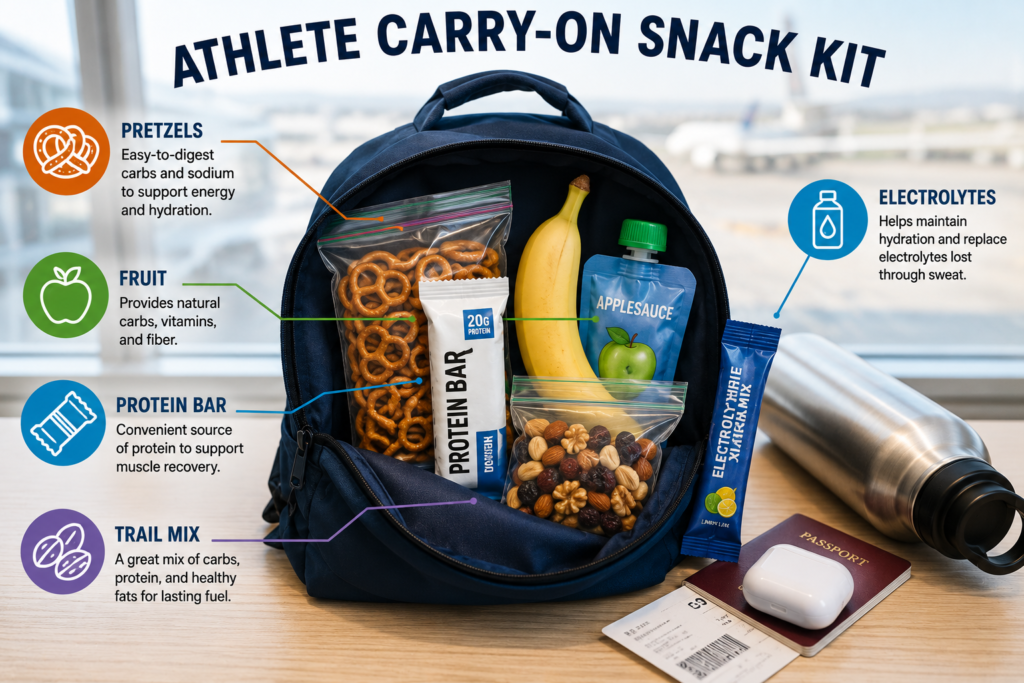
One simple checklist can help ensure you’re prepared for almost any travel situation.
Foods to Pack
Carbohydrate-Rich Snacks
- Bananas
- Apples
- Grapes
- Pretzels
- Graham crackers
- Dry cereal
- Fig bars
- Applesauce pouches
- Whole-grain crackers
Protein Sources
- Ready-to-drink protein shakes
- Greek yogurt (when refrigeration is available)
- String cheese
- Beef or turkey jerky
- Tuna packets (for longer trips)
- Mixed nuts
- Roasted edamame
Easy Meals
- Turkey sandwich
- Chicken wrap
- Rice bowl
- Pasta salad with grilled chicken
- Overnight oats
- Peanut butter and banana sandwich
Hydration Essentials
- Reusable water bottle
- Electrolyte drink packets
- Sports drink (when appropriate)
Helpful Extras
- Ice packs
- Reusable utensils
- Napkins
- Hand sanitizer
- Small cooler or insulated lunch bag
The goal isn’t to pack everything.
It’s to pack enough so that missing one meal or encountering a delay doesn’t leave you without options.
Airport Nutrition Guide
Airport food has improved considerably over the years.
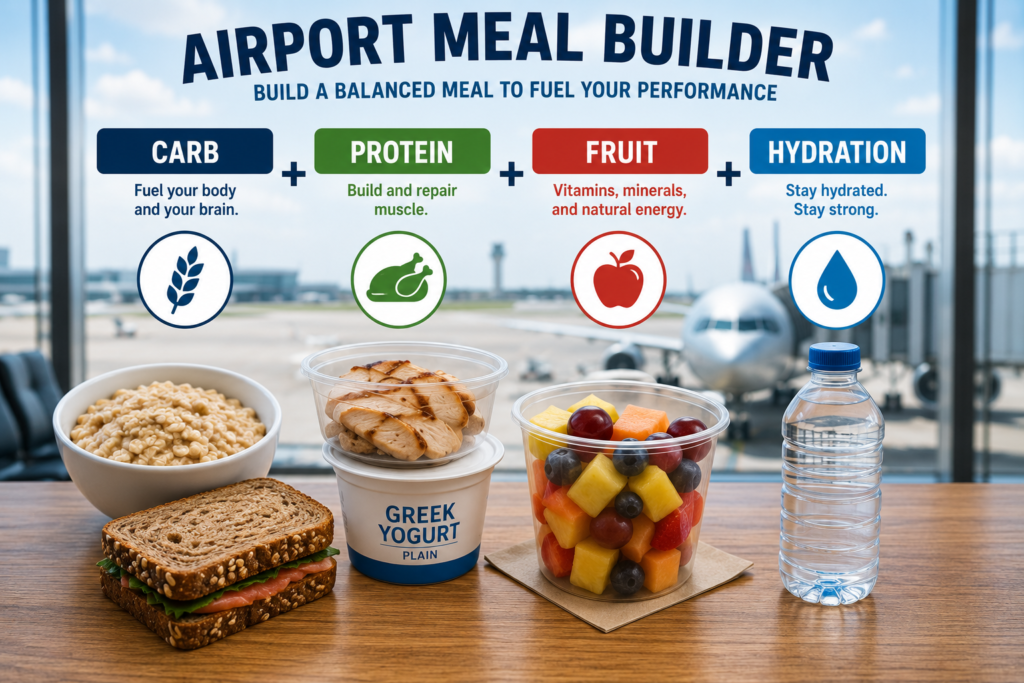
While some terminals still have limited choices, many now offer restaurants and grab-and-go options that can fit well into an athlete’s nutrition plan.
Rather than searching for the “perfect” meal, focus on building a balanced plate whenever possible.
Look for meals that include:
- ✅ A quality carbohydrate source
- ✅ Lean protein
- ✅ Fruit or vegetables
- ✅ Water or another hydrating beverage
Some examples include:
- Grilled chicken sandwich with fruit
- Rice bowl with chicken and vegetables
- Turkey sandwich and yogurt
- Oatmeal with fruit and milk
- Sushi rolls with edamame
- Greek yogurt with granola and berries
Airport nutrition doesn’t need to be complicated.
The same principles that apply at home still apply while traveling:
Prioritize balance, eat consistently, stay hydrated, and avoid trying unfamiliar foods immediately before competition.
Gas Station Survival Guide for Athletes
Let’s be honest.
Most athletes have found themselves standing inside a gas station before a tournament wondering what they should eat.
Whether you’re driving several hours to a weekend competition or traveling with your team, convenience stores often become your only food option.
The good news?
You can absolutely build a balanced snack—or even a meal—from a gas station.
The key is knowing what to look for before hunger starts making the decisions for you.
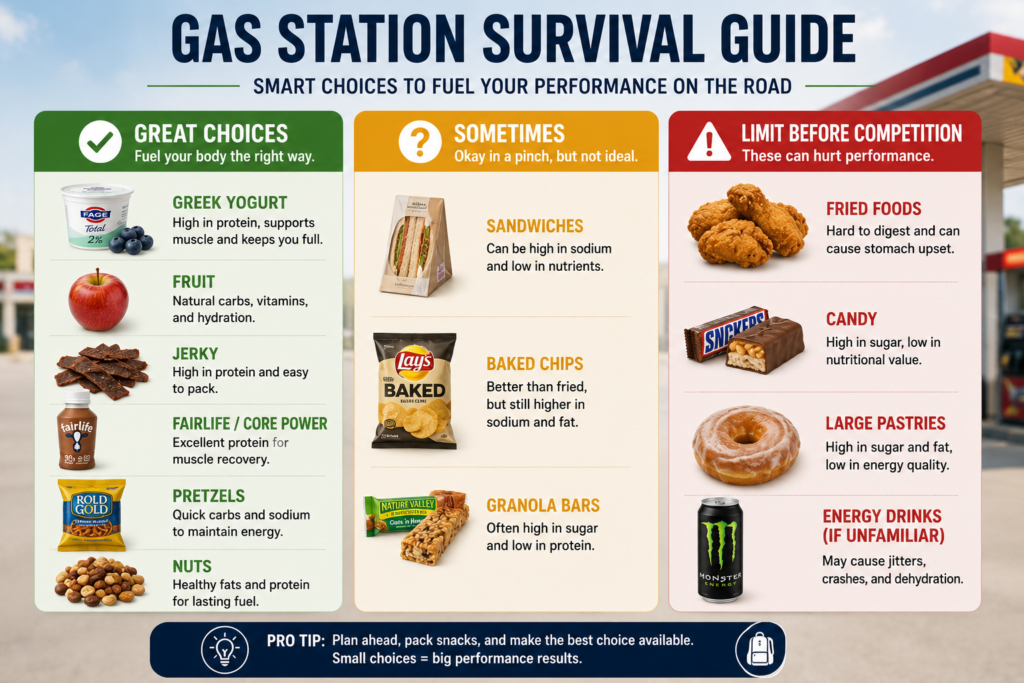
Best Gas Station Choices
Many convenience stores now carry healthier options than they did just a few years ago.
Look for foods that provide carbohydrates for energy, protein to support recovery, and fluids to stay hydrated.
Carbohydrate-Rich Foods
- Bananas
- Apples
- Oranges
- Pretzels
- Whole-grain crackers
- Baked chips
- Plain popcorn
- Instant oatmeal cups
- Applesauce pouches
- Granola bars
Protein Options
- Greek yogurt
- Fairlife® or Core Power® protein shakes
- String cheese
- Beef or turkey jerky
- Hard-boiled eggs
- Roasted edamame
- Mixed nuts
- Peanut butter packets
Hydration
- Water
- Low-fat milk
- Sports drinks for prolonged or high-intensity competition
- Electrolyte beverages when appropriate
Many athletes are surprised by how many quality options are available once they stop looking only at the candy aisle.
Foods to Limit
One meal won’t ruin your performance.
However, if you have a competition coming up in the next few hours, it’s usually best to limit foods that may slow digestion or cause gastrointestinal discomfort.
Examples include:
- Deep-fried foods
- Large pastries
- Candy as your primary fuel
- Energy drinks if you don’t normally drink them
- Extra-large meals immediately before competition
If healthier choices are limited, remember that the best available option is usually better than skipping a meal altogether.
Hotel Nutrition Strategies
Arriving at your hotel doesn’t mean your nutrition plan is finished.
In many cases, this is where athletes either stay consistent—or completely fall out of their routine.
Hotels present several unique challenges.
You may not have access to a kitchen.
Restaurant choices may be limited.
Breakfast might not begin early enough before your event.
Fortunately, a little planning can solve most of these problems.
Check Your Hotel Amenities
Before you travel, find out whether your room includes:
- Mini refrigerator
- Microwave
- Coffee maker
- Complimentary breakfast
These small details can significantly expand your food options.
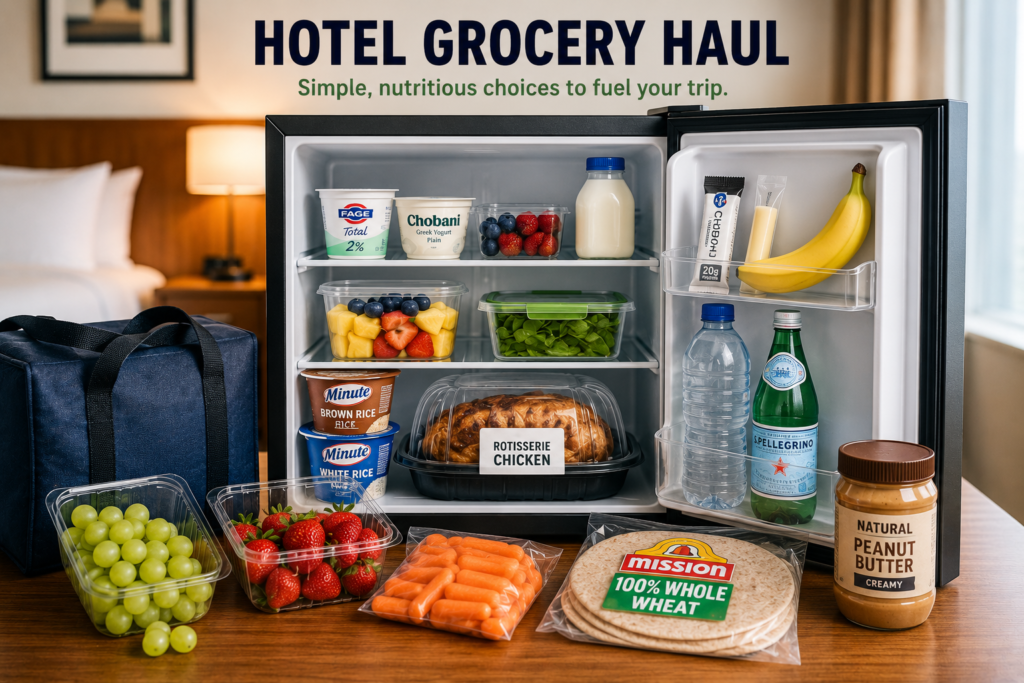
A refrigerator allows you to store yogurt, milk, fruit, sandwiches, and leftovers.
A microwave makes oatmeal cups, rice packets, and reheating meals much easier.
Make a Grocery Store Stop
One of my favorite travel strategies is making a quick grocery store stop shortly after arriving.
Instead of relying on restaurants for every meal, spend 15–20 minutes picking up foods you’ll use throughout your stay.
Some excellent choices include:
Breakfast
- Oatmeal
- Bananas
- Berries
- Greek yogurt
- Whole-grain bread
- Peanut butter
- Eggs (if your room has a kitchenette)
Snacks
- Apples
- Grapes
- Pretzels
- Trail mix
- Cheese sticks
- Protein shakes
Meals
- Deli turkey
- Whole-grain wraps
- Rotisserie chicken
- Microwaveable rice
- Salad kits
Buying a few groceries often costs less than eating every meal at restaurants while giving you greater control over your nutrition.
Hotel Breakfast Buffets
Many athletes underestimate how useful hotel breakfasts can be.
Look for combinations such as:
- Oatmeal with fruit
- Eggs with whole-grain toast
- Yogurt with granola
- Fresh fruit
- Milk
Try not to build your breakfast entirely around pastries, sugary cereals, or waffles if you’re competing shortly afterward.
Eating at Restaurants While Traveling
Eating at restaurants doesn’t mean you’ve “blown your nutrition.”
In fact, many restaurants offer excellent options for athletes.
Rather than focusing on what you should avoid, think about building a balanced plate.
A simple strategy is:
Build Your Plate
Carbohydrate
- Rice
- Potatoes
- Pasta
- Bread
- Tortillas
Lean Protein
- Chicken
- Turkey
- Fish
- Lean beef
- Tofu
- Beans
Fruits and Vegetables
- Fresh fruit
- Side salad
- Steamed vegetables
- Grilled vegetables
Fluids
- Water
- Milk
- Sports drink if appropriate
This approach works whether you’re eating at a sit-down restaurant, a café, or a fast-casual chain.
Fast Food Isn’t Off Limits
Sometimes fast food is simply the most practical option.
Rather than viewing it as “good” or “bad,” focus on making the best choice available.
For example:
Instead of:
- Double cheeseburger
- Large fries
- Large soda
Consider:
- Grilled chicken sandwich
- Turkey sub
- Burrito bowl
- Grilled nuggets
- Side fruit
- Water or milk
One meal won’t determine your performance.
Your overall pattern matters much more.
Hydration During Travel
Travel days can quietly increase your risk of dehydration.
Long periods in the car, dry airplane cabins, warm weather, and simply being busy often mean athletes drink less than usual.
Many people also avoid drinking because they don’t want to stop for bathroom breaks or get up repeatedly during flights.
Unfortunately, arriving dehydrated means you’re already starting behind.
Flying and Hydration
Airplane cabins have very low humidity.
Although flying itself doesn’t dramatically dehydrate you, the dry cabin environment can increase fluid losses and make it easier to fall behind on hydration if you aren’t drinking regularly.
A few simple strategies include:
- Bring an empty reusable water bottle through airport security and fill it before boarding.
- Sip fluids throughout the flight rather than drinking large amounts all at once.
- Limit excessive alcohol before competition.
- Include electrolyte beverages when appropriate, especially after long travel days or if you’ll compete soon after landing.
Driving and Hydration
During road trips, hydration often gets neglected because athletes don’t want frequent bathroom stops.
Instead of avoiding fluids, aim to drink consistently throughout the trip and simply build restroom breaks into your travel schedule.
Good hydration habits during travel can make a noticeable difference in how you feel when you arrive.
For a more detailed guide on sweat rate testing, fluid needs, and electrolyte replacement, check out Hydration for Athletic Performance.
Competition Travel Strategies
Traveling for vacation is very different from traveling to compete.
When competition is the goal, every nutrition decision should help you arrive ready to perform.
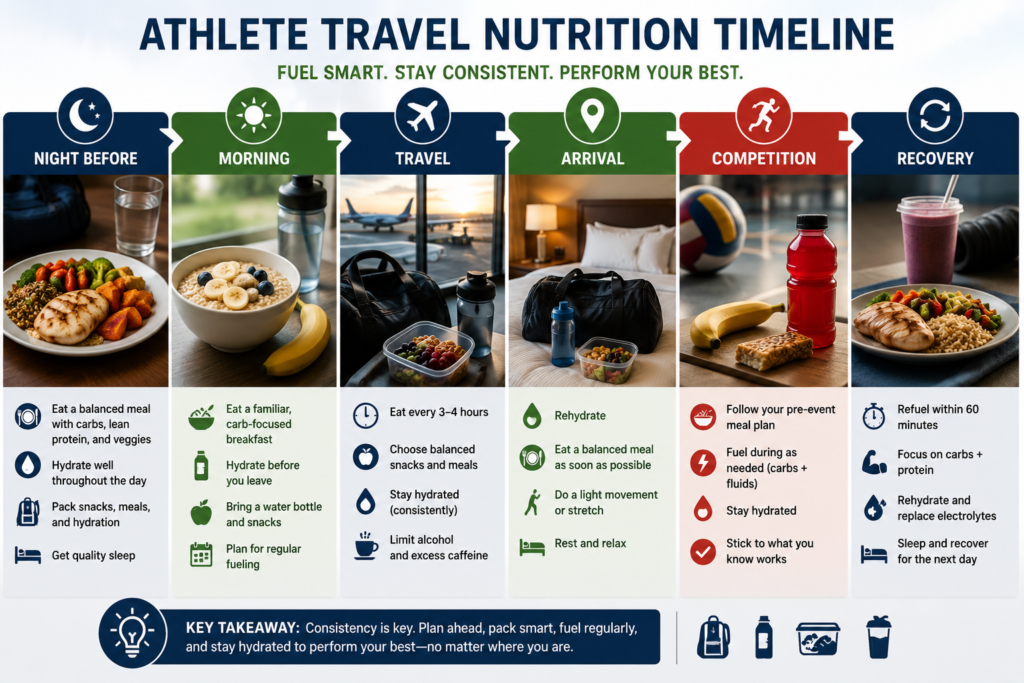
The Night Before
Stick with familiar foods.
Avoid large cheat meals or trying the local specialty restaurant if you’ve never eaten there before.
Save culinary adventures for after the tournament.
Competition Morning
Even if you’re staying in a hotel, try to eat a breakfast similar to what you’ve practiced at home.
Your body responds best to routines it already knows.
During Competition
Bring your own snacks whenever possible.
Even if concessions are available, they may not have foods that match your fueling needs.
Keeping your own cooler or backpack stocked with familiar snacks allows you to fuel according to your schedule—not the venue’s menu.
After Competition
Recovery begins before you start traveling home.
If you have a long drive or flight ahead, don’t skip your recovery meal.
Aim to include:
- Carbohydrates to replenish glycogen stores
- Protein to support muscle repair
- Fluids to replace sweat losses
This becomes even more important if you’ll compete again the following day.
For more detailed information on how to fuel your body for a tournament, read Tournament Day Nutrition.
Sport Spotlight: Travel Nutrition for Swimmers
Travel nutrition looks a little different for swimmers than it does for many field or court sports.
Swim meets often begin early in the morning, with preliminary heats followed by finals later in the day. When these competitions take place away from home, athletes may spend several days living out of a hotel while balancing travel, recovery, and repeated races.
I’ve worked with swimmers who arrived at their hotel the night before competition and immediately stopped at a nearby grocery store to stock their mini refrigerator with yogurt, fruit, milk, sandwiches, and oatmeal. That small amount of preparation made breakfast easier, reduced reliance on fast food, and helped them stay fueled between sessions.
Whether you’re traveling for a swim meet, volleyball tournament, soccer showcase, or CrossFit competition, the principle is the same:
The more prepared you are before you arrive, the fewer nutrition decisions you’ll have to make when your focus should be on performing.
Traveling Across Time Zones
Traveling across time zones presents challenges that go beyond simply feeling tired.
Changes in sleep schedules, meal timing, and daily routines can affect your appetite, energy levels, digestion, and readiness to perform. Athletes competing shortly after arriving may feel hungry at unusual times—or not feel hungry when they actually need to eat.
While there is no single nutrition strategy that completely eliminates jet lag, maintaining regular eating patterns can help your body adjust more smoothly.
Tips for Time Zone Travel
Start Adjusting Early
If you’re traveling across several time zones for an important competition, gradually shifting your bedtime and meal times by 30–60 minutes over a few days may help ease the transition.
Eat According to Your Destination
Once you arrive, begin eating meals based on the local time whenever practical.
For example, if you land at lunchtime—even if your body still thinks it’s breakfast—having a balanced lunch can help your internal clock begin adapting.
Stay Hydrated
Long flights, unfamiliar climates, and disrupted routines all make it easier to fall behind on hydration.
Carry a reusable water bottle and continue drinking fluids consistently throughout your travel day.
Don’t Skip Meals Because You’re Tired
After a long flight, many athletes feel tempted to go straight to bed without eating.
If you’ve gone several hours without food, try to have at least a light meal or snack that includes carbohydrates and protein before resting. This can support recovery and help prepare your body for training or competition the following day.
International Travel Nutrition
Traveling internationally can be one of the most exciting experiences in sports.
It can also introduce new nutrition challenges.
Different cuisines, unfamiliar ingredients, language barriers, food safety concerns, and changes in water quality may all influence what you eat while traveling.
Stick With Familiar Foods Before Competition
One of the simplest ways to reduce the risk of gastrointestinal issues is to avoid experimenting with unfamiliar foods immediately before competing.
Trying the local specialty dish can be a memorable part of your trip—but it’s usually better saved until after your event.
Before competition, prioritize foods your body already knows and tolerates well.
Practice Good Food Safety
When traveling internationally, especially to destinations with different food safety standards, consider the following precautions:
- Drink bottled or properly treated water if recommended.
- Wash your hands before eating.
- Choose foods that are cooked thoroughly.
- Be cautious with raw seafood, undercooked meats, or foods that have been sitting out for extended periods.
- Wash fresh fruits and vegetables when possible or choose fruits with peels that you remove yourself.
Foodborne illness can derail weeks or months of training, making prevention well worth the effort.
Bring Familiar Snacks
Packing a small supply of your favorite snacks can provide consistency when local foods are unfamiliar or difficult to access.
Protein bars, pretzels, trail mix, instant oatmeal, electrolyte packets, and nut butter packets are all easy additions to most travel bags.
Frequently Asked Questions
What if I forget to pack snacks?
Don’t panic.
Visit a grocery store, convenience store, or airport market and build a simple combination of carbohydrates, protein, and fluids.
A banana, Greek yogurt, and bottle of water is a much better choice than skipping a meal entirely.
Is fast food okay while traveling?
Yes.
Fast food can fit into an athlete’s nutrition plan, especially during long travel days when options are limited.
Focus on building a balanced meal whenever possible by including a carbohydrate source, lean protein, and fluids.
Your overall eating pattern matters much more than one individual meal.
Should I bring my own food or buy it after I arrive?
Ideally, both.
Bringing snacks ensures you have food available during unexpected delays, while purchasing groceries after arrival gives you fresh options for the remainder of your trip.
This combination offers flexibility without requiring you to pack every meal.
What should I eat if I compete shortly after arriving?
Choose foods that you’ve successfully eaten before training or competition.
Meals rich in carbohydrates with moderate protein and lower amounts of fat and fiber are often easier to digest before exercise.
Avoid experimenting with unfamiliar foods immediately before competition.
For more detailed recommendations, read Tournament Day Nutrition: What Athletes Should Eat Before, During, and After Competition.
Do I need sports drinks while traveling?
Not necessarily.
For most travel days, water is sufficient.
Sports drinks become more useful when you’re competing, exercising for longer than about an hour, training in hot conditions, or replacing significant sweat losses.
Common Travel Nutrition Mistakes
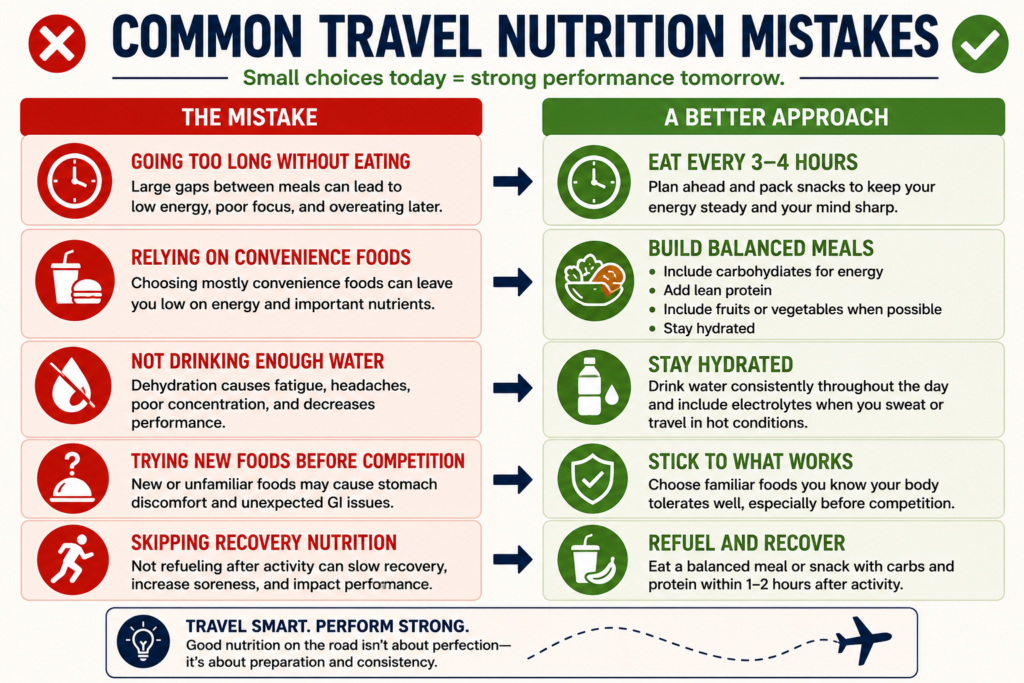
Even experienced athletes can struggle with nutrition while traveling.
Fortunately, most mistakes are preventable with a little preparation.
1. Waiting Until You’re Hungry to Find Food
By the time you’re extremely hungry, you’re much more likely to choose whatever is quickest instead of what’s best for performance.
Plan ahead whenever possible.
2. Packing Too Little Food
Many athletes assume they’ll be able to buy food whenever they need it.
Unexpected delays, long tournament days, or limited restaurant options can quickly change those plans.
Bringing extra snacks provides inexpensive insurance against missed meals.
3. Neglecting Hydration
It’s surprisingly common for athletes to arrive at their destination mildly dehydrated simply because they drank less during travel.
Carry a reusable water bottle and sip fluids consistently throughout the day.
4. Trying New Foods Before Competition
Travel often creates opportunities to experience new restaurants and local cuisine.
Enjoy those experiences—but save them for after competition whenever possible.
Competition day is not the time to discover that a new food doesn’t agree with your stomach.
5. Relying Only on Convenience Foods
Convenience foods can absolutely play a role during travel.
However, they shouldn’t become your only source of nutrition for several days.
Whenever possible, include fruits, vegetables, lean proteins, whole grains, and dairy foods to support recovery and overall health.
Practitioner Insight: What I See in Real Athletes
One of the biggest misconceptions I hear is that athletes need the “perfect” travel meal to perform well.
In reality, consistency is far more important than perfection.
I’ve worked with athletes who spent more time worrying about finding the ideal restaurant than simply eating enough to support their training and competition.
I’ve also seen athletes travel to beach volleyball tournaments with nothing but a bottle of water, expecting to buy food later. As the day went on, matches ran behind schedule, concession options were limited, and by the afternoon they were running low on energy—not because they weren’t fit enough to compete, but because they hadn’t fueled adequately.
On the other hand, the athletes who seem to handle travel with less stress usually have a simple routine.
They eat before leaving.
They pack more snacks than they think they’ll need.
They refill their water bottle whenever they can.
They choose balanced meals without overthinking every decision.
Most importantly, they recognize that travel is part of competition—not separate from it.
Preparing for travel is just another way of preparing to perform.
Action Steps
Before your next trip, challenge yourself to complete this simple checklist:
- ✅ Plan when and where you’ll eat before you leave.
- ✅ Pack enough snacks to cover unexpected delays.
- ✅ Bring a reusable water bottle and stay hydrated throughout the day.
- ✅ Research grocery stores and restaurants near your hotel.
- ✅ Build balanced meals using carbohydrates, protein, fruits or vegetables, and fluids.
- ✅ Stick with familiar foods before competition.
- ✅ Pack a recovery snack if you’ll be traveling home after your event.
Small decisions made before your trip can make a big difference in how you feel when it’s time to compete.
Ready to Travel and Perform at Your Best?
Whether you’re preparing for a local tournament, a collegiate season, or national competition, your nutrition can have a meaningful impact on your energy, recovery, and performance. Every athlete has unique training demands, travel schedules, food preferences, and performance goals, which means a one-size-fits-all nutrition plan rarely works.
As a Registered Dietitian Nutritionist and sports nutrition coach, I help athletes develop practical fueling strategies that fit their sport, competition schedule, and lifestyle. Together, we can create a personalized plan that helps you stay fueled at home, on the road, and on competition day.
A Sports Nutrition Performance Assessment may include:
- A comprehensive review of your current nutrition habits
- An evaluation of energy, hydration, and recovery strategies
- Individualized fueling recommendations for training and competition
- Travel nutrition planning for tournaments and multi-day events
- Body composition and performance nutrition guidance
- Practical meal, snack, and hydration strategies tailored to your sport
Ready to take your performance to the next level?
Schedule your Sports Nutrition Performance Assessment today and start fueling with confidence.
Conclusion
Travel is an unavoidable part of sports for many athletes.
Whether you’re driving to a local tournament, flying across the country for a championship, or traveling internationally to compete, your nutrition doesn’t become less important simply because you’re away from home.
If anything, it becomes more important.
Travel introduces unfamiliar schedules, limited food options, and unexpected delays, all of which can make it easier to underfuel or become dehydrated. Fortunately, these challenges are largely preventable with thoughtful planning.
Within the M3 Performance Framework, successful travel nutrition comes down to three simple principles:
- Mind — Plan ahead and prepare for the unexpected.
- Meals — Eat consistently, prioritize balanced meals, and pack foods you know work well for your body.
- Motion — Remember that every practice, tournament, and competition still requires proper fuel, regardless of where you’re traveling.
You don’t need perfect meals to perform at your best.
You need a plan.
The athletes who consistently perform well on the road aren’t necessarily eating differently than everyone else—they’re simply prepared before the journey begins.
Whether your next destination is a weekend volleyball tournament, a swim meet, a soccer showcase, or a national championship, investing a little time in your travel nutrition plan can help you arrive feeling energized, hydrated, and ready to compete.
Over time, consistently making these small travel nutrition decisions can support better energy, recovery, and performance wherever your sport takes you.
References
Academy of Nutrition and Dietetics, Dietitians of Canada, & American College of Sports Medicine. (2016). Nutrition and Athletic Performance. Journal of the Academy of Nutrition and Dietetics, 116(3), 501–528. https://doi.org/10.1016/j.jand.2015.12.006
Burke, L. M., Castell, L. M., Casa, D. J., Close, G. L., Costa, R. J. S., Desbrow, B., Halson, S. L., Lis, D. M., Melin, A. K., Peeling, P., Saunders, P. U., Slater, G. J., Sygo, J., Witard, O. C., Bermon, S., & Stellingwerff, T. (2019). International Association of Athletics Federations Consensus Statement 2019: Nutrition for Athletics. International Journal of Sport Nutrition and Exercise Metabolism, 29(2), 73–84. https://doi.org/10.1123/ijsnem.2019-0065
Jäger, R., Kerksick, C. M., Campbell, B. I., Cribb, P. J., Wells, S. D., Skwiat, T. M., Purpura, M., Ziegenfuss, T. N., Ferrando, A. A., Arent, S. M., Smith-Ryan, A. E., Stout, J. R., Arciero, P. J., Ormsbee, M. J., Taylor, L. W., Wilborn, C. D., Kalman, D. S., Kreider, R. B., Willoughby, D. S., … Antonio, J. (2017). International Society of Sports Nutrition Position Stand: Protein and Exercise. Journal of the International Society of Sports Nutrition, 14, 20. https://doi.org/10.1186/s12970-017-0177-8
Kerksick, C. M., Arent, S., Schoenfeld, B. J., Stout, J. R., Campbell, B., Wilborn, C. D., Taylor, L., Kalman, D., Smith-Ryan, A. E., Kreider, R. B., Willoughby, D., Arciero, P., VanDusseldorp, T., Ormsbee, M., Wildman, R., Greenwood, M., Lopez, H., Landis, J., Ivy, J. L., & Antonio, J. (2017). International Society of Sports Nutrition Position Stand: Nutrient Timing. Journal of the International Society of Sports Nutrition, 14, 33. https://doi.org/10.1186/s12970-017-0189-4
Maughan, R. J., Burke, L. M., Dvorak, J., Larson-Meyer, D. E., Peeling, P., Phillips, S. M., Rawson, E. S., Walsh, N. P., Garthe, I., Geyer, H., Meeusen, R., van Loon, L. J. C., Shirreffs, S. M., Spriet, L. L., Stuart, M., Vernec, A., Currell, K., Ali, V. M., Budgett, R. G., … Engebretsen, L. (2018). IOC Consensus Statement: Dietary Supplements and the High-Performance Athlete. British Journal of Sports Medicine, 52(7), 439–455. https://doi.org/10.1136/bjsports-2018-099027