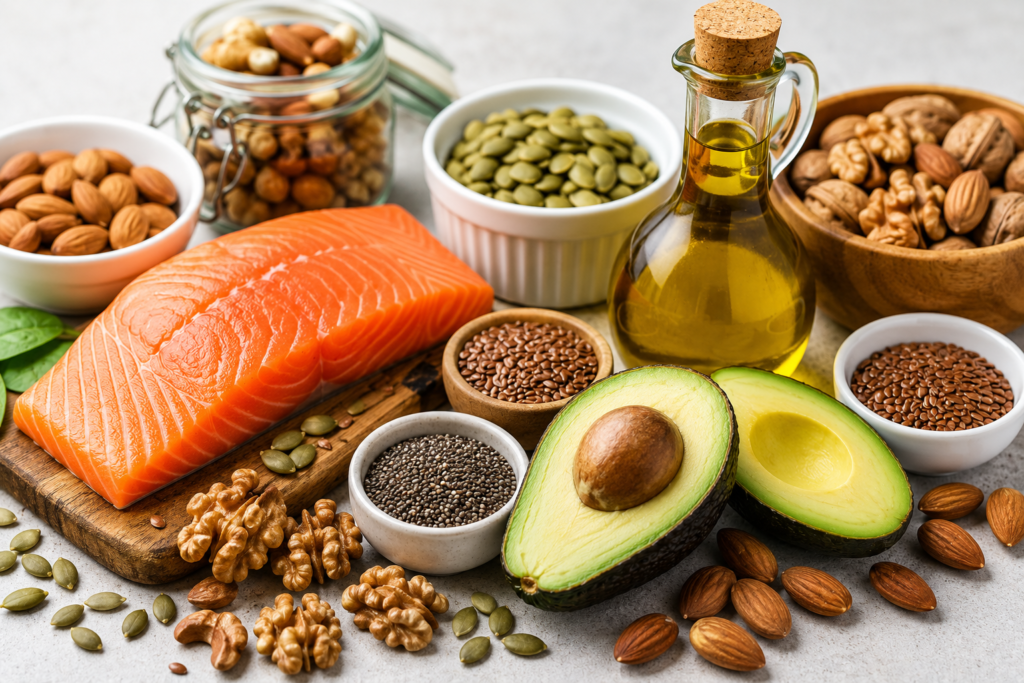
Quick Answer
Healthy fats are important for athletes because they support hormone production, nutrient absorption, overall health, and long-term energy needs. However, fats should complement a balanced nutrition plan rather than replace carbohydrates, which remain the primary fuel source for high-intensity training and competition.
Key Takeaways
- Healthy fats support hormone production, recovery, and overall health
- Fats help the body absorb vitamins A, D, E, and K
- Most athletes should aim for approximately 20–35% of total daily calories from fat
- Healthy fats are important, but carbohydrates remain the primary fuel source for high-intensity exercise
- Extremely low-fat diets may negatively affect health and performance
- Excessive fat intake can crowd out carbohydrates needed for training and competition
- Balance between carbohydrates, protein, and fats is key
Introduction
If carbohydrates are the most feared nutrient in the general population, fats might be the most misunderstood nutrient in sports nutrition.
I’ve worked with athletes who avoid fats almost completely because they’re worried about gaining weight.
I’ve also worked with athletes who swing to the opposite extreme and become convinced that eating more fat is the answer to better performance.
The truth usually lies somewhere in the middle.
Healthy fats play an important role in:
- hormone production
- nutrient absorption
- overall health
- long-term energy needs
At the same time, fats are often misunderstood when it comes to athletic performance.
Some athletes hear phrases like:
- “fat adapted”
- “keto athlete”
- “burn fat for fuel”
and assume that carbohydrates are no longer important.
Unfortunately, that’s rarely the case for athletes participating in high-intensity sports.
Volleyball players, CrossFit athletes, basketball players, soccer players, and most strength athletes still rely heavily on carbohydrates to support training and competition.
Healthy fats matter.
But they play a different role than carbohydrates and protein.
Within the M3 Performance Framework:
- Mind shapes beliefs and attitudes about fats
- Meals provide healthy fats as part of a balanced eating pattern
- Motion determines how the body uses fuel during activity
Understanding where fats fit can help athletes avoid common mistakes and build a nutrition strategy that supports both health and performance.
For a broader overview of athlete fueling, check out:
👉 How Athletes Should Eat for Performance: The M3 Fueling Framework
Table of Contents
Why Healthy Fats Matter for Athletes
Many athletes think about nutrition through the lens of performance.
They want to know:
- What improves energy?
- What improves recovery?
- What helps build muscle?
- What helps them compete better?
Because fats don’t provide quick energy for intense exercise, they sometimes get overlooked.
That can be a mistake.
Healthy fats play several important roles that support both athletic performance and long-term health.
Hormone Production
One of the most important roles of dietary fat is supporting hormone production.
Hormones influence many aspects of athletic performance, including:
- recovery
- muscle adaptation
- energy levels
- mood
- overall health
Most athletes don’t think about hormone function until something starts feeling off.
Recovery slows down.
Energy drops.
Motivation decreases.
Training progress stalls.
While many factors contribute to these issues, chronically low fat intake can sometimes be part of the problem.
This is one reason why extremely low-fat diets are rarely recommended for athletes.
Nutrient Absorption
Certain vitamins require fat for proper absorption.
These include:
- Vitamin A
- Vitamin D
- Vitamin E
- Vitamin K
These nutrients help support:
- bone health
- immune function
- vision
- recovery
Without adequate dietary fat, the body may not absorb these nutrients as effectively.
Long-Term Energy
Unlike carbohydrates, which provide rapid energy during intense exercise, fats serve as a slower-burning fuel source.
The body stores far more energy as fat than it does as glycogen.
This makes fat an important energy source during:
- lower-intensity activity
- long-duration exercise
- everyday movement
However, it’s important to understand that this does not mean athletes should prioritize fats over carbohydrates.
Different fuels serve different purposes.
The M3 Fat Framework
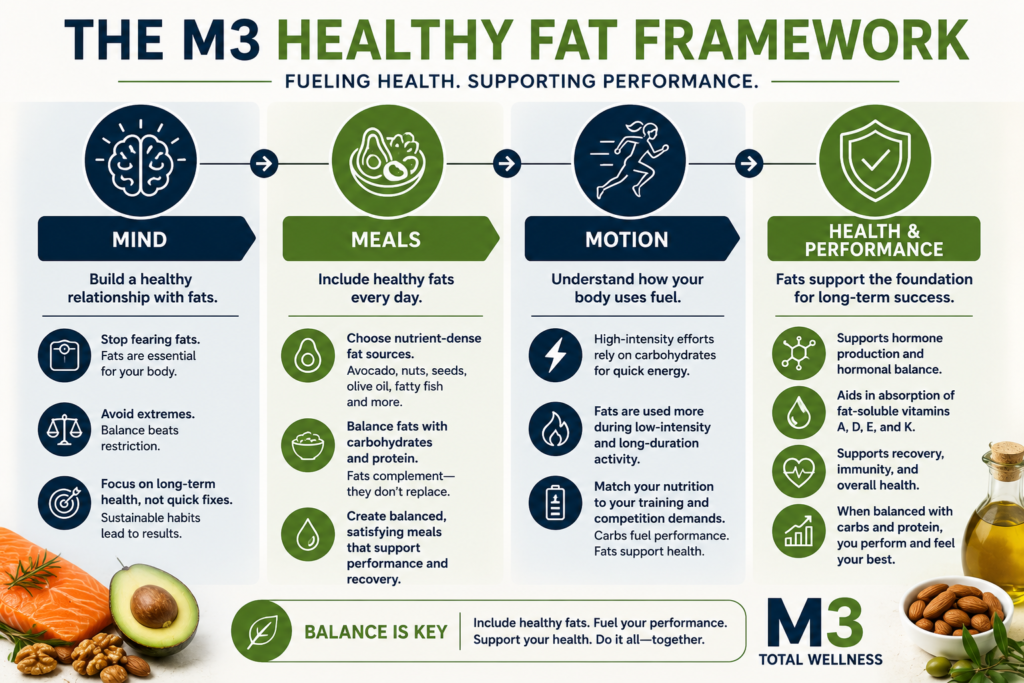
Mind
Many athletes have strong opinions about fats.
Unfortunately, those opinions are often shaped by social media rather than science.
Common beliefs include:
- Fat makes you gain weight.
- Fat should be avoided.
- Carbohydrates are bad.
- High-fat diets improve all athletic performance.
These beliefs often create confusion.
The goal isn’t to fear fats.
The goal isn’t to overemphasize fats either.
The goal is understanding where fats fit within a balanced performance nutrition plan.
Meals
Healthy fats should be included regularly throughout the day.
Good examples include:
- avocado
- nuts
- seeds
- olive oil
- salmon
- nut butters
Fats help create meals that are:
- satisfying
- nutrient-dense
- supportive of overall health
At the same time, fats should complement carbohydrates and protein rather than replace them.
One of the biggest mistakes I see is athletes reducing carbohydrates dramatically while increasing fat intake.
For many athletes, this results in poorer training quality rather than better performance.
For more on athlete fueling, see:
👉 Carbohydrates and Athletic Performance
Motion
Exercise intensity matters.
The body does not use all fuels equally.
As exercise intensity increases, carbohydrate utilization generally increases as well.
This is why explosive sports such as:
- volleyball
- basketball
- soccer
- CrossFit
- sprinting
depend heavily on carbohydrate availability.
Healthy fats support overall health and provide energy during lower-intensity activities.
But when performance demands rapid energy production, carbohydrates remain the preferred fuel source.
Understanding this distinction is one of the most important concepts in sports nutrition.
The Science of Fat in Performance
Fats and Energy Systems
The body uses a combination of carbohydrates and fats to produce energy.
The exact mixture depends on exercise intensity.
During lower-intensity activities such as:
- walking
- easy cycling
- light aerobic exercise
the body relies more heavily on fat oxidation.
As intensity increases, the body gradually shifts toward greater carbohydrate use because carbohydrates can provide energy more rapidly.
This is one reason why athletes who participate in explosive, intermittent sports generally benefit from prioritizing carbohydrates rather than adopting extremely high-fat diets.
Hormonal Function
Healthy fats provide essential fatty acids that support numerous physiological functions.
These include hormone production related to:
- growth
- recovery
- reproduction
- overall health
Insufficient fat intake over time may contribute to disruptions in normal physiological processes, particularly when combined with inadequate overall energy intake.
This is one reason why low energy availability can negatively affect athlete health and performance.
Nutrient Absorption and Recovery
Fat-soluble vitamins depend on dietary fat for absorption.
Athletes who consistently consume extremely low-fat diets may unintentionally reduce their ability to absorb important nutrients that support:
- immune health
- bone health
- recovery
- long-term performance
How Much Fat Do Athletes Need?
One of the most common questions athletes ask is:
“How much fat should I be eating?”
The answer depends on:
- training volume
- body composition goals
- sport demands
- personal preferences
For most athletes, fats should provide approximately:
20–35% of total daily calories.
This range typically allows athletes to:
- support hormone production
- absorb fat-soluble vitamins
- maintain overall health
- still consume adequate carbohydrates for performance
The goal isn’t to eat as little fat as possible.
The goal also isn’t to load every meal with fat.
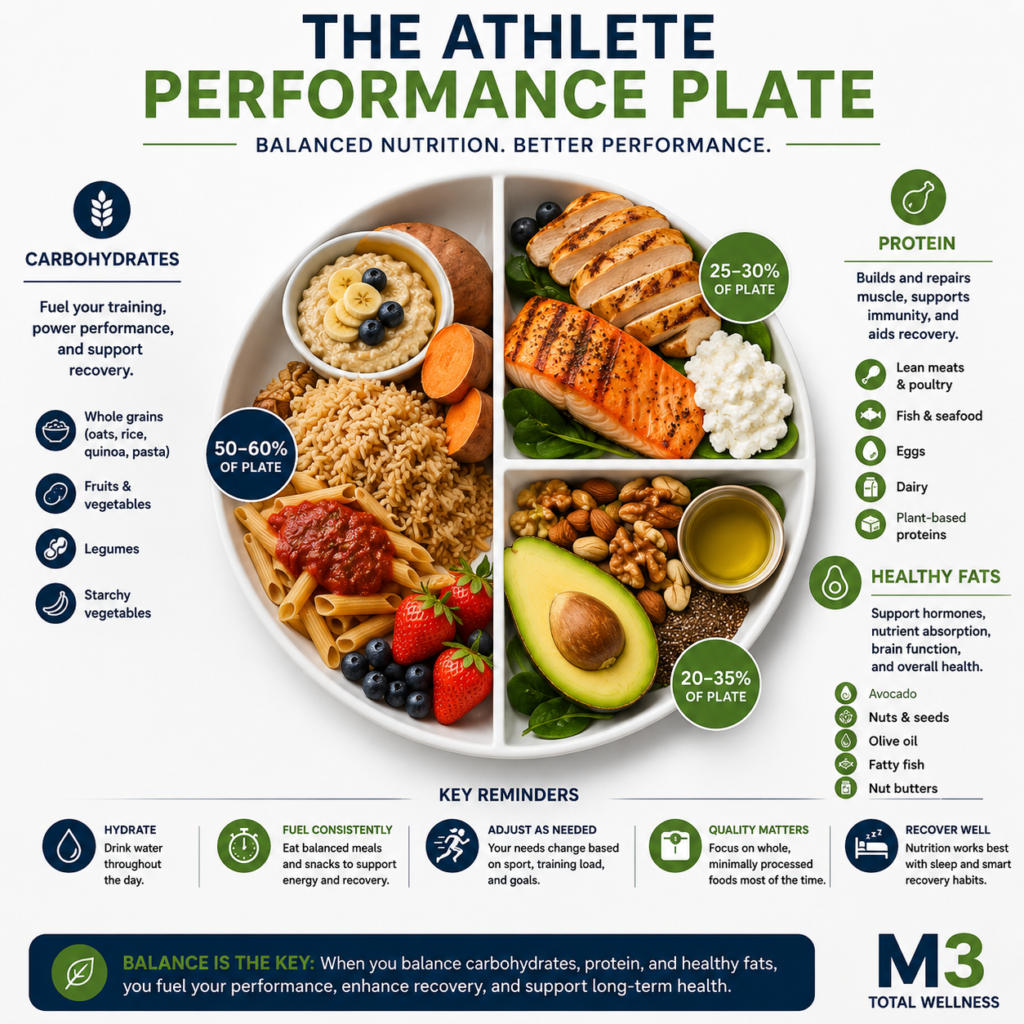
Balance matters.
For example, an athlete consuming 2,500 calories per day may obtain approximately:
- 55–97 grams of fat daily
while still leaving room for sufficient carbohydrate and protein intake.
Athletes who consistently consume extremely low-fat diets may struggle to meet their needs for essential fatty acids and overall health.
On the other hand, athletes who consume excessive amounts of fat sometimes unintentionally reduce carbohydrate intake, which may negatively affect training quality.
Best Sources of Healthy Fats
Not all fats are created equal.
While fats can fit into a healthy eating pattern, some sources provide more nutritional value than others.
Omega-3 Rich Foods
Omega-3 fatty acids are particularly important for overall health.
Good sources include:
- salmon
- sardines
- trout
- mackerel
- herring
These foods provide healthy fats while also supplying high-quality protein.
Plant-Based Fat Sources
Many athletes can obtain healthy fats from plant foods such as:
- avocado
- almonds
- walnuts
- pistachios
- chia seeds
- flax seeds
- hemp seeds
These foods also contribute:
- fiber
- vitamins
- minerals
- antioxidants
making them excellent additions to an athlete’s nutrition plan.
Healthy Cooking Fats
Examples include:
- extra virgin olive oil
- avocado oil
These can be used to prepare meals while supporting overall dietary quality.
Nut Butters
Nut butters can be useful for athletes who need:
- convenient calories
- portable snacks
- easy meal additions
Examples include:
- peanut butter
- almond butter
- cashew butter
However, portion awareness is still important because fats are calorie-dense.
Are Some Fat Sources Better Than Others?
Generally, yes.
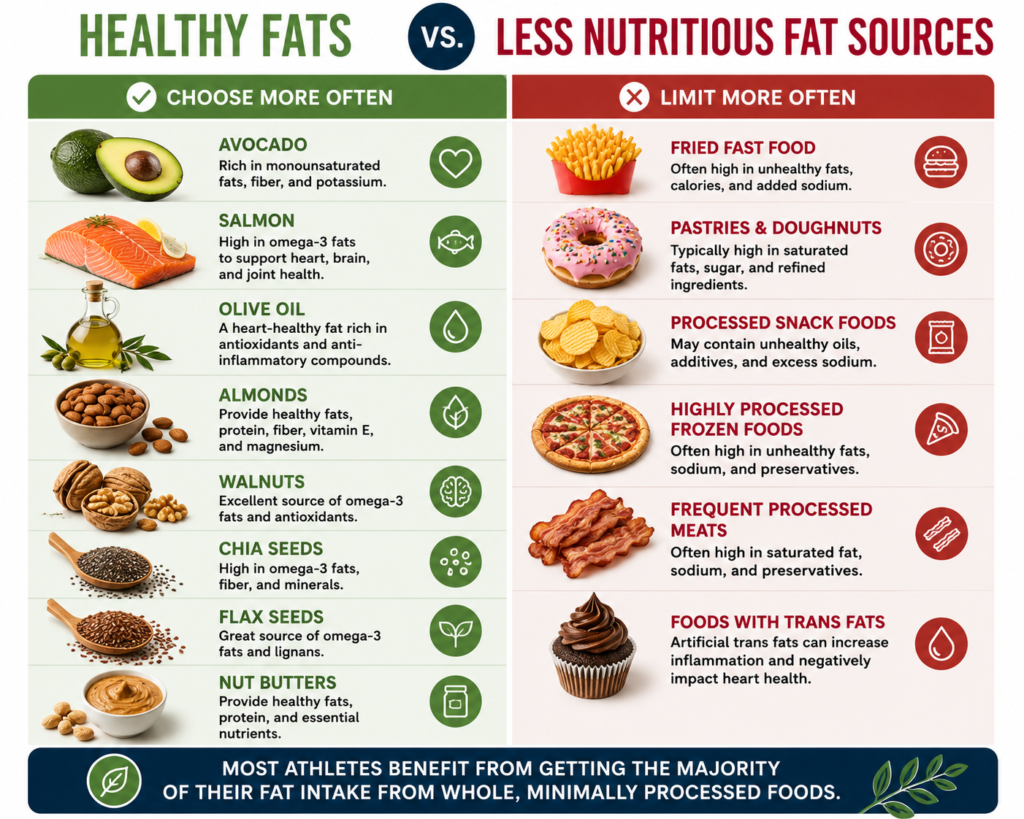
Most athletes should aim to get the majority of their fat intake from nutrient-dense sources such as:
- fatty fish
- avocado
- nuts and seeds
- olive oil
- nut butters
These foods provide healthy fats along with vitamins, minerals, antioxidants, and other nutrients that support overall health.
Athletes do not need to completely avoid foods that contain saturated fat. Foods such as dairy products, eggs, and certain meats can still be part of a balanced eating pattern.
However, it may be beneficial to limit frequent intake of:
- trans fats
- heavily processed fried foods
- highly processed snack foods
- foods containing partially hydrogenated oils
The goal is not perfection.
The goal is building a nutrition pattern where most fat intake comes from high-quality food sources that support both health and performance.
When to Eat (and Avoid) Fats
Timing matters.
Not because fats are bad.
But because digestion matters.
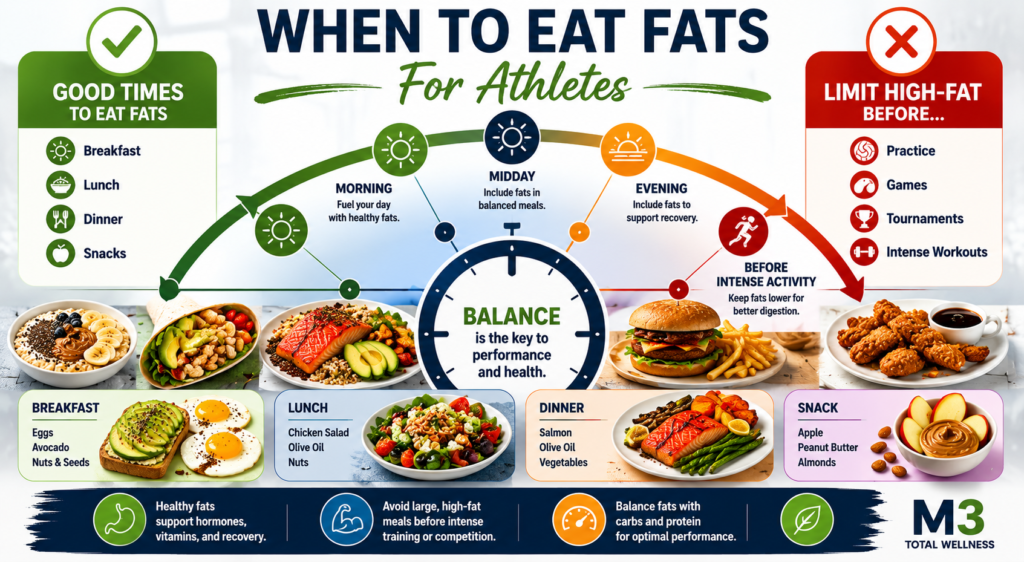
Good Times to Eat Fats
Healthy fats fit well into:
- breakfast
- lunch
- dinner
- snacks
Examples:
Breakfast:
Eggs and avocado toast
Lunch:
Chicken salad with olive oil dressing
Dinner:
Salmon with vegetables and rice
Snack:
Apple with peanut butter
These meals provide fats while still supporting overall nutrition.
Times to Limit High-Fat Meals
Athletes often notice that very high-fat meals before training don’t sit well.
Meals that are heavy in:
- fried foods
- large amounts of cheese
- fast food
- large portions of fatty meats
may:
- slow digestion
- increase stomach discomfort
- leave athletes feeling sluggish
This becomes especially important before:
- practices
- games
- tournaments
- intense workouts
For more on pre-exercise fueling:
👉 Pre-Workout Nutrition for Athletes
Are Fats Bad for Athletes?
No.
Healthy fats are essential.
This is one of the biggest misconceptions I still encounter.
Athletes do not need to eliminate fats to:
- lose weight
- improve performance
- become leaner
In fact, removing fats completely often creates more problems than solutions.
The goal should be including appropriate amounts of healthy fats while maintaining adequate carbohydrate and protein intake.
Should Athletes Follow High-Fat Diets?
For most athletes participating in high-intensity sports, probably not.
High-fat diets may have specific applications in certain situations.
However, most athletes competing in sports requiring:
- speed
- power
- repeated sprint efforts
- explosive movements
benefit from prioritizing carbohydrates.
Examples include:
- volleyball
- basketball
- soccer
- CrossFit
- tennis
- strength training
These activities rely heavily on carbohydrate availability.
This doesn’t mean fats are bad.
It means fats and carbohydrates serve different roles.
For a deeper discussion:
👉 Carbohydrates and Athletic Performance
Can Eating Too Much Fat Hurt Performance?
Potentially, yes.
Not because fat itself is harmful.
But because excessive fat intake can sometimes displace nutrients that athletes need more urgently.
I’ve seen athletes unintentionally follow diets where:
- carbohydrates become extremely low
- fats become extremely high
The result often includes:
- lower training intensity
- poor recovery
- reduced energy
- decreased performance
Athletes generally perform best when fats support the nutrition plan rather than dominate it.
Sport-Specific Example: Volleyball
Imagine a beach volleyball player preparing for a long tournament day.
Breakfast includes:
- bacon
- sausage
- coffee
but very little carbohydrate.
The meal provides calories and fat.
However, it may not adequately support repeated high-intensity efforts throughout the day.
By early afternoon:
- energy levels may decline
- jumping performance may suffer
- fatigue may increase
A more balanced breakfast might include:
- eggs
- oatmeal
- fruit
- nut butter
This approach provides:
- carbohydrates for performance
- protein for recovery
- healthy fats for satiety and health
The goal isn’t avoiding fat.
The goal is creating balance.
Common Mistakes Athletes Make
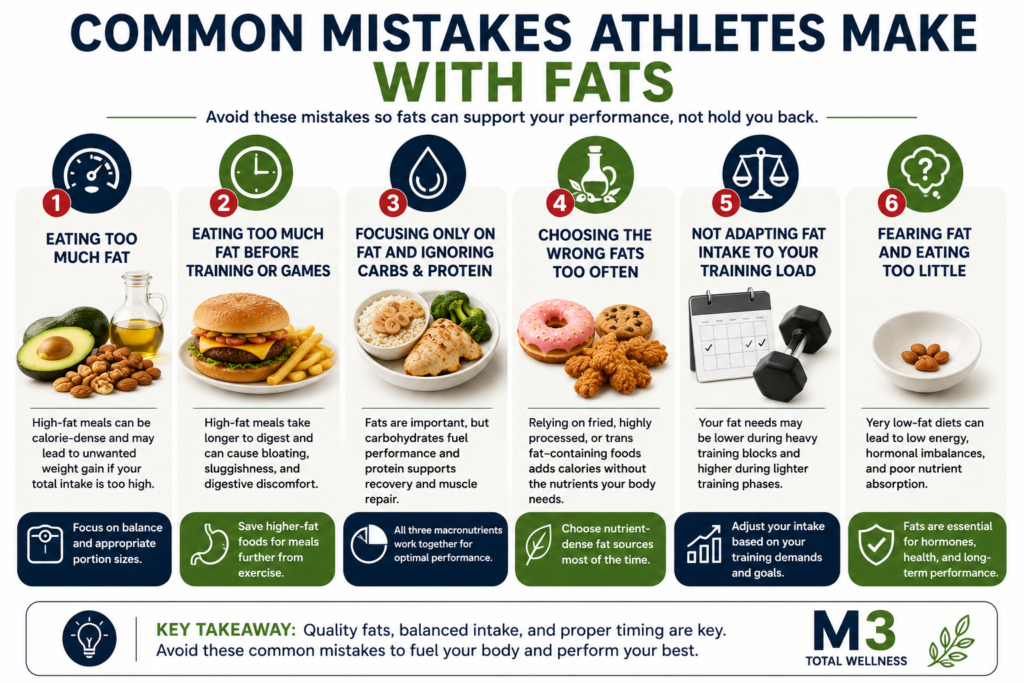
Mistake #1: Avoiding Fats Completely
Some athletes still believe eating fat automatically leads to weight gain.
This often results in unnecessarily restrictive eating patterns.
Mistake #2: Following Extreme High-Fat Trends
Athletes sometimes assume more fat automatically equals better performance.
For most high-intensity sports, this isn’t supported by current evidence.
Mistake #3: Letting Fats Replace Carbohydrates
One of the biggest mistakes I see.
Carbohydrates and fats serve different functions.
Athletes need both.
Mistake #4: Eating Large High-Fat Meals Before Competition
This may increase digestive discomfort and reduce performance.
Practitioner Insight: What I See in Real Athletes
A common pattern I see is that athletes either fear fats or overdo them.
Very few athletes struggle because they’re eating moderate amounts of healthy fats.
Most problems occur at the extremes.
The athletes who consistently perform well usually aren’t chasing nutrition trends.
They’re eating balanced meals, recovering consistently, and fueling appropriately for their sport.
Nutrition doesn’t need to be extreme to be effective.
Action Steps
- Aim for approximately 20–35% of daily calories from fat.
- Include healthy fats regularly throughout the day.
- Prioritize whole-food fat sources when possible.
- Avoid very high-fat meals before intense training or competition.
- Remember that carbohydrates remain the primary fuel source for high-intensity performance.
- Focus on balance rather than extremes.
Conclusion
Healthy fats play an important role in athletic performance and overall health.
They support:
- hormone production
- nutrient absorption
- recovery
- long-term health
At the same time, healthy fats are not the primary fuel source for most high-intensity sports.
Athletes who avoid fats completely may compromise health.
Athletes who over-prioritize fats may compromise performance.
Within the M3 Performance Framework, healthy fats help support the system.
But balance between carbohydrates, protein, and fats is what ultimately drives long-term success.
Take the Next Step
Nutrition trends come and go.
One year athletes are told to avoid fats.
The next year they’re told to eat as much fat as possible.
The reality is that most athletes don’t need extreme approaches.
They need a nutrition strategy that supports training, recovery, health, and long-term performance.
Healthy fats play an important role in that strategy, but they work best when combined with adequate carbohydrates, protein, hydration, and consistent fueling habits.
If you’re unsure whether you’re eating the right balance of nutrients for your sport, training schedule, or body composition goals, a personalized sports nutrition plan can help remove the guesswork.
At M3 Total Wellness, I help athletes build evidence-based fueling strategies that support performance, recovery, and long-term success without relying on fad diets or restrictive approaches.
Whether you’re training for competition, trying to improve recovery, or simply looking to fuel more effectively, the goal is the same:
Fuel smarter. Recover better. Perform consistently.
👉 Schedule a Performance Assessment to receive personalized nutrition guidance based on your sport, training schedule, and performance goals.
References
- Burke, L. M., Whitfield, J., Heikura, I. A., Ross, M. L. R., Tee, N., & Forbes, S. F. (2021). Adaptation to a low carbohydrate high fat diet is rapid but impairs endurance exercise metabolism and performance despite enhanced glycogen availability. Journal of Physiology, 599(3), 771–790.
- Mountjoy, M., Ackerman, K. E., Bailey, D. M., Burke, L. M., Constantini, N., Lebrun, C., et al. (2023). International Olympic Committee consensus statement on Relative Energy Deficiency in Sport (REDs): 2023 update. British Journal of Sports Medicine, 57(17), 1073–1098.
- Thomas, D. T., Erdman, K. A., & Burke, L. M. (updated consensus resources frequently cited through current sports nutrition guidelines). Nutrition and athletic performance guidance from the Academy of Nutrition and Dietetics, Dietitians of Canada, and American College of Sports Medicine.
- Sims, S. T., Heather, A. K., Desbrow, B., et al. (2023). International Society of Sports Nutrition position stand: Nutrition and supplementation considerations for female athletes. Journal of the International Society of Sports Nutrition, 20(1).
- Amawi, A., Aljamal, A., Alshamrani, M., Alzahrani, M., Alsolami, M., Almehmadi, M., & Alqahtani, A. (2024). Athletes’ nutritional demands: A narrative review of nutritional requirements and strategies for optimal performance. Frontiers in Nutrition, 10, 1331854.