
The 5 Nutrition Mistakes Athletes Make—and How to Fix Them
Quick Answer
Many athletes train consistently but still struggle with low energy, poor recovery, or inconsistent performance because their nutrition does not fully support the demands of training. Common issues include underfueling, poor carbohydrate timing, inconsistent hydration, inadequate protein intake, and skipping recovery nutrition.
Key Takeaways
- Nutrition directly affects energy, recovery, and athletic performance
- Many athletes unintentionally underfuel throughout the day
- Carbohydrates are critical for high-intensity training and sport performance
- Hydration and electrolytes play a major role in recovery and performance
- Protein supports muscle repair and adaptation
- Small, consistent fueling habits often produce the biggest performance improvements
Table of Contents
Introduction
A lot of athletes assume that if they just train harder, performance will eventually improve.
But honestly, that is not always the issue.
I’ve worked with athletes who train consistently, show up to every practice, and put in a lot of effort — yet still feel:
- exhausted during sessions
- inconsistent from workout to workout
- slow to recover
- mentally drained
- frustrated with stalled progress
In many cases, the problem is not motivation or discipline.
It’s fueling.
Small nutrition mistakes repeated consistently can quietly limit performance over time, even when training itself is solid.
What makes this tricky is that many athletes do not realize they are underfueling or recovering poorly because the habits often feel “normal.”
Skipping meals.
Relying on caffeine.
Going long hours without eating.
Training dehydrated.
Eating most calories late at night.
I see these patterns constantly.
If you haven’t already, I recommend starting with:
👉 How Athletes Should Eat for Performance: The M3 Fueling Framework
That article explains the overall foundation of sports nutrition using the M3 Framework (Mind • Meals • Motion).
In this article, we’ll focus specifically on the most common fueling mistakes athletes make — and how to fix them.
Mistake #1: Underfueling
This is probably the most common issue I see in athletes.
And usually, it’s unintentional.
Many athletes simply do not eat enough to support the demands of training.
This often happens because of:
- busy schedules
- skipped meals
- restrictive dieting
- poor meal planning
- appetite suppression from stress or caffeine
Sometimes athletes assume they are eating “healthy,” but total intake still does not match training demands.
Why it matters
AsPerformance depends heavily on energy availability.
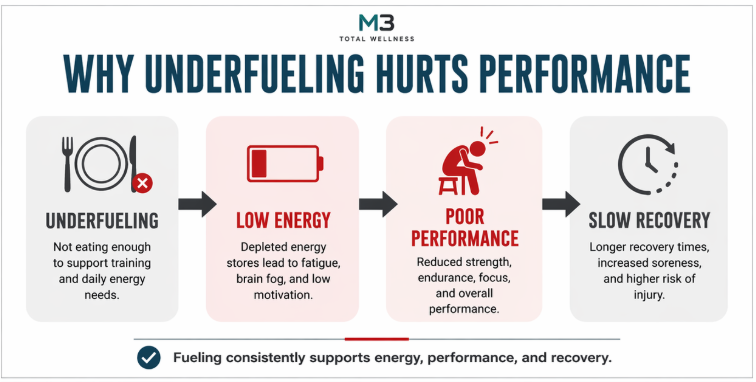
When athletes consistently underfuel, the body begins compensating by:
- reducing power output
- slowing recovery
- increasing fatigue
- breaking down muscle tissue
- decreasing training quality
Over time, chronic underfueling may contribute to low energy availability (LEA) and negatively affect both health and performance.
One thing many athletes notice first is not necessarily weight loss — it’s feeling flat, tired, or unable to recover well between sessions.
How to fix it
- Eat more consistently throughout the day
- Avoid long gaps without food
- Increase intake on harder training days
- Prioritize carbohydrates around training
- Stop relying on caffeine to replace meals
For athletes who struggle with long gaps between meals, strategic snacks can make a huge difference:
👉 Best Snacks for Athletes: Smart Fueling Options for Energy, Performance, and Recovery
Mistake #2: Poor Carbohydrate Timing
Carbohydrates are one of the most misunderstood nutrients in sports nutrition.
A lot of athletes either:
- avoid carbohydrates unnecessarily
- eat too little before training
- or fail to fuel properly around workouts altogether
This becomes especially noticeable in sports that rely heavily on repeated explosive effort.
Why it matters
High-intensity exercise depends heavily on carbohydrates.
As glycogen stores decline, athletes often notice:
- earlier fatigue
- lower explosiveness
- reduced endurance
- slower reaction time
- decreased training intensity
I notice this often during volleyball training and tournaments. Athletes sometimes show up underfueled and feel fine early on, but performance drops significantly later in sessions.
How to fix it
- Include carbohydrates regularly throughout the day
- Eat carbohydrates before training
- Replenish glycogen after exercise
- Match carbohydrate intake to training demands
For a more detailed breakdown of pre-training fueling strategies, meal timing, and snack ideas, read:
👉 Pre-Workout Nutrition for Athletes: How to Fuel Training Sessions Effectively
Competition fueling also requires slightly different strategies:
👉 What to Eat Before a Game: A Simple Guide for Athletes
Mistake #3: Inadequate Hydration
Hydration is one of the most overlooked aspects of athletic performance.
Many athletes:
- drink very little throughout the day
- rely only on thirst
- underestimate sweat losses
- avoid electrolytes completely
Then they wonder why they:
- struggle late in training
- cramp
- feel fatigued
- develop headaches
Why it matters
Even mild dehydration can negatively affect:
- endurance
- concentration
- reaction time
- power output
- recovery
This becomes even more important in:
- hot environments
- long training sessions
- beach sports
- tournament settings
Living and training in South Florida heat makes this extremely obvious during beach volleyball sessions. Hydration mistakes add up quickly outdoors.
How to fix it
- Drink fluids consistently throughout the day
- Start training already hydrated
- Replace fluids lost through sweat
- Consider electrolytes during long or hot sessions
For a deeper breakdown of hydration strategies, sweat losses, sodium, and electrolytes, read:
👉 Hydration for Athletic Performance: How Much Water Athletes Really Need
Mistake #4: Inconsistent Protein Intake
Most athletes understand that protein matters.
But many still struggle with consistency.
Common patterns include:
- eating most protein late at night
- relying too heavily on supplements
- skipping protein earlier in the day
- underestimating total needs
Why it matters
Protein supports:
- muscle repair
- recovery
- strength adaptation
- lean muscle maintenance
Inconsistent intake can reduce recovery quality and limit adaptation to training over time.
The goal is not just high protein intake — it’s consistent intake.
How to fix it
- Include protein at meals and snacks
- Distribute protein throughout the day
- Use whole foods as the foundation
- Prioritize recovery meals after training
Recovery nutrition is where many athletes struggle most:
👉 Post-Workout Recovery Nutrition for Athletes
Mistake #5: Skipping Recovery Nutrition
This is another huge issue I see regularly.
Athletes often:
- finish training
- delay eating for several hours
- or skip recovery nutrition entirely
Then they show up to the next session still under-recovered.
Why it matters
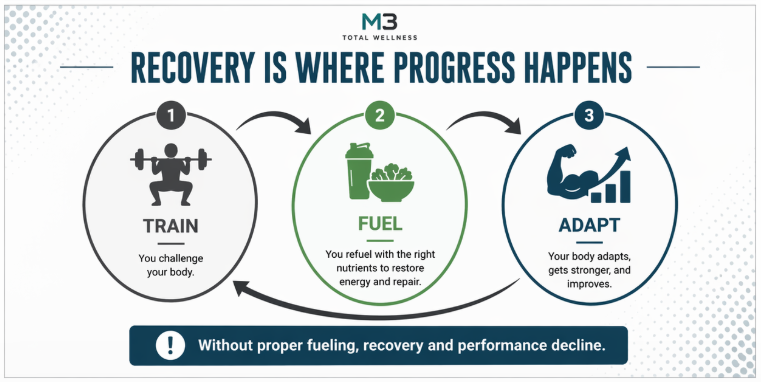
Recovery is where adaptation happens.
Post-workout nutrition helps:
- replenish glycogen
- repair muscle tissue
- support hydration
- improve readiness for the next session
Without proper recovery fueling:
- fatigue accumulates
- soreness increases
- performance may decline over time
This becomes especially important during:
- back-to-back training sessions
- tournament weekends
- multiple practices per day
How to fix it
- Eat within ~30–90 minutes after training when possible
- Combine carbohydrates and protein
- Rehydrate after exercise
- Keep recovery meals simple and repeatable
Examples:
- protein smoothie + fruit
- yogurt + granola
- rice + chicken
- sandwich + fruit
For more detailed recovery strategies, read:
👉 What to Eat After a Game for Recovery and Performance
Practitioner Insight: What I See in Real Athletes
In practice, many athletes believe they have a training problem.
But honestly, a lot of the time they have a fueling problem.
The most common pattern I see looks something like this:
- light breakfast or skipped breakfast
- rushed lunch
- long gap before practice
- intense training session
- large dinner late at night
Technically, total food intake may not seem terrible by the end of the day.
But energy availability during training was still poor.
Once athletes begin:
- eating more consistently
- improving hydration
- adding carbohydrates around workouts
- reducing long gaps without food
they often notice improvements surprisingly quickly.
Usually:
- energy improves first
- then recovery
- then performance consistency
And honestly, the changes are often much simpler than athletes expect.
Summary
How to Fix These Mistakes
If you want to improve your performance, focus on:
- eating consistently throughout the day
- fueling before training
- prioritizing carbohydrates around exercise
- improving hydration habits
- eating after workouts consistently
- building repeatable fueling routines
Most athletes do not need perfect nutrition.
They need better consistency.
Frequently Asked Questions (FAQ)
Why do athletes feel tired even when training consistently?
One of the most common reasons is inadequate fueling. Low carbohydrate intake, inconsistent meal timing, dehydration, and poor recovery nutrition can all contribute to fatigue.
How do I know if I’m not eating enough?
Common signs include:
- low energy
- poor recovery
- excessive hunger later at night
- fatigue during workouts
- stalled progress
- declining performance
Do athletes need to eat more on training days?
Usually, yes.
Harder training sessions increase energy demands, which means athletes often need more carbohydrates, fluids, and total calories to support recovery and performance.
Conclusion
Training is only one piece of performance.
Nutrition is what supports the ability to:
- recover
- adapt
- maintain energy
- perform consistently over time
Many athletes are working extremely hard in training while unintentionally limiting themselves through inconsistent fueling habits.
The good news is that small nutrition improvements often create meaningful performance changes.
Not because nutrition is magic —
but because the body performs better when it actually has enough fuel available to support the work being asked of it.
Within the M3 Performance Framework (Mind • Meals • Motion), fueling is not separate from performance.
It is part of performance.
Take the Next Step
If you’re training consistently but still struggling with:
- low energy
- inconsistent recovery
- fatigue during workouts
- poor tournament endurance
- difficulty fueling properly around training
your nutrition strategy may be limiting your performance more than you realize.
At M3 Total Wellness, I help athletes build practical, evidence-based fueling strategies that support performance, recovery, and long-term consistency.
👉 Schedule a performance assessment to build a personalized nutrition plan around your sport, schedule, and goals.
References
Thomas, D. T., Erdman, K. A., Burke, L. M. (2016). American College of Sports Medicine Joint Position Statement: Nutrition and Athletic Performance. Medicine & Science in Sports & Exercise, 48(3), 543–568. https://doi.org/10.1249/MSS.0000000000000852
Kerksick, C. M., Arent, S., Schoenfeld, B. J., et al. (2017). International Society of Sports Nutrition position stand: Nutrient timing. Journal of the International Society of Sports Nutrition, 14(1), 33. https://doi.org/10.1186/s12970-017-0189-4
Mountjoy, M., Ackerman, K. E., Bailey, D. M., et al. (2023). International Olympic Committee consensus statement on Relative Energy Deficiency in Sport (REDs). British Journal of Sports Medicine, 57(17), 1073–1097. https://doi.org/10.1136/bjsports-2023-106994
Sawka, M. N., Burke, L. M., Eichner, E. R., et al. (2007). American College of Sports Medicine position stand: Exercise and fluid replacement. Medicine & Science in Sports & Exercise, 39(2), 377–390. https://doi.org/10.1249/mss.0b013e31802ca597
Jäger, R., Kerksick, C. M., Campbell, B. I., et al. (2017). International Society of Sports Nutrition position stand: Protein and exercise. Journal of the International Society of Sports Nutrition, 14(1), 20. https://doi.org/10.1186/s12970-017-0177-8