Quick Answer
Anti-inflammatory nutrition for athletes focuses on eating a balanced, nutrient-dense diet that supports recovery without interfering with the body’s natural adaptation to exercise. While inflammation is a normal and necessary part of training, excessive or prolonged inflammation may contribute to slower recovery, increased fatigue, and reduced performance. Rather than trying to eliminate inflammation completely, athletes should prioritize whole foods, adequate energy intake, hydration, quality sleep, and consistent recovery habits.
Key Takeaways
- Inflammation is a normal and necessary response to exercise that helps your body recover and adapt to training.
- The goal isn’t to eliminate inflammation—it’s to support healthy recovery while preventing excessive or chronic inflammation.
- Eating enough carbohydrates, protein, healthy fats, fruits, and vegetables provides your body with the nutrients it needs to recover effectively.
- No single “superfood” or supplement can replace an overall balanced eating pattern.
- Foods rich in omega-3 fats, antioxidants, fiber, vitamins, and minerals may help support recovery when included as part of a well-rounded diet.
- Sleep, hydration, stress management, and overall training load influence inflammation just as much as nutrition.
- Consistency—not perfection—is the foundation of an effective anti-inflammatory nutrition plan.
Introduction
Search for “anti-inflammatory foods” online and you’ll quickly find hundreds of articles promising faster recovery, less soreness, and better athletic performance.
You’ll probably see long lists of foods like blueberries, turmeric, salmon, spinach, olive oil, and tart cherry juice. While many of these foods contain nutrients that support overall health, the message often becomes oversimplified.
Some athletes begin to believe that inflammation itself is the problem.
It isn’t.
In fact, inflammation is one of the reasons training works in the first place.
Every hard workout creates a small amount of stress on your muscles and other tissues. Your body responds by initiating a carefully regulated inflammatory process that helps repair damaged tissue, strengthen muscles, and prepare you to handle future training.
Without that process, your body wouldn’t adapt.
The problem isn’t inflammation.
The problem is when recovery can’t keep up with training.
This can happen when athletes consistently underfuel, sleep poorly, become dehydrated, train excessively without adequate recovery, or follow restrictive diets that don’t meet their nutritional needs.
As a sports dietitian, I’ve seen athletes become so focused on eating “anti-inflammatory foods” that they unintentionally overlook the fundamentals of sports nutrition.
Some avoid carbohydrates because they believe they’re inflammatory.
Others rely heavily on expensive supplements while skipping meals or failing to eat enough overall.
In reality, these habits are far more likely to impair recovery than help it.
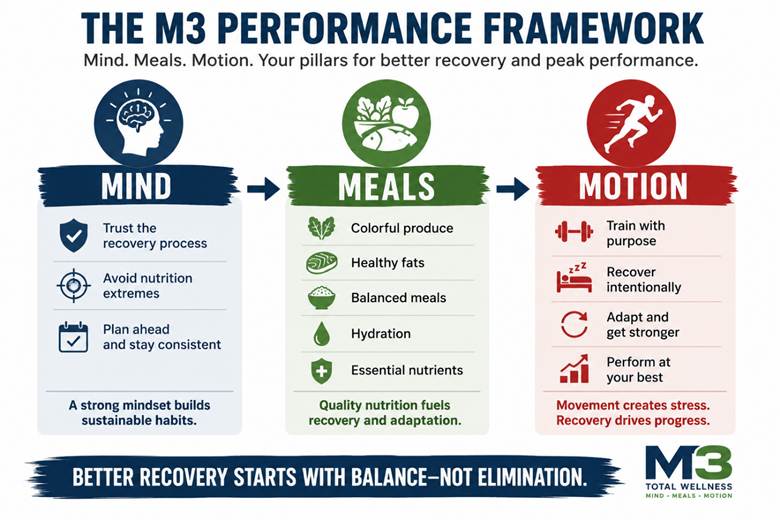
At M3 Total Wellness, I teach athletes to think about recovery through the M3 Performance Framework, which emphasizes the connection between mindset, nutrition, and training.
Rather than chasing the latest superfood or fad diet, athletes should focus on building sustainable habits that consistently support performance.
In this guide, you’ll learn what inflammation actually is, why it’s an essential part of training adaptation, how nutrition influences the recovery process, which foods can support healthy inflammation, and why your overall dietary pattern matters much more than any single ingredient.
Table of Contents
What Is Inflammation?
Inflammation is your body’s natural response to stress, injury, or infection.
Although the word often carries a negative connotation, inflammation is actually one of the body’s most important protective mechanisms.
When you complete a challenging workout, tiny amounts of muscle damage occur as a normal part of exercise. Your immune system responds by sending specialized cells and signaling molecules to the affected tissues, beginning the repair process.
This temporary response is known as acute inflammation, and it’s a normal part of becoming stronger.
Think about what happens after a demanding strength-training session.
Your muscles may feel sore for a day or two.
That soreness is one sign that your body is actively repairing tissue and adapting to the stress of training.
Over time, those repeated cycles of stress and recovery contribute to improvements in strength, endurance, speed, and overall athletic performance.
Without this process, training adaptations would be greatly reduced.
However, inflammation isn’t always beneficial.
When recovery is inadequate, training volume is excessive, illness occurs, or poor nutrition becomes chronic, inflammation may remain elevated longer than intended.
Instead of supporting adaptation, it can begin to interfere with recovery and performance.
The goal of sports nutrition isn’t to eliminate inflammation.
The goal is to provide your body with the nutrients it needs to recover efficiently while allowing the natural adaptation process to occur.
This distinction is important because many popular diets and supplements are marketed as though inflammation should be avoided altogether.
For athletes, that’s neither realistic nor desirable.
The M3 Performance Framework
One of the core messages I teach athletes is that recovery isn’t determined by one food or one supplement.
It’s the result of many small habits working together over time.
That’s why the M3 Performance Framework serves as the foundation for every sports nutrition recommendation I make.
Mind
Recovery starts with your mindset.
Athletes who understand that inflammation is a normal part of training are less likely to chase quick fixes or eliminate entire food groups based on misinformation.
Instead, they focus on consistency, preparation, and trusting the recovery process.
That might mean planning meals after practice, prioritizing sleep, or recognizing that soreness doesn’t necessarily mean something is wrong.
Meals
Nutrition provides the building blocks your body needs to recover.
Rather than focusing on individual “anti-inflammatory” foods, build meals around:
- Colorful fruits and vegetables
- Whole grains and other carbohydrate-rich foods
- Lean sources of protein
- Healthy fats such as nuts, seeds, olive oil, and fatty fish
- Adequate fluids throughout the day
Together, these foods supply energy, protein, fiber, vitamins, minerals, antioxidants, and healthy fats that support normal recovery and overall health.
No single food does all the work.
It’s the quality of your overall eating pattern that matters most.
Motion
Exercise creates the stress that stimulates adaptation.
Nutrition helps support recovery from that stress.
When training and recovery remain balanced, your body becomes stronger, faster, and more resilient.
When recovery consistently falls behind training demands, fatigue accumulates, soreness lingers, and performance may begin to decline.
Instead of viewing inflammation as something to fight against, think of it as a signal that your body is responding to training.
Your job is to provide the recovery support it needs to finish the process.
Good vs. Excessive Inflammation
One of the biggest misconceptions in sports nutrition is that all inflammation is harmful.
In reality, there are different types of inflammation, and understanding the difference is essential for athletes.
Not all inflammation should be treated the same.
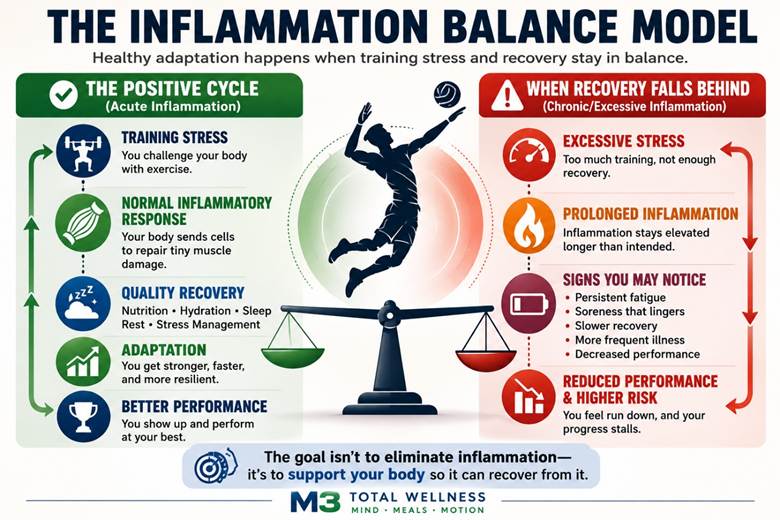
Acute Inflammation: The Kind You Want
Every time you complete a challenging workout, your body experiences a small amount of stress.
Whether you’re lifting weights, sprinting, running a long distance, or competing in a volleyball tournament, exercise creates tiny amounts of muscle damage. Your immune system responds by sending specialized cells to begin repairing those tissues.
This short-term response is known as acute inflammation.
Although it may sound concerning, it’s actually one of the reasons your body becomes stronger.
Acute inflammation helps:
- Repair muscle tissue after exercise
- Stimulate muscle growth and adaptation
- Support connective tissue repair
- Prepare your body for future training
- Improve long-term athletic performance
Think about strength training.
You don’t build muscle while you’re lifting weights.
You build muscle during the recovery process that follows.
Without the normal inflammatory response, those training adaptations would be significantly reduced.
This is why athletes shouldn’t fear soreness after a challenging workout.
While severe or persistent soreness can indicate excessive training, mild soreness often reflects your body’s natural recovery process.
Chronic or Excessive Inflammation: When Recovery Falls Behind
Problems begin when the body remains in a prolonged inflammatory state.
Unlike acute inflammation, which resolves as recovery occurs, chronic or excessive inflammation may develop when the stress placed on the body consistently exceeds its ability to recover.
This can happen for several reasons, including:
- Inadequate calorie intake
- Low carbohydrate availability
- Poor sleep quality
- Chronic psychological stress
- Dehydration
- Excessive training volume
- Illness or injury
- Insufficient recovery between workouts
Rather than helping you adapt, prolonged inflammation can interfere with the recovery process and contribute to declining performance.
Athletes experiencing excessive inflammation may notice:
- Persistent fatigue
- Muscle soreness lasting several days
- Slower recovery between workouts
- Reduced training quality
- Frequent illnesses
- Increased risk of overuse injuries
- Difficulty maintaining performance throughout the season
Importantly, these signs don’t necessarily mean inflammation itself is the problem.
More often, they’re signals that one or more aspects of recovery need attention.
Recovery Is a Balancing Act
Imagine inflammation as the body’s repair crew.
After a workout, the crew arrives to repair damaged tissue and prepare your body for future training.
If everything goes well—adequate nutrition, hydration, sleep, and appropriate recovery—the repairs are completed, and your body comes back stronger.
But if another demanding workout begins before the repairs are finished, or if the body doesn’t receive the resources it needs to recover, the repair crew falls behind.
Eventually, that unfinished work begins to accumulate.
This analogy helps explain why recovery isn’t just about reducing inflammation.
It’s about giving your body enough time and enough nutrients to complete the job.
How Nutrition Influences Inflammation
Nutrition cannot stop inflammation—and that’s actually a good thing.
Remember, inflammation is one of the body’s natural responses to training.
Instead of trying to eliminate it, nutrition helps ensure the inflammatory response remains well regulated and that recovery can occur efficiently.
Think of nutrition as providing your body’s recovery team with the materials it needs to repair, rebuild, and prepare for the next training session.
When your diet consistently provides enough energy and nutrients, your body is better equipped to recover from exercise.
When those nutrients are lacking, recovery becomes more difficult.
Carbohydrates Help Restore Energy
One of the biggest myths I hear is that carbohydrates are inflammatory.
For healthy athletes, that’s not supported by current evidence.
In fact, carbohydrates play a critical role in recovery.
During moderate- and high-intensity exercise, your muscles rely heavily on stored carbohydrate (glycogen) as a primary fuel source.
After training, consuming carbohydrate-rich foods helps replenish those energy stores so your body is prepared for the next workout.
Athletes who consistently underconsume carbohydrates may experience:
- Earlier fatigue
- Poor training quality
- Slower recovery
- Difficulty maintaining performance during busy training periods
This is one reason restrictive low-carbohydrate diets can be particularly challenging for athletes participating in high-volume or high-intensity training.
If you’d like to learn more about how carbohydrates support athletic performance, read my article on Carbohydrates and Athletic Performance.
Protein Supports Muscle Repair
Exercise creates microscopic damage to muscle tissue.
Protein provides the amino acids needed to repair that tissue and support the adaptations that occur after training.
Rather than focusing on eating a large amount of protein at one meal, most athletes benefit from distributing protein intake throughout the day.
Including protein with meals and snacks can help support muscle repair while also contributing to overall recovery.
Some excellent protein choices include:
- Greek yogurt
- Cottage cheese
- Eggs
- Chicken
- Turkey
- Fish
- Lean beef
- Tofu
- Beans and lentils
To learn more about daily protein needs, check out my guide on Protein Needs for Athletes.
Healthy Fats Support Overall Health
Healthy fats don’t simply provide energy.
They’re also important for overall health and provide essential fatty acids that support numerous physiological functions throughout the body.
Foods rich in unsaturated fats include:
- Salmon
- Trout
- Sardines
- Walnuts
- Chia seeds
- Flaxseed
- Olive oil
- Avocados
- Almonds
These foods fit naturally into a balanced eating pattern that supports long-term recovery and cardiovascular health.
Learn more in my article on Healthy Fats for Athletes.
Fruits and Vegetables Provide More Than Vitamins
Colorful fruits and vegetables contribute far more than just vitamins and minerals.
They’re rich in fiber and naturally occurring plant compounds—including polyphenols and carotenoids—that support overall health and recovery.
Rather than searching for one “best” fruit or vegetable, aim for variety.
Eating different colors throughout the week increases the diversity of nutrients your body receives.
Some excellent options include:
- Blueberries
- Strawberries
- Cherries
- Oranges
- Spinach
- Kale
- Broccoli
- Bell peppers
- Tomatoes
- Sweet potatoes
No single fruit or vegetable is a miracle food.
Together, they create a dietary pattern that supports overall health and athletic performance.
Hydration Matters Too
Nutrition isn’t the only factor influencing recovery.
Hydration also plays an essential role.
Even mild dehydration can affect exercise performance, increase perceived effort, and make recovery more difficult.
Replacing fluids throughout the day supports normal physiological processes and helps your body recover more effectively between training sessions.
If you’re unsure how much to drink before, during, or after exercise, read my article on Hydration for Athletic Performance.
The Big Picture
When athletes ask me, “What’s the most anti-inflammatory food I can eat?” my answer is usually the same.
There isn’t one.
Recovery doesn’t come from a single berry, spice, or supplement.
It comes from consistently meeting your body’s overall nutritional needs.
That’s why I encourage athletes to focus less on individual foods and more on building balanced meals that include carbohydrates, protein, healthy fats, fruits, vegetables, and adequate fluids.
Those habits are far more powerful than chasing the latest nutrition trend.
Anti-Inflammatory Foods That Support Recovery
Instead of thinking about foods as either “anti-inflammatory” or “inflammatory,” it’s more helpful to think about which foods consistently support your body’s recovery process.
Athletes don’t need a special anti-inflammatory diet.
They need a well-balanced eating pattern that provides enough energy, supports muscle repair, replenishes glycogen stores, and supplies a variety of nutrients that contribute to overall health.
Below are some of the foods I encourage athletes to include regularly.
Colorful Fruits
Fruits provide carbohydrates for energy along with fiber, vitamins, minerals, and naturally occurring plant compounds that support overall health.
Great choices include:
- Blueberries
- Strawberries
- Cherries
- Oranges
- Kiwi
- Pineapple
- Grapes
Aim to include fruit at breakfast, as part of snacks, or after workouts to help support recovery.
Vegetables
Vegetables add important vitamins, minerals, fiber, and a wide variety of phytochemicals.
Rather than focusing on one “superfood,” try to eat a variety of colors throughout the week.
Examples include:
- Spinach
- Kale
- Broccoli
- Bell peppers
- Carrots
- Tomatoes
- Sweet potatoes
- Brussels sprouts
Healthy Fats
Healthy fats help round out a balanced eating pattern.
Good options include:
- Salmon
- Sardines
- Trout
- Olive oil
- Avocados
- Walnuts
- Almonds
- Chia seeds
- Flaxseed
Whole Grains and Other Carbohydrate-Rich Foods
Recovery requires energy.
Whole grains and other carbohydrate-rich foods help replenish glycogen stores after exercise while also providing fiber and other nutrients.
Examples include:
- Oatmeal
- Brown rice
- Quinoa
- Whole-grain bread
- Whole-wheat pasta
- Potatoes
- Beans
Lean Protein Foods
Recovery also depends on adequate protein intake.
Include a quality protein source with most meals and snacks.
Examples include:
- Chicken
- Turkey
- Fish
- Eggs
- Greek yogurt
- Cottage cheese
- Tofu
- Edamame
- Beans and lentils
💡 Sports Dietitian Tip
One of the simplest pieces of advice I give athletes is to “eat the rainbow.”
Not because every color has magical recovery powers, but because eating a wide variety of fruits and vegetables naturally increases the diversity of vitamins, minerals, fiber, and plant compounds in your diet.
A colorful plate is often a good indicator that you’re eating a balanced, nutrient-dense diet—and that’s far more important than searching for one perfect “anti-inflammatory” food.
Foods to Limit (Not Eliminate)
One of the biggest mistakes I see athletes make is believing they have to completely avoid certain foods to reduce inflammation.
They begin labeling foods as either “good” or “bad,” and before long, eating becomes stressful and unnecessarily restrictive.
That’s not what evidence-based sports nutrition recommends.
A healthy eating pattern isn’t built on perfection.
It’s built on consistency.
Enjoying pizza after a game, birthday cake with friends, or fast food during a long road trip isn’t going to erase months of healthy habits.
Instead of asking, “Which foods should I never eat?” ask yourself:
“What does my overall eating pattern look like most of the time?”
For most athletes, that’s the question that matters.
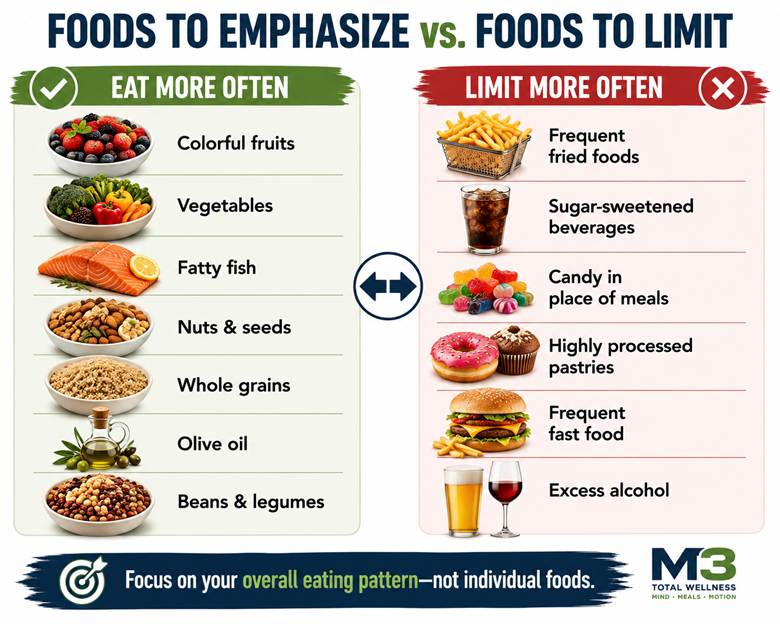
Foods Worth Limiting More Often
Some foods provide relatively few nutrients while being high in added sugars, saturated fats, or sodium. Eating these foods occasionally isn’t a problem, but relying on them frequently may displace more nutrient-dense options.
Examples include:
- Frequent fried foods
- Sugar-sweetened beverages
- Candy and desserts consumed in place of balanced meals
- Highly processed snack foods
- Fast food consumed multiple times per day
- Excessive alcohol (for adult athletes)
Again, these foods aren’t “off limits.”
The goal is simply to make them a smaller part of your overall dietary pattern.
The 80/20 Mindset
One approach I often discuss with athletes is the 80/20 mindset.
Aim to make most of your meals balanced, nutrient-dense, and supportive of your training goals.
Then allow room for flexibility.
This approach is far more sustainable than trying to eat “perfectly.”
It also reduces unnecessary guilt around food—something that can negatively affect an athlete’s relationship with eating.
If a meal contains vegetables, lean protein, whole grains, and healthy fats, your body doesn’t suddenly stop benefiting from it because you enjoyed dessert afterward.
Consistency always beats perfection.
What About Supplements?
Walk into any supplement store and you’ll quickly find products marketed as “anti-inflammatory.”
Turmeric capsules, tart cherry concentrate, omega-3 supplements, antioxidant blends, and recovery powders are often promoted as essential tools for athletes.
But are they?
For most athletes, not necessarily.
While certain supplements have been studied for their potential role in supporting recovery, none can compensate for inadequate nutrition, insufficient sleep, poor hydration, or excessive training.
Food should always be the foundation.
Omega-3 Fatty Acids
Omega-3 fats found in salmon, trout, sardines, walnuts, chia seeds, and flaxseed contribute to overall health and can be part of a balanced recovery plan.
If an athlete rarely eats fish, an omega-3 supplement may be appropriate in some situations, but this should be discussed with a healthcare provider or registered dietitian.
Turmeric and Curcumin
Turmeric and its active compound, curcumin, have received significant attention for their potential role in recovery.
Some studies suggest they may help reduce muscle soreness following intense exercise.
However, research is still evolving, and results vary depending on the dose, formulation, and athlete population.
Adding turmeric to meals is a flavorful way to enjoy it, but high-dose supplements shouldn’t be viewed as a shortcut to better recovery.
Tart Cherry Products
Tart cherry juice and concentrates have also been studied in athletes.
Some evidence suggests they may reduce soreness after particularly strenuous training or competition.
However, they’re best viewed as one tool—not a replacement for adequate nutrition.
Be Careful With High-Dose Antioxidants
Many athletes assume that if antioxidants are good, taking large amounts must be even better.
Unfortunately, that’s not always true.
Exercise intentionally creates oxidative stress as part of the adaptation process.
Large doses of antioxidant supplements taken routinely around training may interfere with some of the body’s natural training adaptations.
That’s one reason I generally recommend obtaining antioxidants primarily through whole foods rather than relying on high-dose supplements unless medically indicated.
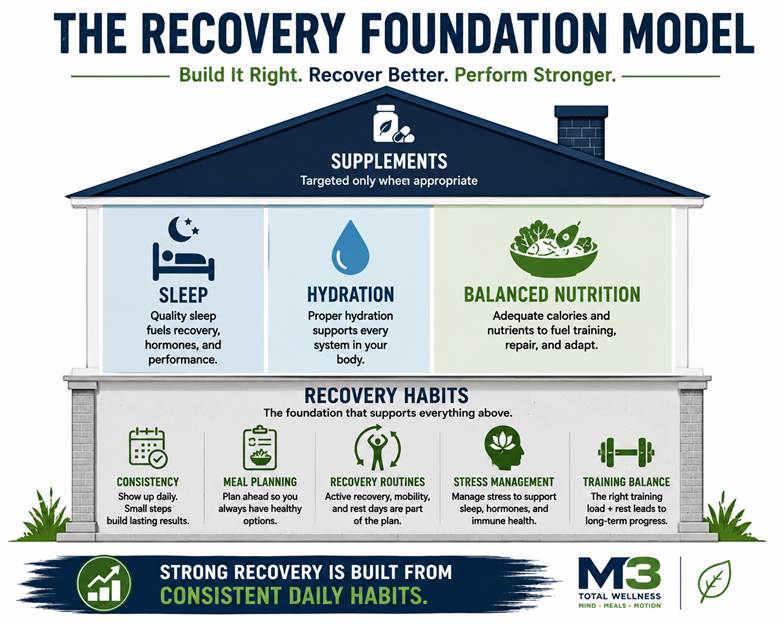
Food First
When athletes ask whether they should buy an anti-inflammatory supplement, I usually ask a different question.
“How many servings of fruits and vegetables did you eat yesterday?”
If the answer is one or none, that’s where I’d focus first.
Improving overall food quality almost always provides a greater return than adding another supplement.
Supplements may have a role in certain situations, but they should complement an already strong nutrition foundation—not replace it.
Daily Strategies for Athletes
Recovery doesn’t depend on one perfect meal.
It’s the result of many small habits repeated consistently over time.
If you’re looking for practical ways to support healthy inflammation and recovery, start here.
1. Eat Enough Overall
One of the most overlooked aspects of recovery is simply consuming enough energy to support your training.
Athletes who consistently underfuel often struggle more with fatigue, prolonged soreness, and poor recovery than athletes who occasionally eat less-than-perfect foods.
2. Build Balanced Meals
Whenever possible, include:
- Carbohydrates
- Lean protein
- Healthy fats
- Fruits or vegetables
- Fluids
This combination provides the nutrients your body needs to recover from training while preparing for the next session.
3. Eat Colorfully
Aim to include fruits and vegetables of different colors throughout the week.
Variety naturally increases your intake of vitamins, minerals, fiber, and beneficial plant compounds.
4. Stay Hydrated
Recovery isn’t only about food.
Maintaining hydration throughout the day supports circulation, temperature regulation, and normal physiological function.
If you’re unsure where to start, read my guide on Hydration for Athletic Performance.
5. Prioritize Sleep
Nutrition supports recovery.
Sleep completes it.
Most athletes need consistent, high-quality sleep to maximize adaptation from training.
Without adequate sleep, even the best nutrition plan has limitations.
6. Plan Ahead
Recovery becomes much easier when healthy choices are convenient.
Pack snacks.
Bring a water bottle.
Prepare meals ahead of busy training days.
Small habits often produce the biggest long-term improvements.
Common Mistakes Athletes Make
Even athletes who care deeply about nutrition sometimes fall into habits that make recovery more difficult.
Here are some of the most common mistakes I encounter.
Trying to Eliminate Inflammation Completely
Inflammation isn’t your enemy.
It’s your body’s natural response to training.
Trying to eliminate it completely misses the point of athletic recovery.
Focusing on One “Superfood”
Blueberries, salmon, turmeric, and tart cherries are all nutritious foods.
But no single food determines your recovery.
Your overall eating pattern matters much more.
Relying on Supplements Instead of Meals
Supplements can have a place.
Balanced meals should always come first.
Restricting Carbohydrates
Many athletes unintentionally reduce their recovery capacity by avoiding carbohydrates.
Remember, carbohydrates help replenish glycogen and support future performance.
Forgetting the Basics
It’s easy to become distracted by social media trends.
But hydration, adequate calories, balanced meals, sleep, and consistent training habits will always outperform the latest nutrition fad.
Frequently Asked Questions
Do anti-inflammatory foods reduce muscle soreness?
Some foods and dietary patterns may support recovery and reduce soreness, but no food completely prevents delayed onset muscle soreness (DOMS).
Should athletes avoid inflammation completely?
No.
Acute inflammation is a normal and necessary part of the training process.
The goal is to support healthy recovery—not eliminate inflammation.
Are anti-inflammatory diets good for athletes?
A balanced eating pattern rich in fruits, vegetables, whole grains, lean proteins, and healthy fats can support recovery.
However, extremely restrictive “anti-inflammatory diets” are generally unnecessary for healthy athletes.
Do I need an omega-3 supplement?
Not necessarily.
Many athletes can meet their needs by regularly including fatty fish, walnuts, flaxseed, and chia seeds in their diet.
Are processed foods inflammatory?
Occasionally eating processed foods doesn’t automatically increase inflammation or impair recovery.
The overall quality and consistency of your diet are much more important than any single meal.
Sports Dietitian Insight
One of the biggest myths I encounter is the idea that athletes need to “fight inflammation.”
In reality, they need to support recovery.
I’ve worked with athletes who spent hundreds of dollars on supplements while skipping breakfast, underfueling after practice, sleeping five hours a night, and wondering why they still felt sore.
The supplements weren’t the problem.
The foundation was.
When we shifted the focus back to the basics—adequate calories, balanced meals, carbohydrates to replenish energy, protein to support muscle repair, hydration, and consistent sleep—their recovery often improved without adding anything expensive or complicated.
That’s why I encourage athletes to think beyond individual foods.
Blueberries don’t make an anti-inflammatory diet.
Turmeric doesn’t fix poor recovery.
One “superfood” won’t overcome weeks of underfueling.
Instead, build a plate that supports your training, recover consistently, and trust your body’s ability to adapt.
Recovery isn’t about eliminating inflammation.
It’s about giving your body the resources it needs to move through the recovery process successfully.
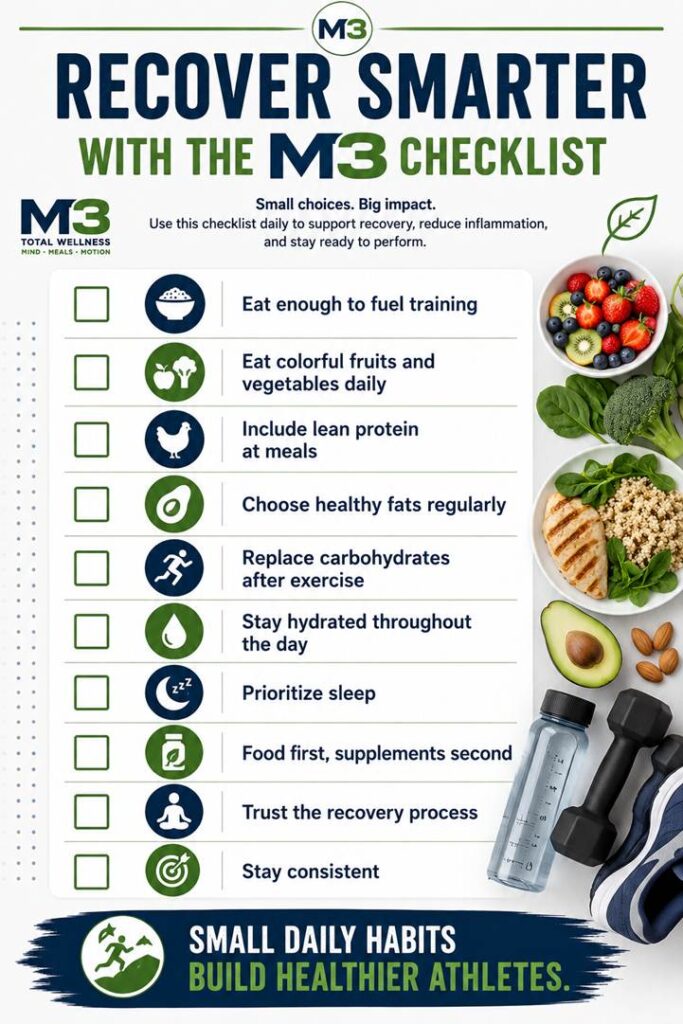
M3 Anti-Inflammatory Nutrition Checklist
Improving recovery doesn’t require a complete diet overhaul.
Instead, focus on building small, sustainable habits that support your body’s natural ability to recover from training.
Use this checklist as a quick reminder throughout your training season.
✅ Eat enough calories to support your training volume.
✅ Include colorful fruits and vegetables every day.
✅ Eat a source of lean protein with most meals and snacks.
✅ Choose healthy fats like olive oil, nuts, seeds, avocado, and fatty fish regularly.
✅ Include carbohydrate-rich foods to replenish energy after exercise.
✅ Stay hydrated throughout the day—not just during workouts.
✅ Prioritize quality sleep as part of your recovery plan.
✅ Build your diet around whole foods before considering supplements.
✅ Don’t fear normal inflammation—it helps your body adapt.
✅ Focus on consistency instead of chasing the latest nutrition trend.
Conclusion
Inflammation isn’t something athletes should fear.
It’s a normal and necessary part of the training process that allows your body to repair, adapt, and become stronger over time.
The real goal isn’t to eliminate inflammation.
It’s to create an environment where your body can recover efficiently and continue adapting to the demands of training.
That doesn’t require an expensive supplement stack or a restrictive “anti-inflammatory diet.”
Instead, focus on the habits that consistently support recovery:
- Eat enough to match your training demands.
- Build balanced meals with carbohydrates, protein, healthy fats, fruits, and vegetables.
- Stay hydrated throughout the day.
- Prioritize sleep and recovery.
- Be consistent rather than perfect.
At M3 Total Wellness, we believe performance is built through the balance of Mind, Meals, and Motion.
When those three pillars work together, your body is better equipped to recover, perform, and stay healthy throughout the season.
Instead of asking, “How do I eliminate inflammation?”, ask a better question:
“How can I give my body what it needs to recover?”
That’s the mindset that supports long-term athletic success.
Ready to Recover Smarter and Perform at Your Best?
Every athlete responds differently to training, competition, and recovery.
Whether you’re preparing for a season, recovering from demanding practices, or simply trying to improve your performance, a personalized nutrition plan can help you get more out of your hard work.
At M3 Total Wellness, I provide one-on-one sports nutrition counseling designed to help athletes fuel with confidence, recover more effectively, and perform at their highest level.
Together, we’ll create a plan tailored to your sport, training schedule, body composition goals, and lifestyle.
During a sports nutrition consultation, we’ll work together to:
- Build a personalized fueling and recovery strategy
- Optimize meal timing around practices and competitions
- Improve hydration habits
- Support healthy body composition goals without compromising performance
- Identify practical nutrition strategies that fit your schedule
- Separate evidence-based recommendations from social media nutrition myths
Whether you’re a competitive athlete, active adult, or parent of a young athlete, the right nutrition strategy can make training more productive—and recovery more effective.
Ready to fuel smarter, recover better, and perform with confidence?
References
Burke, L. M., Hawley, J. A., Wong, S. H. S., & Jeukendrup, A. E. (2011). Carbohydrates for training and competition. Journal of Sports Sciences, 29(Suppl. 1), S17-S27. https://doi.org/10.1080/02640414.2011.585473
Jäger, R., Kerksick, C. M., Campbell, B. I., et al. (2017). International Society of Sports Nutrition Position Stand: Protein and Exercise. Journal of the International Society of Sports Nutrition, 14, 20. https://doi.org/10.1186/s12970-017-0177-8
Kerksick, C. M., Arent, S., Schoenfeld, B. J., et al. (2017). International Society of Sports Nutrition Position Stand: Nutrient Timing. Journal of the International Society of Sports Nutrition, 14, 33. https://doi.org/10.1186/s12970-017-0189-4
Koelman, L., Rodrigues, C. E., & Aleksandrova, K. (2022). Effects of dietary patterns on biomarkers of inflammation and immune responses: A systematic review and meta-analysis of randomized controlled trials. Advances in Nutrition, 13(1), 101–115. https://doi.org/10.1093/advances/nmab086
McDermott, B. P., Anderson, S. A., Armstrong, L. E., et al. (2017). National Athletic Trainers’ Association Position Statement: Fluid Replacement for the Physically Active. Journal of Athletic Training, 52(9), 877-895. https://doi.org/10.4085/1062-6050-52.9.02
Mountjoy, M., Ackerman, K. E., Bailey, D. M., et al. (2023). International Olympic Committee (IOC) Consensus Statement on Relative Energy Deficiency in Sport (REDs): 2023 Update. British Journal of Sports Medicine, 57(17), 1073-1098. https://doi.org/10.1136/bjsports-2023-106994
Peake, J. M., Neubauer, O., Della Gatta, P. A., & Nosaka, K. (2017). Muscle damage and inflammation during recovery from exercise. Journal of Applied Physiology, 122(3), 559-570. https://doi.org/10.1152/japplphysiol.00971.2016
Reyneke, G. L., Lambert, K., & Beck, E. J. (2025). Dietary patterns associated with anti-inflammatory effects: An umbrella review of systematic reviews and meta-analyses. Nutrition Reviews. https://doi.org/10.1093/nutrit/nuaf104
Thomas, D. T., Erdman, K. A., & Burke, L. M. (2016). Position of the Academy of Nutrition and Dietetics, Dietitians of Canada, and the American College of Sports Medicine: Nutrition and Athletic Performance. Journal of the Academy of Nutrition and Dietetics, 116(3), 501-528. https://doi.org/10.1016/j.jand.2015.12.006