
Quick Answer
Relative Energy Deficiency in Sport (RED-S) is a syndrome that can develop when an athlete experiences problematic low energy availability—meaning too little dietary energy remains available to adequately support the body’s physiological functions after accounting for exercise demands.
RED-S can affect athletes of any sex and can involve multiple aspects of health and performance, including:
- Bone health
- Reproductive function
- Metabolism
- Immune function
- Cardiovascular and hematological health
- Psychological well-being
- Recovery
- Training response
- Athletic performance
RED-S doesn’t necessarily develop because an athlete intentionally restricts food. Problematic low energy availability can result from intentional restriction, but it can also occur when training demands increase and food intake simply doesn’t keep up.
RED-S is also not diagnosed from one symptom, a certain body weight, or one calculation of energy availability. Proper assessment requires looking at the whole athlete.
Key Takeaways
- RED-S stands for Relative Energy Deficiency in Sport.
- The current IOC model describes RED-S as a syndrome associated with exposure to problematic prolonged and/or severe low energy availability (LEA).
- RED-S can affect both female and male athletes.
- It can affect athletes across different sports, body sizes, and competitive levels.
- RED-S involves more than menstrual function or bone health.
- Health consequences can involve reproductive, musculoskeletal, metabolic, immune, cardiovascular, hematological, gastrointestinal, neurocognitive, and psychological function.
- Performance may also be affected through impaired recovery, training response, endurance, strength, power, concentration, and availability to train or compete.
- An athlete does not have to be underweight or losing weight to warrant concern.
- Athletes may continue performing well for some time despite problematic low energy availability.
- RED-S cannot be diagnosed from one symptom or a simple online checklist.
- Evaluation may involve a sports medicine physician, sports dietitian, and other qualified healthcare professionals depending on the athlete’s needs.
- Treatment focuses on correcting the underlying energy mismatch while addressing any health consequences and contributing behaviors.
Introduction: RED-S Is About More Than Performance
Athletes are accustomed to asking a lot from their bodies.
Train harder.
Recover faster.
Become stronger.
Improve endurance.
Compete more often.
Sometimes the pursuit of better performance also comes with pressure to become leaner or lighter.
But every training session creates an energy demand—and the body has responsibilities that extend far beyond sport.
It still needs energy to maintain:
- Bone
- Hormones and reproductive function
- Immune defenses
- Cardiovascular function
- Blood-cell production and iron-related processes
- Metabolism
- Growth and development
- Brain function
- Recovery and tissue repair
When an athlete repeatedly doesn’t provide enough energy to support both exercise and these physiological needs, the consequences can extend far beyond feeling tired during practice.
That’s where Relative Energy Deficiency in Sport, or RED-S, becomes important.
RED-S isn’t simply another name for eating too little.
It describes a broader syndrome in which exposure to problematic low energy availability can impair health, well-being, and athletic performance. The current International Olympic Committee (IOC) model recognizes that these effects can involve numerous physiological and psychological systems and can occur in both female and male athletes.
Within the M3 Performance Framework—Mind, Meals, and Motion, RED-S reinforces an important principle:
Training demand cannot be considered separately from the resources required to support it.
Motion creates the demand.
Meals help provide the energy and nutrients needed to meet that demand.
Mind can influence food choices, body-image concerns, performance expectations, planning, and other behaviors that affect fueling.
When those areas become persistently misaligned, health and performance may eventually be affected.
This article explains what RED-S actually is, how it differs from underfueling and low energy availability, how it can affect female and male athletes, how clinicians evaluate it, and what recovery can involve.
Table of Contents
What Is Relative Energy Deficiency in Sport (RED-S)?
RED-S stands for:
Relative Energy Deficiency in Sport
The concept was introduced by the International Olympic Committee in 2014 and has continued to evolve as research into low energy availability and athlete health has expanded.
The IOC’s 2023 consensus statement describes RED-S as a syndrome of impaired physiological and/or psychological functioning experienced by female and male athletes as a result of exposure to problematic prolonged and/or severe low energy availability.
That wording matters.
RED-S isn’t simply:
Athlete eats too little → athlete has RED-S.
The relationship is more nuanced.
Low energy availability exists on a continuum.
The IOC distinguishes between adaptable LEA and problematic LEA.
Adaptable Low Energy Availability
A short-term reduction in energy availability isn’t automatically harmful.
In some situations, athletes may experience brief and carefully managed reductions in energy availability—for example, during a monitored body-composition intervention or temporary period of intensified training.
The body can respond with mild, reversible adaptations without necessarily producing long-term harm.
The IOC refers to this as adaptable LEA.
Problematic Low Energy Availability
Concern increases when the exposure becomes sufficiently severe, prolonged, or frequent that normal physiological functioning is disrupted.
This is referred to as problematic LEA.
Exactly how much exposure becomes problematic isn’t identical for every athlete or every body system. Individual responses can vary based on the magnitude, duration, and frequency of LEA as well as other modifying factors.
When problematic LEA contributes to impaired physiological and/or psychological functioning, the athlete may fall within the RED-S syndrome.
That’s why RED-S should not be reduced to one calorie threshold, one symptom, or one body type.
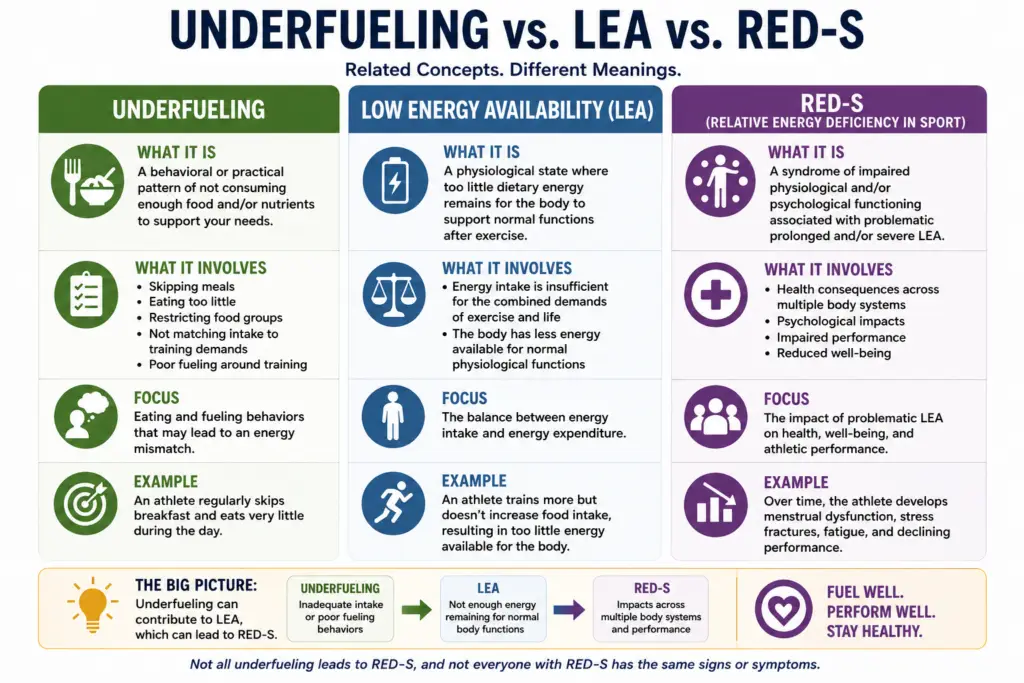
Underfueling vs. Low Energy Availability vs. RED-S
These three terms are related, but they don’t mean exactly the same thing.
Understanding the distinction prevents a lot of confusion.
Underfueling
Underfueling is the practical description of not consuming enough food or nutrients to adequately support an athlete’s needs.
It might look like:
- Skipping meals
- Eating portions that are consistently too small
- Restricting carbohydrates
- Missing recovery nutrition
- Failing to increase food intake when training increases
- Intentionally reducing intake for weight or body-composition goals
Underfueling can be intentional or completely accidental.
For a practical discussion of how this can show up in everyday training, see Signs of Underfueling in Athletes: How to Know If You’re Not Eating Enough.
Low Energy Availability
Energy availability refers to the dietary energy remaining for the body’s physiological functions after accounting for exercise energy expenditure.
Low energy availability occurs when that remaining energy is insufficient to optimally support the body’s needs.
That makes LEA a more specific physiological concept than the general term underfueling.
For a deeper explanation of energy availability, risk factors, signs, and the distinction between adaptable and problematic LEA, see Low Energy Availability in Athletes: Signs, Risks, and Why It Matters.
RED-S
RED-S describes the broader syndrome of health and performance consequences associated with problematic LEA.
A useful way to think about the relationship is:
Underfueling may contribute to LEA → problematic LEA may contribute to RED-S
But this should not be interpreted as an automatic sequence in which every missed meal eventually becomes RED-S.
Context matters.
Duration matters.
Severity matters.
Individual physiology matters.
And the presence of signs or symptoms requires appropriate clinical interpretation.
This is also why athletes shouldn’t diagnose themselves with RED-S simply because they’re tired or believe they aren’t eating enough.
How Does RED-S Develop?
There isn’t one single pathway to RED-S.
Some athletes intentionally restrict their intake.
Others don’t.
That distinction is important because RED-S is sometimes incorrectly assumed to occur only in athletes with eating disorders.
Intentional Restriction
An athlete may deliberately reduce food intake because they want to:
- Lose weight
- Reduce body fat
- Meet a weight-class requirement
- Achieve a particular appearance
- Improve their perceived power-to-weight ratio
- Meet expectations from sport culture, coaches, teammates, or social media
Not every attempt to modify body composition produces RED-S.
The concern is when the resulting energy mismatch becomes problematic and begins affecting physiological or psychological function.
Unintentional Underfueling
An athlete can also develop problematic LEA without trying to restrict food.
Consider an athlete who suddenly increases training from:
5 hours per week → 10 hours per week
but continues eating approximately the same way.
Or an endurance athlete whose energy requirements become difficult to meet because of very high training volumes.
Or an athlete balancing:
school + work + practice + strength training + competition
who simply doesn’t have enough opportunities to eat.
In these situations, the athlete may genuinely believe they’re eating plenty.
Their intake simply isn’t keeping pace with demand.
Disordered Eating and Eating Disorders
Disordered eating or a diagnosed eating disorder can also contribute to problematic LEA and RED-S.
But the two concepts shouldn’t be treated as interchangeable.
An athlete can experience RED-S without having an eating disorder, and an athlete with an eating disorder requires appropriate specialized assessment and treatment beyond simply being told to increase calories.
Training Load Matters Too
Nutrition is only one side of the equation.
Training volume, intensity, competition schedules, additional conditioning, and other physical activity all contribute to energy expenditure.
That’s why the solution isn’t always:
“Eat more.”
Sometimes nutrition needs to increase.
Sometimes training needs to decrease temporarily.
Sometimes both need attention.
And sometimes psychological or medical factors also need treatment.
RED-S is ultimately a whole-athlete problem, which is why effective assessment and management may require a multidisciplinary approach.
How RED-S Can Affect the Body
This is where RED-S becomes distinctly different from simply having a poorly fueled workout.
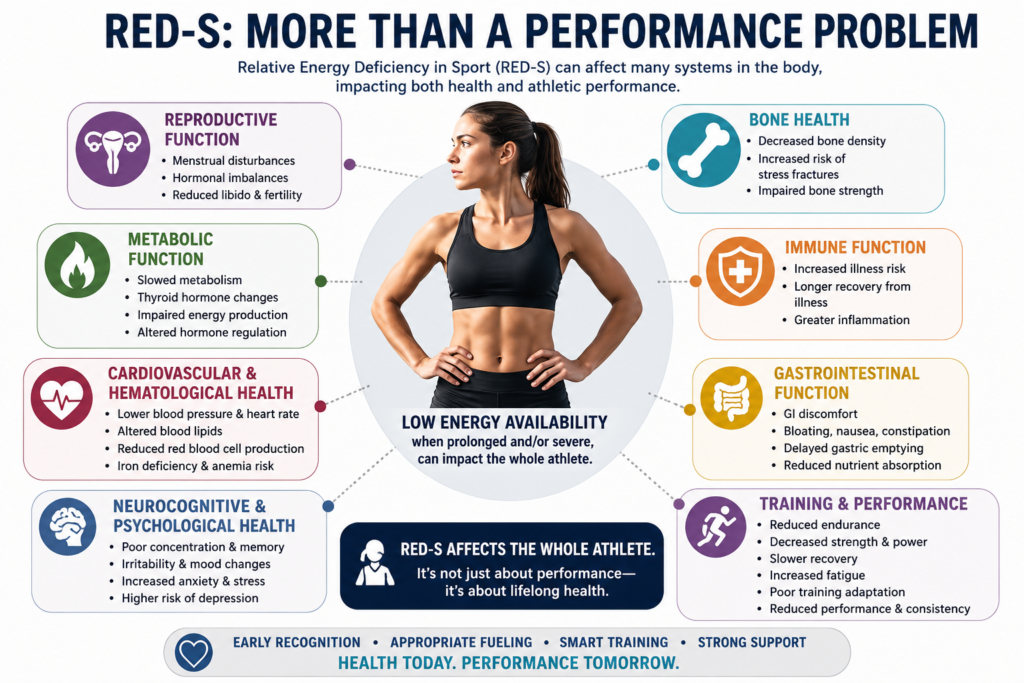
Problematic low energy availability can affect numerous physiological systems.
The IOC’s RED-S model includes potential effects involving energy metabolism, reproductive function, musculoskeletal health, immunity, glycogen synthesis, cardiovascular health, and hematological health, among other areas. More recent reviews similarly describe RED-S as a multisystem problem rather than an isolated reproductive or bone disorder.
1. Reproductive Function
Reproductive function is particularly sensitive to energy availability.
When energy availability becomes inadequate, the body can alter signaling along the hypothalamic-pituitary-gonadal axis.
In female athletes, this may contribute to menstrual disturbances.
In male athletes, changes can include suppression of reproductive hormones such as testosterone and changes in libido.
These effects are discussed more specifically later in this article.
2. Bone Health
Bone is living tissue that continuously responds to training, nutrition, hormones, and mechanical loading.
Problematic LEA can interfere with normal bone health through multiple pathways, including altered reproductive hormones and changes in bone formation and turnover.
Over time, this may contribute to:
- Reduced bone mineral density
- Impaired bone health
- Increased concern for bone stress injuries
A recent systematic review and meta-analysis found that most included studies examining bone outcomes reported impaired bone health and greater bone-stress-injury risk among athletes with LEA.
Bone stress injuries in an athlete—especially recurrent injuries—deserve a broader evaluation rather than being viewed only as bad luck.
3. Metabolic and Endocrine Function
When energy is limited, the body can adapt by changing how energy is allocated.
Research on RED-S and LEA has identified alterations involving several hormonal and metabolic pathways, including thyroid-related signaling, leptin, reproductive hormones, and the growth hormone/IGF-1 axis.
These adaptations help explain why RED-S cannot be understood simply as “not eating enough calories.”
The body is actively responding to inadequate energy availability.
4. Immune Function
Athletes need a functioning immune system to remain healthy enough to train consistently.
Problematic LEA has been associated with impaired immune-related outcomes, and athletes may experience increased susceptibility to illness or lose training availability because of illness.
Again, getting sick frequently does not diagnose RED-S.
But recurrent illness in an athlete who is also experiencing other RED-S indicators deserves attention.
5. Cardiovascular and Hematological Health
The RED-S model also recognizes potential cardiovascular and hematological consequences.
These areas are particularly important because athletes may focus primarily on visible outcomes—body weight, muscle definition, race times—while changes occurring internally are much easier to miss.
The IOC consensus includes cardiovascular and hematological health among the systems potentially impaired by RED-S.
6. Gastrointestinal Function
Problematic LEA can also occur alongside gastrointestinal disturbances.
GI symptoms can create a difficult cycle:
Athlete struggles to eat enough → GI symptoms make eating harder → intake falls further
This is another reason an athlete with persistent GI problems shouldn’t simply be told to force down more food without investigating the underlying problem.
7. Neurocognitive and Psychological Health
RED-S isn’t purely physical.
The current IOC framework also recognizes psychological and neurocognitive considerations. Mental-health concerns can be both contributors to and consequences associated with problematic LEA, depending on the individual situation.
This reinforces why RED-S assessment sometimes requires more than a nutrition plan.
How RED-S Can Affect Athletic Performance
Athletes often become concerned about RED-S because something changes in their performance.
Training may feel harder.
Recovery may take longer.
Progress may stall.
An athlete who normally tolerates a demanding training schedule may suddenly struggle to maintain the same workload.
But the relationship between RED-S and performance isn’t always obvious.
An athlete experiencing problematic low energy availability may still have good workouts, compete successfully, or even improve temporarily. Performance changes can develop gradually, and different athletes may experience different consequences.
This is one reason current performance alone isn’t a reliable indicator of whether an athlete is adequately fueled or healthy.
When RED-S does affect performance, several areas may be involved.
Reduced Training Response
Training creates a stimulus.
Recovery is when the body adapts to that stimulus.
For an athlete to become stronger, faster, or more conditioned, the body needs sufficient resources to support those adaptations.
When energy availability is persistently inadequate, the athlete may not respond to training as expected.
This can create a frustrating situation:
More training → inadequate recovery → limited adaptation → more training
The athlete may interpret the lack of progress as evidence that they need to work harder when the underlying problem may actually involve inadequate recovery resources.
Reduced Endurance
Endurance performance depends heavily on adequate energy and carbohydrate availability.
Problematic LEA can coexist with inadequate carbohydrate intake and reduced glycogen availability, particularly when athletes restrict food while maintaining high training volumes.
An athlete might notice that:
- Normal training paces feel harder
- Energy fades earlier in sessions
- Longer workouts become increasingly difficult
- Repeated efforts are harder to sustain
These symptoms are not specific to RED-S, but persistent changes alongside other indicators deserve further investigation.
For more information about carbohydrate’s role in training and performance, see Carbohydrates and Athletic Performance.
Strength and Power May Be Affected
RED-S is sometimes associated primarily with endurance athletes, but strength and power athletes aren’t immune.
The IOC RED-S framework includes potential performance consequences involving decreased muscle strength, reduced training response, and impaired performance.
For athletes participating in sports requiring:
- Sprinting
- Jumping
- Explosive movements
- Heavy resistance training
- Repeated high-intensity efforts
inadequate energy availability can work against the adaptations they’re trying to create through training.
Recovery Can Become More Difficult
A difficult workout should create some fatigue.
The important question is whether the athlete recovers appropriately before the next major training demand.
With problematic LEA, an athlete may begin noticing that recovery isn’t keeping pace with training.
That might appear as:
- Persistent fatigue
- Increasing difficulty completing normal training
- Declining training quality
- Longer recovery between sessions
- Greater difficulty tolerating high training volumes
Recovery nutrition is only one part of the picture, but consistently replacing energy and nutrients after exercise helps support the recovery process.
See Post-Workout Recovery Nutrition for Athletes for practical recovery-fueling strategies.
Injuries and Illness Can Interrupt Training
One of the biggest performance consequences isn’t necessarily what happens during competition.
It’s losing the ability to train consistently.
If an athlete experiences recurrent illness, bone stress injuries, or other health problems associated with problematic LEA, missed training can accumulate.
Consider two athletes with similar ability.
One completes months of consistent training.
The other repeatedly misses training because of illness or injury.
Even if RED-S never produces an obvious dramatic decline during a single workout, reduced training availability can ultimately interfere with long-term development.
Concentration and Decision-Making Matter Too
Athletic performance isn’t purely physical.
Many sports require athletes to:
- Read opponents
- Make rapid decisions
- Maintain concentration
- Execute technical skills under fatigue
- Adapt tactics during competition
The IOC RED-S framework recognizes potential neurocognitive consequences as part of the syndrome.
For a beach volleyball player, for example, performance isn’t determined only by jump height or hitting power.
The athlete also needs to recognize defensive positioning, communicate with a partner, make serving decisions, and execute skills repeatedly—sometimes across hours of competition.
Nutrition supports the athlete who has to make those decisions, not simply the muscles performing the movement.
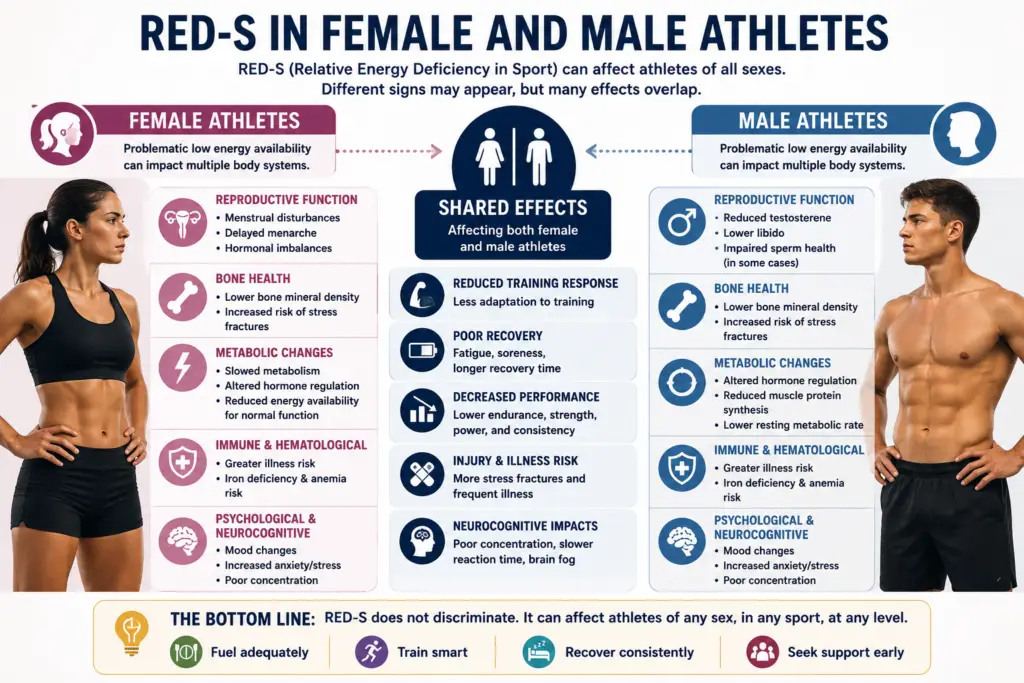
RED-S in Female Athletes
RED-S applies to athletes of all sexes, but reproductive changes in female athletes have played an important role in understanding the effects of inadequate energy availability.
One of the best-known signs is menstrual dysfunction.
Menstrual Changes Can Be an Important Signal
Problematic LEA can disrupt the hormonal signaling involved in normal reproductive function.
Depending on the athlete and circumstances, menstrual disturbances may include:
- Irregular menstrual cycles
- Longer intervals between periods
- Missed periods
- Functional hypothalamic amenorrhea
These changes should not automatically be considered a normal consequence of serious training.
The idea that losing a menstrual cycle simply means an athlete is “training hard enough” is outdated and potentially harmful.
Menstrual dysfunction can be an important sign that warrants medical evaluation.
However, menstrual status also shouldn’t be used as a stand-alone RED-S test.
Not every menstrual disturbance is caused by low energy availability, and other medical causes may need to be investigated.
Hormonal Contraception Can Complicate the Picture
Another important consideration is hormonal contraception.
Some forms of hormonal contraception alter or suppress menstrual bleeding, which can make spontaneous menstrual function more difficult to evaluate.
A withdrawal bleed associated with hormonal contraception, for example, does not necessarily provide the same information about endogenous reproductive function as a naturally occurring menstrual cycle.
This is one reason RED-S evaluation requires more context than asking:
“Do you get a period?”
Medication history, menstrual history, nutrition, training, injuries, symptoms, and other clinical findings all matter.
Bone Health Deserves Particular Attention
Reproductive dysfunction and inadequate energy availability can intersect with bone health.
This becomes particularly concerning in athletes who experience:
- Recurrent bone stress injuries
- Menstrual dysfunction
- Prolonged periods of restrictive eating
- Significant training loads
- Other RED-S indicators
Building and maintaining healthy bone is especially important during adolescence and early adulthood, when athletes are still accumulating bone mass.
A young athlete repeatedly losing menstrual cycles while experiencing bone stress injuries shouldn’t simply be reassured that these are normal consequences of competitive sport.
Those patterns deserve appropriate evaluation.
RED-S in Male Athletes
One of the most important developments in the RED-S model was recognition that male athletes can also experience clinically important consequences of problematic low energy availability.
RED-S is not a female-only condition.
Historically, much of the research surrounding low energy availability focused on female athletes, partly because menstrual dysfunction provides a visible reproductive signal.
Male athletes don’t have that same obvious monthly indicator.
As a result, problematic LEA may be easier to overlook.
Reproductive Hormones Can Be Affected
In male athletes, prolonged or severe energy deficiency can affect the hypothalamic-pituitary-gonadal axis and reproductive hormones.
Potential findings can include reductions in testosterone and changes in reproductive function.
An athlete might also experience changes in:
- Libido
- Morning erections
- General well-being
- Recovery
These symptoms aren’t specific to RED-S and can have many other causes.
They should therefore be interpreted clinically rather than used for self-diagnosis.
Male Athletes Can Experience Bone Consequences Too
Bone health is not exclusively a female-athlete concern.
Male athletes exposed to problematic LEA may also experience impaired bone health and increased concern for bone stress injuries.
This is especially relevant in sports where athletes combine:
high training volume + pressure to remain lean or light
Examples can include endurance sports, cycling, weight-category sports, and other environments where a low body mass may be perceived as advantageous.
RED-S May Be Easier to Miss in Men
A male athlete might continue training while experiencing:
- Persistent fatigue
- Poor recovery
- Recurrent injuries
- Decreased libido
- Changes in mood
- Reduced performance
Each symptom individually can be explained in many ways.
That’s exactly why RED-S assessment relies on patterns and clinical context rather than one “classic” symptom.
Greater awareness of RED-S in male athletes is important because being male does not protect an athlete from the physiological consequences of inadequate energy availability.
Who May Be at Greater Risk for RED-S?
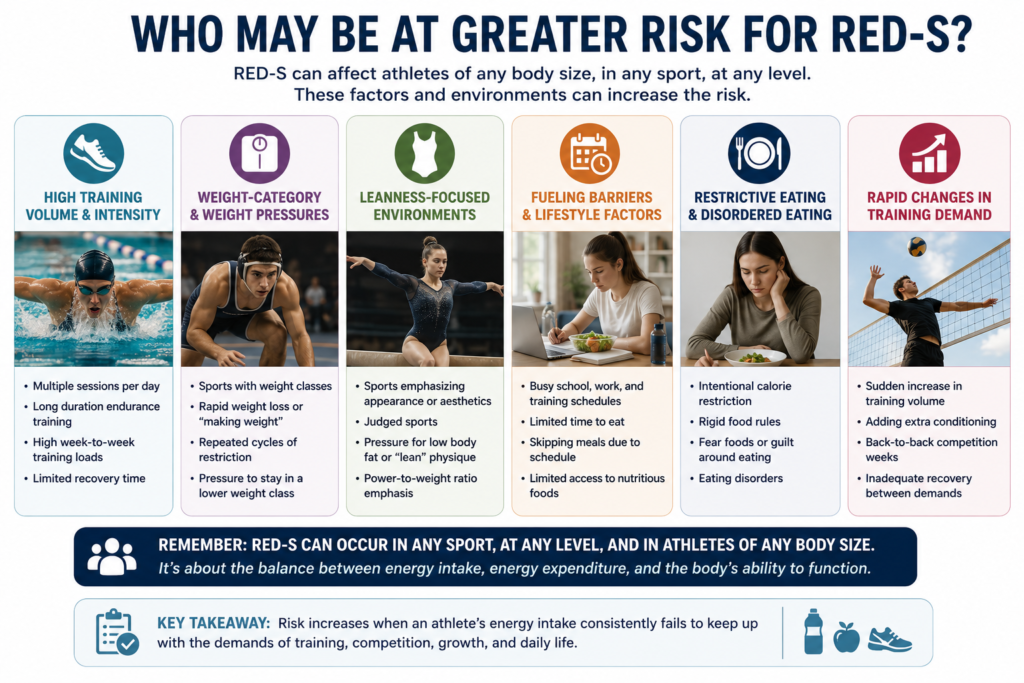
RED-S can occur in any sport.
However, certain sporting environments may increase the likelihood of problematic LEA.
Endurance Sports
Distance running, cycling, triathlon, swimming, and other endurance sports can involve substantial energy expenditure.
High training volumes can make it difficult for athletes to consume enough energy, particularly when:
- Multiple training sessions occur in one day
- Appetite doesn’t match expenditure
- Training schedules interfere with meals
- Athletes intentionally try to remain light
- Carbohydrate intake is restricted
In these situations, underfueling can happen even without an intentional attempt to lose weight.
Weight-Category Sports
Sports with weight classes can create additional pressure around body mass.
Athletes may intentionally manipulate food and fluid intake to qualify for a particular category.
Depending on the strategy, magnitude, frequency, and duration of restriction, repeated attempts to make weight can increase concern around energy availability and other health consequences.
Aesthetic and Judged Sports
Sports in which appearance or physique is perceived to influence performance or judging may create additional pressure to maintain a certain body composition.
That doesn’t mean athletes in these sports automatically develop RED-S.
It means the sporting environment can contain risk factors that deserve attention.
Sports That Emphasize Leanness or Power-to-Weight Ratio
In some sports, athletes may believe that reducing body mass will automatically improve performance.
Sometimes body composition does influence sport performance.
But lighter is not always better.
If weight loss comes at the expense of:
- Training quality
- Recovery
- Strength
- Bone health
- Hormonal function
- Overall health
the strategy may ultimately undermine the performance it was intended to improve.
High-Volume Training Environments
Athletes don’t need to participate in a traditionally “high-risk” sport.
Training demand itself can create risk.
An athlete who suddenly adds:
- Extra conditioning
- Strength sessions
- Two-a-day practices
- Tournament weekends
- Additional cardio
- Longer practices
without adjusting nutrition may unintentionally create a substantial energy mismatch.
This is particularly relevant during periods when training volume changes quickly.
For athletes regularly completing multiple sessions in one day, see Fueling for Two-a-Day Training Sessions.
Athletes Pursuing Weight Loss
Intentional weight loss deserves careful planning in athletes.
An aggressive calorie deficit combined with demanding training can increase the likelihood that energy availability becomes inadequate.
The goal shouldn’t simply be:
“How quickly can I lose weight?”
A better performance-oriented question is:
“Can this strategy support my health, training, recovery, and performance while I pursue the goal?”
Athletes With Disordered Eating or Eating Disorders
Restrictive eating behaviors and eating disorders can substantially increase the risk of problematic LEA.
Warning signs might involve rigid food rules, fear surrounding certain foods, compulsive exercise, significant body-image concerns, or persistent restriction.
These situations require appropriate professional support.
Nutrition education alone may not address the underlying problem.
Young and Developing Athletes
Youth and adolescent athletes deserve particular attention because energy is needed not only for training but also for growth and development.
An adolescent athlete is not simply a smaller adult athlete.
Their nutrition must support:
- Growth
- Bone development
- Puberty
- Normal physiological function
- Training
- Recovery
Chronically inadequate intake during these years can therefore carry implications beyond today’s practice or competition.
RED-S Doesn’t Have a “Look”
One point deserves emphasis:
You cannot determine whether an athlete has adequate energy availability by looking at their body.
RED-S can occur across different body sizes and body compositions.
Being lean doesn’t prove an athlete has RED-S.
Having a larger body doesn’t rule it out.
Body appearance isn’t a diagnostic tool.
Can You Have RED-S Without Losing Weight?
Yes.
This is one of the most important misconceptions surrounding RED-S.
Body weight can provide useful information in some circumstances, but stable body weight does not guarantee adequate energy availability.
The body can adapt to prolonged energy deficiency in ways that make scale weight an incomplete indicator of what is happening physiologically.
An athlete may therefore experience concerning changes involving:
- Reproductive function
- Bone health
- Recovery
- Training response
- Mood
- Illness
- Performance
without experiencing dramatic weight loss.
Conversely, losing weight does not automatically mean an athlete has RED-S.
Weight can change for many reasons.
The key point is that RED-S is not diagnosed by the scale.
This is why evaluating athletes only through body weight can miss important information.
Can You Still Perform Well With RED-S?
Potentially, yes.
This can make RED-S particularly difficult to recognize.
Athletes sometimes assume:
“If something were wrong, my performance would be terrible.”
But physiological problems don’t necessarily appear all at once.
An athlete may continue:
- Winning competitions
- Setting personal bests
- Completing difficult workouts
- Maintaining strength
- Training at a high level
while other indicators begin appearing.
There may even be situations in which short-term weight loss temporarily benefits a performance variable while the underlying strategy is not sustainable for long-term health or performance.
That creates an important distinction between:
What produces a result today
and
What supports sustainable performance over months and years.
Eventually, accumulating problems such as poor recovery, illness, bone stress injury, hormonal disruption, or impaired training adaptation can interfere with the athlete’s ability to train and compete consistently.
Performance success does not automatically equal physiological health.
How Is RED-S Diagnosed?
There is no single test that tells an athlete:
“You have RED-S.”
There is also no universally valid calorie threshold, body-fat percentage, blood test, questionnaire, or symptom that independently establishes the diagnosis.
RED-S assessment requires clinical evaluation.
This is especially important because many potential RED-S indicators are nonspecific.
Fatigue, for example, could result from:
- Inadequate sleep
- Iron deficiency
- Infection
- Excessive training
- Psychological stress
- Inadequate carbohydrate intake
- Medication effects
- Other medical conditions
Likewise, menstrual dysfunction, low testosterone, gastrointestinal symptoms, recurrent injuries, or declining performance can have causes unrelated to RED-S.
A clinician therefore needs to investigate the pattern, not simply identify one symptom and attribute it to underfueling.
What Might Be Evaluated?
Depending on the athlete and their symptoms, evaluation may include:
- Medical history
- Menstrual or reproductive history
- Training history
- Recent changes in training load
- Injury history
- Bone stress injuries
- Nutrition and fueling patterns
- Body-weight or growth history when clinically relevant
- Psychological health
- Eating behaviors
- Sleep and recovery
- Medications
- Physical examination
- Laboratory testing when indicated
- Bone health assessment when indicated
The evaluation also needs to consider other medical explanations for the athlete’s symptoms.
That is one reason collaboration between healthcare professionals can be valuable.
A sports dietitian can evaluate nutrition and energy intake, but RED-S may also require involvement from a:
- Sports medicine physician
- Primary-care physician
- Endocrinologist
- Mental-health professional
- Athletic trainer
- Other appropriate healthcare specialist
depending on the athlete’s presentation.
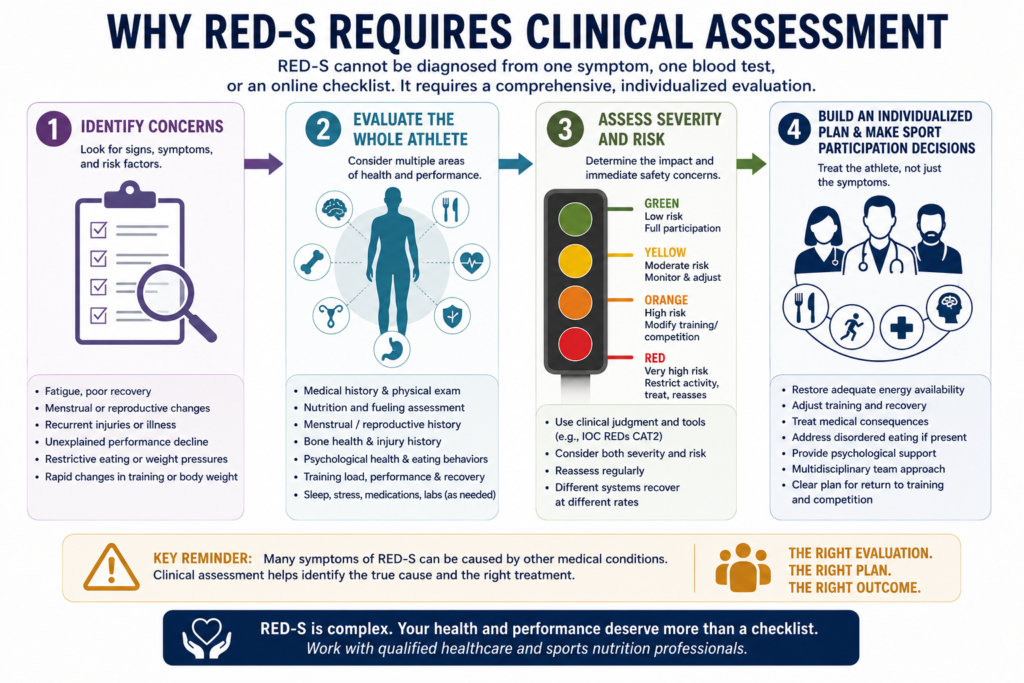
The IOC REDs Clinical Assessment Tool Version 2 (CAT2)
To help clinicians evaluate athletes when RED-S is suspected, the International Olympic Committee developed the IOC REDs Clinical Assessment Tool Version 2, commonly called the IOC REDs CAT2.
The tool was published alongside the updated 2023 IOC RED-S consensus statement.
Importantly, the CAT2 is intended for clinical use, not as an online self-diagnosis checklist.
The assessment follows a structured process that includes:
Step 1: Screening
The clinician first considers whether the athlete has signs or risk factors that warrant further evaluation.
Step 2: Severity and Risk Assessment
If concerns are identified, the athlete is evaluated using RED-S indicators.
Rather than assuming every symptom carries equal significance, the CAT2 considers different indicators and their clinical importance.
The framework includes primary and secondary indicators and organizes findings according to severity/risk.
Step 3: Physician-Led Diagnosis and Treatment
The information is then integrated into a clinical assessment that helps guide diagnosis and management.
The CAT2 uses a four-level traffic-light system to help characterize severity/risk:
Green → Yellow → Orange → Red
As concern increases, recommendations surrounding treatment, training, and competition may become more restrictive.
This represents an important evolution from treating RED-S as a simple yes-or-no diagnosis.
An athlete may present with different combinations and severities of indicators, requiring individualized clinical judgment.
Why This Matters for Athletes
The CAT2 reinforces something important:
RED-S isn’t diagnosed because an athlete checks three symptoms on a list.
An athlete might have fatigue and poor recovery without RED-S.
Another athlete might have several concerning clinical indicators despite maintaining good competition results.
And another might have symptoms caused by an entirely different medical condition.
The purpose of screening is to identify athletes who may need further evaluation—not to replace that evaluation.
Why a Multidisciplinary Approach Matters
RED-S can cross the boundaries between nutrition, medicine, psychology, and sport performance.
Consider an athlete experiencing:
recurrent bone stress injuries + restrictive eating + menstrual dysfunction + declining training tolerance
Nutrition clearly matters.
But nutrition isn’t the only issue requiring attention.
The athlete may need:
- Medical assessment of reproductive function
- Evaluation of bone health
- Nutrition intervention
- Modification of training
- Psychological support
- Treatment for disordered eating if present
Another athlete might have unintentional LEA caused primarily by a demanding training schedule and inadequate meal planning.
That athlete’s treatment could look very different.
This is why RED-S management should be individualized rather than reduced to a generic meal plan.
Within the M3 Performance Framework, we can think about this through all three pillars:
Mind
What beliefs, pressures, psychological factors, or behaviors may be influencing the situation?
Meals
Is nutrition adequately supporting training, recovery, health, and normal physiological function?
Motion
Does the current training load allow the athlete to adequately fuel and recover?
RED-S often requires looking at how all three interact.
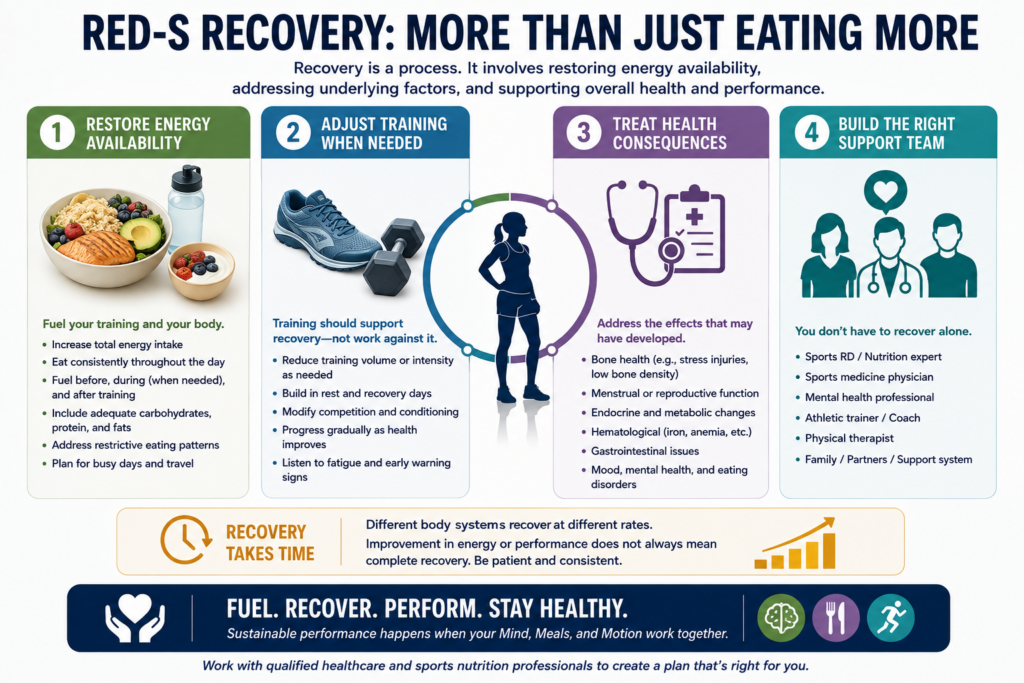
Treatment and Recovery From RED-S
Recovery from RED-S isn’t simply a matter of telling an athlete to:
“Eat more.”
Increasing energy availability is central to treatment, but effective management requires understanding why problematic low energy availability developed in the first place and which health or performance consequences need attention.
For one athlete, the primary issue may be intentionally restricting food to change body composition.
For another, training volume may have increased substantially without a corresponding increase in food intake.
Another athlete may struggle to eat enough because of a demanding school, work, or competition schedule.
And another may have an eating disorder requiring specialized treatment.
The appropriate intervention will therefore depend on the individual athlete.
Restore Adequate Energy Availability
The primary goal is to correct the mismatch between the energy available from food and the demands being placed on the body.
This may require:
- Increasing overall energy intake
- Increasing meal or snack frequency
- Increasing portion sizes
- Improving nutrition around training
- Restoring adequate carbohydrate availability
- Addressing unnecessarily restrictive eating patterns
- Adjusting exercise energy expenditure when appropriate
The IOC identifies restoration of optimal energy availability through non-pharmacological changes to diet and exercise as the primary treatment approach for RED-S.
However, there isn’t one universal calorie prescription that applies to every athlete with RED-S.
Nutrition intervention should reflect the athlete’s:
- Sport
- Training schedule
- Current intake
- Symptoms
- Medical status
- Body-composition goals when appropriate
- Food preferences
- Access to food
- Relationship with food
- Other individual circumstances
This is where individualized sports nutrition care becomes especially valuable.
Nutrition Distribution Can Matter
Total energy intake is important, but athletes also need opportunities to fuel throughout the day.
An athlete who completes a morning workout, eats very little afterward, goes several hours without food, and then consumes most of their calories at night may have a very different fueling pattern than an athlete whose nutrition is distributed around training and recovery.
Depending on the athlete, practical changes might involve:
- Eating breakfast rather than delaying the first meal for several hours
- Adding a snack between meals
- Fueling before training
- Consuming carbohydrate during longer or demanding sessions when appropriate
- Eating after training
- Increasing intake on higher-volume training days
For a broader discussion of distributing nutrition around exercise, see Nutrient Timing for Athletes.
Training May Need to Change
Nutrition isn’t always the only variable.
If an athlete is experiencing moderate-to-severe RED-S-related concerns, continuing the same training load while simply trying to add food may not always be appropriate.
Depending on clinical severity, treatment may include:
- Reducing training volume
- Reducing training intensity
- Eliminating additional conditioning
- Increasing recovery days
- Temporarily modifying competition
- Temporarily stopping training or competition in more serious cases
These decisions should be based on the athlete’s clinical situation—not a generic rule.
Health Consequences May Require Their Own Treatment
Correcting problematic LEA addresses the underlying exposure, but specific medical consequences may also require treatment and monitoring.
For example, an athlete may need additional evaluation or management for:
- Bone stress injury
- Low bone mineral density
- Menstrual dysfunction
- Endocrine abnormalities
- Gastrointestinal problems
- Iron-related or hematological concerns
- Depression, anxiety, or other psychological concerns
- An eating disorder
The IOC emphasizes both reversing problematic LEA and treating associated body-system dysfunction when necessary.
Recovery Doesn’t Happen at the Same Speed for Every System
An athlete may begin eating more and feel more energetic relatively quickly.
That doesn’t necessarily mean every physiological consequence has recovered.
Different systems can recover on different timelines.
For example:
Energy and training tolerance may improve before bone health fully recovers.
Menstrual or reproductive function may also require time to normalize.
This is one reason symptom improvement shouldn’t automatically be interpreted as:
“Everything is fixed, so I can immediately return to my previous training load.”
Recovery needs to be evaluated over time.
Current intervention research also remains limited. A recent systematic review found benefits from interventions such as increasing energy intake and nutrition education, but emphasized that the evidence base is still developing.
Can You Continue Training With RED-S?
Sometimes.
But not always.
Whether an athlete can safely continue full training and competition depends on the severity of their situation.
This is one of the reasons the IOC REDs CAT2 uses a four-level severity/risk framework rather than treating every athlete with suspected RED-S identically.
Broadly, the system progresses from:
Green → Yellow → Orange → Red
with increasing clinical concern.
Sport-participation recommendations vary across the CAT2 severity/risk spectrum. Athletes categorized in the green range may participate fully in training and competition, while athletes with increasing RED-S severity or risk may require closer monitoring, treatment, and progressively greater modification of training or competition.
As severity and risk increase, aspects of training or competition may need to be modified.
At the highest level of concern, substantial restriction—and in many cases removal from training and competition—may be necessary while the athlete receives treatment.
This is why athletes shouldn’t make return-to-sport decisions based solely on whether they feel capable of completing a workout.
An athlete can be motivated enough to train despite a significant medical problem.
Being physically capable of exercising doesn’t necessarily mean continuing unrestricted exercise is medically appropriate.
Sport-participation decisions should consider the athlete’s clinical findings, sport, injury risk, competitive environment, severity of RED-S indicators, and other relevant factors.
Preventing RED-S
Preventing RED-S doesn’t require athletes to obsessively calculate every calorie they eat and burn.
In fact, accurately measuring energy availability outside of controlled research environments can be difficult.
A more practical strategy is to build nutrition and training habits that reduce the likelihood of prolonged or severe energy mismatches.
Match Nutrition to Training Demand
Training doesn’t remain identical throughout the year.
Nutrition shouldn’t necessarily remain identical either.
Higher-demand periods may include:
- Increased training volume
- Two-a-day sessions
- Tournament weekends
- Training camps
- Longer endurance sessions
- Additional strength training
- More frequent competition
Those periods generally create greater fueling demands.
Athletes should recognize that more training usually requires more nutritional support, rather than assuming their normal eating pattern will automatically remain adequate.
For help estimating the factors that influence overall fueling requirements, see Energy Needs for Athletes.
Avoid Long, Repeated Gaps Without Food
One delayed meal isn’t RED-S.
But repeatedly going long periods without eating while maintaining a substantial training schedule can make adequate fueling more difficult.
Planning meals and snacks around school, work, travel, and training can help athletes distribute nutrition more consistently.
Portable options can be particularly useful for busy athletes.
See Best Snacks for Athletes for practical ideas.
Be Careful With Intentional Weight Loss
Athletes pursuing body-composition changes should avoid assuming that a larger calorie deficit will produce a better performance outcome.
More aggressive restriction can compromise the very qualities the athlete is trying to improve.
Body-composition interventions should consider:
health + performance + recovery + training quality
—not simply how quickly scale weight changes.
Pay Attention When Training Changes
A fueling strategy that worked during a lower-volume training phase may no longer be adequate after workload increases.
Ask:
Has my training changed without my eating changing?
That simple question can identify an important source of unintentional underfueling.
Don’t Normalize Persistent Warning Signs
Athletes frequently become accustomed to feeling tired.
That makes it easy to dismiss changes such as:
- Persistent fatigue
- Recurrent illness
- Repeated bone stress injuries
- Menstrual changes
- Reduced libido
- Persistent decline in recovery
- Unexplained deterioration in training tolerance
These symptoms don’t automatically mean RED-S.
But persistent patterns deserve investigation.
For a broader discussion of early fueling-related patterns, see Signs of Underfueling in Athletes: How to Know If You’re Not Eating Enough.
Common RED-S Myths
Myth 1: “RED-S Only Affects Female Athletes”
Reality: RED-S can affect both female and male athletes.
Menstrual dysfunction made energy deficiency particularly visible in female athletes and contributed to the development of earlier models such as the Female Athlete Triad.
But research now recognizes that problematic LEA can affect numerous physiological systems in athletes of all sexes.
Myth 2: “You Have to Be Underweight to Have RED-S”
Reality: RED-S does not have a specific body type.
An athlete can maintain a relatively stable weight while experiencing physiological consequences associated with problematic LEA.
Body size alone cannot diagnose—or exclude—RED-S.
Myth 3: “Losing Your Period Is Normal for Serious Athletes”
Reality: Menstrual dysfunction shouldn’t simply be accepted as the price of training hard.
Training can influence reproductive function, particularly when accompanied by inadequate energy availability, but persistent menstrual disturbances deserve medical evaluation.
Other causes also need to be considered.
Myth 4: “If I’m Performing Well, I Can’t Have RED-S”
Reality: Performance isn’t a health screening tool.
Some athletes can continue training or competing successfully while physiological problems are developing.
Performance changes may appear gradually—or health consequences may become apparent before major performance decline occurs.
Myth 5: “RED-S Only Happens When Athletes Intentionally Diet”
Reality: Problematic LEA can be intentional or unintentional.
An athlete may simply underestimate the amount of energy required to support a demanding training schedule.
Busy schedules, limited opportunities to eat, high training volumes, appetite suppression around exercise, food availability, and inadequate nutrition knowledge can all contribute.
Myth 6: “RED-S Is Just Another Name for an Eating Disorder”
Reality: They’re not synonymous.
Eating disorders and disordered eating can contribute to problematic LEA and RED-S, but athletes can develop RED-S without either.
When an eating disorder is present, specialized treatment is important.
Frequently Asked Questions About RED-S
Is RED-S the Same as the Female Athlete Triad?
No.
The Female Athlete Triad traditionally focuses on the relationship among:
- Low energy availability, with or without disordered eating
- Menstrual dysfunction
- Low bone mineral density
RED-S is a broader model developed by the International Olympic Committee.
It includes athletes of all sexes and recognizes a wider range of potential physiological, psychological, and performance consequences.
The two models overlap substantially, but they aren’t identical.
Is RED-S an Eating Disorder?
No.
An eating disorder can contribute to RED-S, but RED-S itself is not an eating disorder.
Some athletes develop problematic LEA unintentionally because their energy intake doesn’t keep pace with their training demands.
Others may have disordered eating or a diagnosed eating disorder that contributes to the problem.
The distinction matters because treatment needs can be very different.
Can Male Athletes Develop RED-S?
Yes.
Male athletes can experience effects involving reproductive hormones, bone health, metabolism, recovery, performance, and other physiological systems.
RED-S in male athletes may be less obvious because they don’t have menstrual function as a visible reproductive indicator.
Can You Have RED-S at a Normal or Higher Body Weight?
Yes.
Body weight alone cannot determine whether an athlete has adequate energy availability.
RED-S should not be assumed—or ruled out—based on appearance, BMI, or scale weight alone.
Can RED-S Affect Fertility?
Problematic LEA can disrupt reproductive function in both female and male athletes.
Because fertility is influenced by many factors, an athlete experiencing reproductive concerns should receive appropriate medical evaluation rather than assuming RED-S is the cause.
Does RED-S Affect Bone Density?
It can.
Problematic LEA and associated hormonal changes can negatively affect bone health.
Research has also associated LEA with increased concern for bone stress injuries. A 2025 systematic review and meta-analysis found that most included studies examining bone outcomes reported impaired bone health and greater bone-stress-injury risk in athletes with LEA.
Can You Recover From RED-S?
Yes, recovery is possible.
Treatment generally involves restoring adequate energy availability while addressing contributing factors and any health consequences that have developed.
Recovery time varies considerably depending on:
- Severity
- Duration
- Systems affected
- Presence of injuries
- Eating behaviors
- Training demands
- Individual response to treatment
Some consequences may improve sooner than others.
How Long Does RED-S Recovery Take?
There isn’t one universal timeline.
An athlete may notice improvements in energy or training tolerance before reproductive or bone-related outcomes fully recover.
This is why recovery should be based on clinical progress rather than an arbitrary number of weeks.
Who Should I See If I’m Concerned About RED-S?
A sports medicine physician or another physician familiar with athlete health is an appropriate place to begin when significant RED-S concerns are present.
A registered dietitian nutritionist—particularly one experienced in sports nutrition— can evaluate fueling patterns and help develop an individualized strategy for restoring adequate nutrition.
Depending on the situation, the care team may also include:
- Mental-health professionals
- Endocrinologists
- Athletic trainers
- Physical therapists
- Other sports medicine specialists
Sports Dietitian Insight: Performance Is Only One Piece of the Picture
Athletes are naturally drawn to performance metrics.
How fast did I run?
How much did I lift?
How high did I jump?
Did I win?
Am I getting leaner?
Those numbers matter in sport—but they don’t tell us everything about whether an athlete is adequately supported.
An athlete can occasionally perform well while:
- Recovering poorly
- Developing a bone stress injury
- Experiencing menstrual or reproductive changes
- Struggling with persistent fatigue
- Becoming increasingly rigid around food
- Losing the ability to tolerate their normal training schedule
That’s why I wouldn’t evaluate an athlete’s fueling status based solely on whether their workouts are still going well.
The better question is:
Can the athlete support both performance and health over time?
High performance isn’t simply about extracting as much work as possible from the body.
It’s about creating an environment in which the athlete can train, adapt, recover, remain healthy, and repeatedly perform.
That’s a much higher standard than getting through today’s workout.
The M3 RED-S Health & Performance Check-In
Rather than trying to diagnose RED-S yourself, use these questions to identify patterns that may deserve a closer look.
Mind
Ask yourself:
- Am I increasingly anxious or rigid around food?
- Do I feel guilty when I eat more on hard training days?
- Am I afraid that adequate fueling will negatively affect my body or performance?
- Do I feel pressure to become lighter or leaner?
- Am I adding exercise because I feel I need to compensate for eating?
- Has food started occupying an excessive amount of my mental energy?
Meals
Consider:
- Am I regularly skipping meals?
- Do I frequently go long periods without eating?
- Has my training increased without a meaningful change in my food intake?
- Am I restricting carbohydrates or other major food groups without a medical reason?
- Do I regularly train without eating beforehand when fuel would be beneficial?
- Am I consistently missing recovery nutrition?
- Is my schedule making it difficult to eat enough?
Motion
Consider your training:
- Has my training volume recently increased?
- Am I adding workouts beyond my planned program?
- Am I consistently training through significant fatigue?
- Am I allowing adequate recovery between demanding sessions?
- Is my performance declining despite doing more training?
- Have illness or injuries started interfering with training consistency?
Health
Consider whether you’ve experienced persistent or unexplained changes involving:
- Energy
- Menstrual or reproductive function
- Libido
- Bone stress injuries
- Frequent illness
- Recovery
- Gastrointestinal function
- Mood
- Sleep
- Training tolerance
None of these questions diagnoses RED-S.
Their purpose is to help identify patterns.
If several areas are changing at the same time, that’s much more useful information to bring to a qualified healthcare professional than simply saying:
“I think I need to eat more.”
When Should an Athlete Seek Professional Help?
Consider seeking professional evaluation when symptoms are persistent, worsening, affecting health or training, or occurring together.
Particular reasons for evaluation include:
- Recurrent bone stress injuries
- Menstrual periods becoming persistently irregular or stopping
- Reproductive or hormonal concerns
- Persistent fatigue that doesn’t improve with normal recovery
- Frequent illness
- Significant decline in training tolerance
- Unexplained performance deterioration
- Persistent gastrointestinal problems interfering with adequate intake
- Significant food restriction
- Fear or anxiety surrounding food
- Compulsive exercise
- Significant body-image distress
- Suspected disordered eating or an eating disorder
Some symptoms require more urgent medical evaluation, particularly when there are signs of significant medical instability.
RED-S shouldn’t be self-diagnosed—and symptoms shouldn’t automatically be blamed on nutrition.
Other medical conditions can produce similar signs.
Appropriate evaluation helps determine what is actually happening and what needs to be treated.
Conclusion
Relative Energy Deficiency in Sport is about much more than an athlete feeling tired because they didn’t eat enough before practice.
RED-S describes a broader syndrome in which exposure to problematic low energy availability can affect physiological function, psychological health, training, recovery, and performance.
It can affect:
female athletes and male athletes
endurance athletes and strength athletes
elite competitors and recreational athletes
lean athletes and athletes in larger bodies
And it can occur intentionally or unintentionally.
The goal isn’t to make athletes afraid of hard training, body-composition goals, or occasional imperfect eating.
It’s to recognize that athletic development requires resources.
Within the M3 Performance Framework: Mind • Meals • Motion, sustainable performance happens when all three support one another.
Mind influences how athletes approach food, body image, training, and performance.
Meals provide the energy and nutrients required to support both exercise and normal physiological function.
Motion creates the training stimulus—but also increases the resources required to recover and adapt.
When those demands become persistently mismatched, the answer isn’t always to train harder.
Sometimes the smartest performance decision is to make sure the body has enough support to respond to the training you’re already doing.
Need Help Matching Your Nutrition to Your Training?
If you’re consistently struggling with fatigue, recovery, fueling, or matching your nutrition to your training demands, individualized sports nutrition guidance can help identify gaps and build a strategy around your actual schedule and goals.
Learn more about M3 Performance Nutrition Coaching
If you’re unsure whether your current nutrition and training habits are supporting your performance, you can also start with the M3 Performance Assessment.
This article is for educational purposes and is not intended to diagnose or treat RED-S or any other medical condition. Athletes with concerning symptoms should seek evaluation from an appropriately qualified healthcare professional.
References
- Mountjoy, M., Ackerman, K. E., Bailey, D. M., et al. (2023). 2023 International Olympic Committee’s (IOC) consensus statement on Relative Energy Deficiency in Sport (REDs). British Journal of Sports Medicine, 57(17), 1073–1097. https://doi.org/10.1136/bjsports-2023-106994
- Stellingwerff, T., Mountjoy, M., McCluskey, W. T. P., Ackerman, K. E., Verhagen, E., & Heikura, I. A. (2023). Review of the scientific rationale, development and validation of the International Olympic Committee Relative Energy Deficiency in Sport Clinical Assessment Tool: V.2 (IOC REDs CAT2)—by a subgroup of the IOC consensus on REDs. British Journal of Sports Medicine, 57(17), 1109–1118. https://doi.org/10.1136/bjsports-2023-106914
- Stellingwerff, T., Mountjoy, M., McCluskey, W. T. P., Ackerman, K. E., Verhagen, E., & Heikura, I. A. (2023). International Olympic Committee Relative Energy Deficiency in Sport Clinical Assessment Tool 2 (IOC REDs CAT2). British Journal of Sports Medicine, 57(17), 1068–1072. https://doi.org/10.1136/bjsports-2023-107549
- Gallant, T. L., Ong, L. F., Wong, L., et al. (2025). Low Energy Availability and Relative Energy Deficiency in Sport: A systematic review and meta-analysis. Sports Medicine, 55(2), 325–339. https://doi.org/10.1007/s40279-024-02130-0
- Logue, D. M., Madigan, S. M., Delahunt, E., Heinen, M., Mc Donnell, S. J., & Corish, C. A. (2018). Low energy availability in athletes: A review of prevalence, dietary patterns, physiological health, and sports performance. Sports Medicine, 48(1), 73–96. https://doi.org/10.1007/s40279-017-0790-3
- Thomas, D. T., Erdman, K. A., & Burke, L. M. (2016). Position of the Academy of Nutrition and Dietetics, Dietitians of Canada, and the American College of Sports Medicine: Nutrition and athletic performance. Journal of the Academy of Nutrition and Dietetics, 116(3), 501–528. https://doi.org/10.1016/j.jand.2015.12.006